

- 286 Views
- 20 Min Read
- (0) Comment
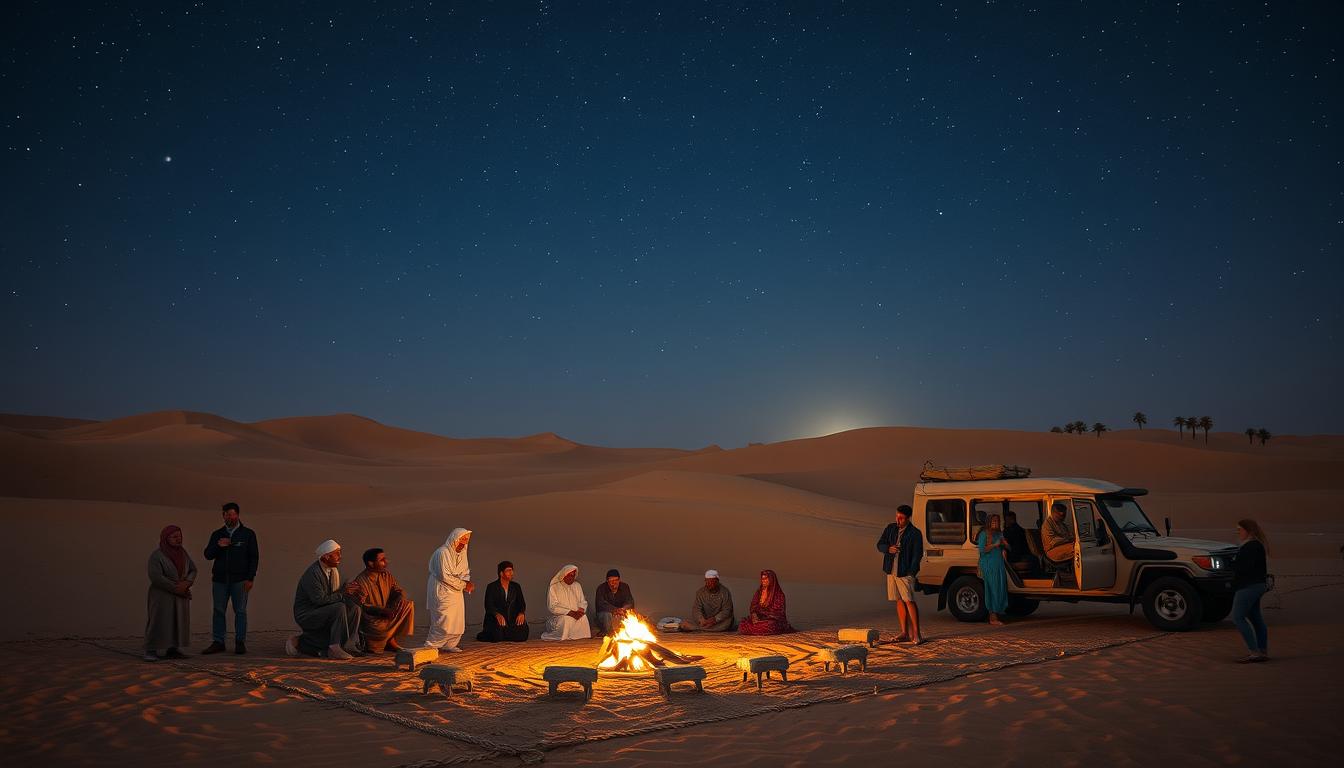
As the dunes open like waves, a hush falls over you. A breeze carries the scent of cardamom from a fire. In this moment, you feel a connection to stories told under the stars.
You came for the view, but you stay for the voices that give the land its soul. These voices are the heart of the desert.
In the UAE, your choices have a big impact. By choosing UAE desert tourism carefully, you help protect Bedouin heritage. You respect real lives, skills, and memories.
You become a respectful guest in Dubai desert safari culture. It’s not just about watching; it’s about experiencing with respect.
This guide will show you how desert safaris preserve Bedouin culture. You’ll learn about guides sharing oral histories and artisans teaching crafts. You’ll also see how camps follow strict sustainability standards.
You’ll find out how to choose responsible operators and avoid harmful activities. This way, you can travel in a way that gives back.
Your visit can support living traditions, from hospitality rituals to desert survival knowledge. When done right, a single evening among the dunes can protect a legacy for the next dawn.
Key Takeaways
- Your choices in UAE desert tourism can actively support Bedouin heritage and living traditions.
- Responsible operators center cultural preservation in desert tourism with interpretation, fair pay, and consent.
- Dubai desert safari culture is strongest when guided by community voices and sustainable practices.
- Look for tours that protect oral histories, crafts, and hospitality rituals through authentic participation.
- Ethical desert safaris reduce environmental impact while strengthening cultural pride and livelihoods.
- Travel with respect: ask questions, follow etiquette, and choose experiences that benefit both people and nature.
Understanding Bedouin Heritage in the UAE
Exploring Bedouin heritage in the UAE is like stepping into a living storybook. The dunes tell tales of family, honor, and generosity that guide desert life today. As you learn these customs, you see the land through the eyes of its first travelers. You understand how community shapes the tribal identity UAE.
Nomadic traditions and tribal identity
Nomadic families once followed the seasons, moving with their animals. Clans like Bani Yas and Al Nuaimi formed strong alliances through kinship and help. This created a strong tribal identity UAE.
Today, Bedouin camel culture shows the importance of tracking, star paths, and wells. These traditions highlight values like dignity, duty, and generosity.
Oral histories, poetry, and music
Oral memory connects people and place. Nabati poetry shares stories of love, valor, and tribe history. Poet Ousha bint Khalifa Al Suwaidi, known as Fatat Al Arab, made these verses known to modern audiences.
Bedouin music, with the rebab and oud, is a key part of gatherings. It combines verse with al-ayyala, celebrating Bedouin heritage UAE.
Desert survival skills and traditional crafts
Skills like reading winds and tracking stars were honed over centuries. Water and pasture care kept herds and families safe. These practices anchor Bedouin camel culture in daily life.
Traditional crafts include Al Sadu weaving, tent making, leatherwork, and falconry. Gahwa with cardamom welcomes guests. Sadu patterns tell stories in fabric. Cultural institutions like Dubai Culture and the Emirates Heritage Club preserve these arts. You can learn more through an authentic desert experience.
How Desert Safaris Help Preserve Bedouin Culture
When you visit the dunes, you’re not just a spectator. Dubai’s cultural tours offer a deep dive into Bedouin culture. You learn how traditions, crafts, and nature are intertwined.
Cultural interpretation during guided tours
Guides share stories of clan ties, hospitality, and desert life. You see sadu weaving, coffee roasting, and the use of oud and frankincense. This hands-on learning strengthens Bedouin heritage.
On Dubai’s cultural tours, the focus is on understanding before enjoying. Guides explain the origins of songs, the importance of tent orientation, and water sharing. This approach enriches your experience.
Revenue streams that support Bedouin artisans
Safaris that pay storytellers and poets keep oral traditions alive. Fair fees for crafts and demonstrations provide income and fund apprenticeships. Buying authentic sadu textiles supports makers directly.
This model benefits Bedouin culture directly. Money goes to artisans, not middlemen. It supports workshops, materials, and training.
Showcasing authentic customs without exploitation
Responsible operators respect tradition and seek consent. They use authentic materials and give credit where it’s due. This approach keeps stories true while welcoming guests.
Through careful curation, safaris preserve Bedouin heritage. You gain valuable insights, and communities maintain control over their stories.
| Practice | What You Experience | Benefit to Communities | Why It Matters |
|---|---|---|---|
| Guided interpretation | Stories on nomadism, poetry, camp etiquette | Employment for trained local guides | Strengthens cultural interpretation UAE |
| Craft demonstrations | Sadu weaving, leatherwork, beadwork | Fair pay and funded apprenticeships | Supports Bedouin heritage preservation through safaris |
| Ethical scheduling | Programs timed around prayer and seasons | Respects social rhythms and beliefs | Prevents tokenism and fatigue |
| Direct sales on-site | Authentic textiles and incense accessories | Higher maker margins, transparent pricing | Amplifies desert safari impact on Bedouin culture |
| Community-led storytelling | Firsthand accounts during Dubai cultural tours | Authority stays with tradition bearers | Reduces appropriation and error |
The Role of Sustainable Tourism in Bedouin Communities
You play a big role in how desert travel grows in the UAE. By choosing sustainable tourism in Bedouin communities, tours become better and more respectful. This way, families get real benefits and traditions stay alive.
Community-led tourism models
Look for tours led by Bedouins. Choose operators that put Bedouin voices first. They should work with cooperatives, guide associations, and camps that hire locals.
When elders plan your trip, you learn more. You hear real stories, get accurate names, and respect local rules.
Capacity building and fair compensation
Good programs start with people. Guides should learn Arabic and English, and know first-aid. They also need business skills and help with their heritage.
Make sure tours pay fairly. Look for clear prices and wages that match UAE standards. This way, young guides can stay in their communities.
Long-term cultural preservation strategies
Good operators plan for the long term. They teach skills like sadu weaving and tent-making. They also give micro-grants for tools and looms.
Support camps that host cultural centers and archive stories. Work with places like Dubai Culture or the Sharjah Institute for Heritage. This ensures tourism is sustainable for years to come.
| Practice | What You Should Look For | Community Benefit | Why It Matters |
|---|---|---|---|
| Community Leadership | Local guide associations and joint-venture camps | Decision-making power, accurate narratives | Centers lived knowledge and reduces tokenism |
| Capacity Building | Language, interpretation, safety, business training | Skilled jobs for youth and women | Builds resilience beyond tourism cycles |
| Fair Pay | Published rates and artisan price transparency | Stable income and dignity of work | Turns fair compensation desert tours into a norm |
| Heritage Programs | Apprenticeships, cultural centers, archives | Safeguards crafts and oral histories | Ensures cultural preservation strategies endure |
| Accountability | Multi-year agreements and annual impact reviews | Predictable support and shared goals | Transforms good intentions into measurable outcomes |
Responsible Travel in Desert Regions
You set the tone for respectful, memorable encounters. Practicing UAE cultural etiquette is key to responsible travel in desert regions. It keeps host traditions alive. Small choices, like how you greet and dress, build trust.
Visitor etiquette in Bedouin camps
Dress modestly and follow your host’s lead. Remove shoes before entering a majlis if requested. Accept Arabic coffee with your right hand; three small cups are customary, and a gentle shake of the cup signals you are finished.
Avoid interrupting prayer times and respect gender-segregated areas when they apply. Listen to guides, who translate custom into practice and help you navigate UAE cultural etiquette with ease.
Respectful photography and cultural sensitivity
Ask permission before photographing people, and never shoot private homes, prayer, or sensitive animal handling. This is the heart of respectful photography UAE and a cornerstone of responsible travel in desert regions.
Use neutral, non-extractive language when posting on social media, and credit artisans by name when possible. When in doubt, put the camera down and engage through conversation.
Supporting local businesses and cooperatives
Buy certified sadu textiles, leather goods, and spices directly from producer stalls to support local cooperatives and sustain living traditions. Verify authenticity labels where available and choose camps that publish sourcing policies for food, materials, and performances.
Opt for experiences that show local ownership or profit-sharing. Explore this approach through sustainable desert safari guidance, and favor operators who connect purchases to community benefit.
| Action | Why It Matters | How to Do It | Impact on Community |
|---|---|---|---|
| Follow UAE cultural etiquette | Builds trust and dignity | Dress modestly, accept coffee properly, respect prayer | Strengthens host-guest relationships |
| Practice respectful photography UAE | Protects privacy and beliefs | Ask consent, avoid private spaces, credit artisans | Encourages open cultural exchange |
| Support local cooperatives | Drives fair income and continuity | Buy certified sadu and local goods from producers | Preserves craft skills and livelihoods |
| Choose ethical operators | Aligns travel with heritage care | Look for published sourcing and profit-sharing | Funds community programs and training |
Eco-Friendly Desert Safari Practices
Enjoying the dunes can help the land thrive. Choose operators that follow clear standards and work with protected areas. This supports eco-friendly desert safari practices that respect both culture and nature.
Low-impact driving and wildlife protection
Low-impact dune driving means staying on marked tracks and using smaller convoys. It also involves lowering tire pressure to protect the sand. Avoiding vegetated patches and known nesting zones is key, as well as minimizing night movements near wildlife corridors.
This approach helps protect wildlife in the UAE desert, like the Arabian oryx and desert fox. It also preserves the desert soundscape. This lets animals behave naturally and guides can share stories without being drowned out by engines.
Waste reduction and water conservation
Look for camps that reduce single-use plastics and sort recyclables. They should use durable, reusable dinnerware. Planning seasonal menus and serving right-sized portions also helps reduce food waste, with scraps composted instead of thrown away.
Water conservation is important in every task. Look for camps that use gray-water recovery and low-flow fixtures. They should also check for leaks regularly and publish water-per-guest benchmarks. Refill stations and briefings help guests use water wisely during their stay.
Renewable energy use in desert camps
Solar PV powers lighting and charging, while solar-thermal heats water without diesel. Battery storage replaces generators at night, keeping camps quiet for storytelling and stargazing. These choices reduce emissions and dust, preserving the desert’s calm.
Booking with leaders like Platinum Heritage supports responsible transport and clean power. It also promotes careful camp design. For more on sustainable desert safaris, check out this guide to sustainable desert safaris.
| Practice | What You Should See | Positive Impact |
|---|---|---|
| Low-impact driving | Marked tracks, small convoys, deflated tires | Protects dunes and nesting sites; supports wildlife protection UAE desert goals |
| Wildlife viewing | Safe distances, no spotlighting, quiet stops | Less stress on Arabian oryx, sand gazelle, desert fox, Houbara bustard |
| Waste reduction | Reusable dinnerware, recycling stations, composting | Lower landfill loads; cleaner camps and tracks |
| Water management | Gray-water systems, low-flow fixtures, refill points | Stronger water conservation in camps; measurable per-guest savings |
| Renewable energy | Solar PV, solar-thermal, battery storage | Fewer generator hours; quieter nights and reduced emissions |
| Operator transparency | Published benchmarks, wildlife protocols, staff training | Trust, accountability, and consistent eco-friendly desert safari practices |
Promoting Traditional Bedouin Lifestyle Through Desert Safaris
You enter a classroom where guides share stories and skills with care. Desert safaris teach you about Bedouin traditions. You learn about language, crafts, and hospitality in short, easy sessions.
Storytelling, Nabati poetry, and music performances
At dusk, Nabati poetry performances start. They talk about land, family, and strength. A rebab or oud plays the verse, teaching you about star-lore.
Stories tell of ancient migrations and the connection between desert caravans and coastal pearl diving. These moments ask you to listen and respect.
Weaving, handicrafts, and tent-making demonstrations
Hands-on stations teach you about sadu weaving UAE. You see how to make durable bands for belts and bags. Artisans show you how to make tents with goat hair.
They explain how the fibers keep rain out and let air in. You also see stitching, braiding, and leather curing, important for travel.
Traditional cooking, coffee rituals, and hospitality
Culinary traditions come alive at live fires. You taste dishes like regag and harees. Hosts teach you how to make gahwa rituals.
Learning etiquette is part of the lesson. You learn about bukhoor, seating, and serving elders first. This keeps the Bedouin lifestyle alive and interesting.
Desert Safari Experiences That Support Cultural Preservation
You enter the dunes to learn, not just to look. In the UAE, operators now focus on cultural preservation in desert tourism. They give clear briefings, have local hosts, and share heritage cues.
Camel ride insights and animal welfare
Guides tell you how dromedaries helped trade and kinship routes in the Empty Quarter. You learn about Wadah and Sofor breeds, traditional tack, and caravan paths.
Ethical operators in the camel welfare UAE space ensure animal care. They cap ride times, rotate animals, and enforce weight limits. Shade, water, rest, and vet checks are standard, making your photo moment meaningful.
Sandboarding and dune sports with heritage context
Before you start, you learn about barchan dunes and how wind shapes them. This knowledge turns sandboarding into a lesson, linking it to desert history and culture.
Safety briefings teach you about slope choice, fall technique, and dune etiquette. You ride with respect, learning about historic play and travel routes.
Sunset majlis gatherings and cultural exchange
At sunset, you join a majlis where hosts share Nabati verse, coffee rituals, and stories of seasonal movement. These gatherings invite your questions and encourage dialogue.
Music, poetry, and insights into daily life are shared without staging. By listening and engaging, you help preserve desert culture.
How Desert Buggy Rental Dubai Aligns With Cultural Preservation
You want speed without losing the story of the land. Desert Buggy Rental Dubai blends adventure with context. Your ride supports Bedouin culture conservation in tourism while staying thrilling and safe.
Service types: Dune Buggy Tours, Quad Biking Tours, Evening and Morning Desert Safari, Desert BBQ Dinner, Camel Ride, Sandboarding
Choose Dune Buggy Tours Dubai or Quad Biking Tours Dubai to trace old caravan routes. Learn how desert travelers read stars and dunes. Morning Desert Safari trips highlight light, animal tracks, and quiet landscapes.
Evening Desert Safari programs add a Desert BBQ Dinner, a Camel Ride, and sandboarding. Each thrill ties to heritage skills and etiquette.
Guides trained in Bedouin history and storytelling
Your guide shares Nabati poetry cues, hospitality customs, and navigation methods passed through families. You hear why certain dunes matter, how water was found, and how camps honored guests. This turns every stop into a moment of meaning.
24-hour booking and responsible experience design
Round-the-clock booking lets you plan trips that fit your schedule and values. Routes follow low-impact tracks, and wildlife awareness briefings come first. Safety protocols are clear.
Camps present coffee rituals and craft displays that channel revenue to local makers. This strengthens Bedouin culture conservation in tourism.
Contact: +971 52 440 9525 | [email protected]
Reach the team to tailor Dune Buggy Tours Dubai, Quad Biking Tours Dubai, an Evening Desert Safari, or a Morning Desert Safari. Add a Desert BBQ Dinner, Camel Ride, and sandboarding.
| Experience | Cultural Focus | Environmental Practice | Safety & Welfare | Ideal Time |
|---|---|---|---|---|
| Dune Buggy Tours Dubai | Caravan routes, star navigation, dune names | Low-impact tracks, dune crest avoidance | Briefings, helmets, paced convoys | Sunrise to late afternoon |
| Quad Biking Tours Dubai | Trade paths, tool-making, signaling methods | Wildlife buffer zones, stop-point rotation | Guide-to-rider ratios, route audits | Morning and late day |
| Morning Desert Safari | Tracking skills, water-finding traditions | Cool-hour travel to reduce stress | First-aid ready, radio check-ins | Early morning |
| Evening Desert Safari | Hospitality customs, poetry and music | Light management, waste sorting | Marked walkways, supervised fires | Late afternoon to night |
| Desert BBQ Dinner | Traditional recipes, coffee rituals | Reusable serveware, water stewardship | Food safety checks, allergen notes | Evening |
| Camel Ride | Caravan etiquette, pack-rest cycles | Short, shaded routes, load limits | Animal welfare standards, handler presence | Morning and sunset |
| Sandboarding | Dune formation, wind patterns | Designated slopes, erosion care | Gear checks, supervised starts | Morning and late day |
Economic Empowerment and Bedouin Culture Conservation in Tourism
Your booking can help protect Bedouin culture when it supports fair pay for desert storytellers. In the UAE, fair contracts and regular work hours make heritage jobs stable. This way, we value Bedouin knowledge over just shows.
Direct income for local guides and artisans
Support operators that hire Bedouin for jobs like guiding and cooking. They should pay well and offer regular hours. This helps keep traditions alive and supports learning from one generation to the next.
Market access for traditional products
Camps can have small markets for Bedouin crafts like textiles and incense. These markets, along with storytelling and coffee, help artisans reach more people. Your purchases support quality and fair trade.
Measuring the desert safari impact on Bedouin culture
Look for real data, not just promises. Good operators share how many people work, cultural programs given, and sales of crafts. They also report on training and feedback from visitors. This data helps you make informed choices.
| Indicator | What You Should Look For | Why It Matters |
|---|---|---|
| Community Employment | Number of Bedouin staff and average paid hours per month | Links economic empowerment UAE to steady, dignified work |
| Cultural Programming | Documented hours of interpretation, poetry, music, and craft demos | Shows active Bedouin culture conservation in tourism |
| Artisan Sales | Volume and pricing of sadu, leather, and incense sold with provenance | Expands artisan market access and rewards authenticity |
| Training & Apprenticeships | Certificates earned and number of apprentices placed with masters | Builds future skills while reducing desert safari impact on Bedouin culture |
| Visitor Learning | Satisfaction scores for cultural understanding and respect | Confirms that tours educate, not exploit |
| Audit & Reporting | Annual public summaries and third-party verification | Provides proof, not promises, for responsible spending |
When you compare these indicators, your choice channels money to living heritage and keeps the desert’s knowledge at the heart of every journey.
Safeguarding Authenticity: Avoiding Cultural Commodification
You visit the desert to learn, not to watch a caricature. In the spirit of safeguarding authenticity UAE, you deserve context, consent, and fair credit for every tradition shared. Well-run tours avoid cultural commodification by putting Bedouin voices first and keeping ritual and heritage intact.
What you see should match what communities value. Ethical cultural performances come with clear intros, correct names, and proper attributions. Fees go to the people who sing, weave, host, and guide. You hear why a chant matters, when it is used, and how often it should be shown.
Ethical curation of performances and activities
You benefit when curators consult culture-bearers on what is appropriate to share. Programs resist exaggeration and skip props that flatten meaning. Short briefings frame dances, poetry, and coffee rituals, keeping ethical cultural performances rooted in place and practice.
Consent, representation, and community voice
Consent is active and ongoing. Clear signs state rules for photos, recording, and social media, and guides reiterate them. Community representation tourism means Bedouin hosts lead as presenters, translators, and decision-makers, so the narrative stays accurate and dignified.
Balancing entertainment with education
Enjoyment grows with insight. Operators weave in two-minute context talks, Q&A moments, and interpretive cues that help you read the desert. This balance upholds safeguarding authenticity UAE and helps you avoid cultural commodification while honoring lived knowledge.
Visitor Planning Tips for Cultural Preservation in Desert Tourism
Planning a responsible desert trip in the UAE can make a big difference. Start by doing your homework. Then, pick experiences that protect the heritage and wildlife.
Choosing certified operators with sustainability standards
Look for operators with clear policies on emissions, waste, animal welfare, and local hiring. Check for third-party certifications or audited reports. Also, make sure guides are trained in Bedouin history.
Choose companies that limit group sizes and use eco-friendly vehicles. They should also support local culture by sharing revenue with elders and artisans.
Questions to ask about cultural programming
- Who leads the cultural activities, and how are they trained and compensated?
- What share of each booking funds community programs or heritage projects?
- Are crafts locally made with provenance and fair pricing?
- What wildlife safeguards, route controls, and animal care standards are in place?
Asking these questions helps you find operators that respect tradition and nature.
What to bring and how to behave respectfully
Pack modest layers, closed-toe shoes, a reusable water bottle, reef-safe sunscreen, and a scarf. Follow safety briefings and stay on marked routes. Keep noise low around wildlife and camps.
Respect UAE customs: accept coffee with your right hand, wait to be seated, ask before photos, and choose humane and authentic experiences.
| Planning Focus | What to Do | Why It Matters | Red Flags |
|---|---|---|---|
| Operator Standards | Choose certified operators with published policies and trained cultural guides | Builds trust and advances cultural preservation in desert tourism | No certification, vague claims, oversized groups |
| Cultural Programming | Verify community leadership and fair pay for artisans | Ensures authentic voices and fair economic return | Uncredited performances, unclear revenue sharing |
| Wildlife & Routes | Confirm animal welfare protocols and designated tracks | Protects habitats and reduces dune erosion | Chasing wildlife, off-track driving |
| Guest Gear & Conduct | Bring modest clothing, reusable bottle, and follow respectful behavior UAE etiquette | Honors local customs and reduces waste | Single-use plastics, disruptive photography |
Conclusion
You play a key role in preserving Bedouin Culture through Desert Safaris. By choosing responsible desert safaris in Dubai, you support traditions like poetry and music. You also respect the ancient wisdom of desert survival.
This is what UAE cultural tourism is all about. It’s real, respectful, and benefits the community. It’s a chance to see the authentic side of the UAE.
Community-led tours ensure stories are told right. Guides share Bedouin history, making each stop educational. This way, your trip supports sustainable heritage travel.
It builds trust and keeps traditions alive for future generations. This is how you make a difference.
Being eco-friendly is important in the desert. Low-impact driving and smart waste systems protect the environment. Dressing modestly and supporting local artisans also helps.
Desert Buggy Rental Dubai offers 24-hour booking for unique experiences. These experiences blend cultural learning, artisan support, and eco-friendly operations. By choosing these responsible desert safaris, you support local livelihoods and protect the environment.
This shows how Desert Safaris help preserve Bedouin Culture. You set a high standard for UAE cultural tourism and sustainable heritage travel.
FAQ
How do desert safaris help preserve Bedouin culture?
Desert safaris teach visitors about Bedouin history and traditions. Guides share stories and crafts like sadu weaving. This helps keep traditions alive and supports local artisans.
What should you look for in a sustainable desert safari in Bedouin communities?
Look for safaris that support local communities and protect the environment. Check if they pay artisans fairly and use eco-friendly practices. Also, make sure they publish their impact and policies.
How can you ensure the experience is authentic and not exploitative?
Choose tours where Bedouin hosts share their stories. Ethical tours respect traditions and avoid fake performances. They balance entertainment with educational talks.
What etiquette should you follow in Bedouin camps?
Dress modestly and remove shoes when asked. Accept coffee with your right hand. Always ask before taking photos and use respectful language online.
How do eco-friendly practices protect the desert and its wildlife?
Drive carefully and avoid damaging habitats. Camps should use solar power and reduce waste. This helps protect animals like Arabian oryx and desert foxes.
How do safaris support Bedouin artisans and markets?
Quality safaris offer craft markets and fair payments for artisans. This helps increase income and preserve Bedouin heritage.
What questions should you ask before booking?
Ask about cultural programming and artisan payments. Check animal welfare and environmental policies. Also, ask about the impact of the safari on Bedouin culture.
Are camel rides ethical on cultural tours?
Ethical rides are short, rotate animals, and provide care. Guides share history and context, making the ride educational and responsible.
What role does storytelling and Nabati poetry play on safaris?
Storytellers share history and themes of kinship. Short performances deepen understanding without turning heritage into a show. This supports cultural preservation.
How can you support local businesses during your visit?
Buy sadu textiles and spices directly from producers. Choose tours that support local businesses. Your purchases and reviews help promote sustainable tourism.
What should you bring to minimize impact and show respect?
Bring modest clothes, closed-toe shoes, and a reusable water bottle. Stay on marked routes and follow safety briefings. These choices show respect for the desert.
How does Desert Buggy Rental Dubai align with cultural preservation?
The company offers dune adventures with Bedouin history and hospitality. They provide various tours and activities. For booking: +971 52 440 9525 | [email protected].
Categories
- Quad Bike Rental (1)
- Desert safari (1)
- Hot air ballon (2)
- dirt bike (4)
- Uncategorized (4)
- Desert Buggy Rental (2,089)
- Dune buggy (4)
Recent Post



Tags
Affordable balloon rides in Dubai Animal experience Dubai ATV maintenance Ballooning Attire Balloon ride service norms Bargain desert safari packages Best Hot Air Balloon Destinations Best safari experiences Budget-friendly desert safaris Camel riding attire Can-am Buggy Dubai Challenges of oceanic ballooning Desert safari Dubai prices Dubai aerial adventure Dubai Attractions Dubai dune buggies Dubai Events Dubai hot air balloon ride duration Dubai Museum Dubai night temperature Dubai weekend activities Dubai winter desert experience Extreme heat in Dubai Footwear etiquette in Dubai Health Conditions and Desert Safari Hot air ballooning for heavy individuals Hot Air Balloon Safety Hot Air Balloon Safety Tips Kids in hot air balloons Luxury desert safari rates Merzouga Adventure Money-saving tips for Dubai Morning hot air balloon Dubai Nomadic culture Oman deserts Prohibited goods in Dubai quad bike rentals dubai Religious freedom in Dubai Safari clothing tips Safe Adventure for Seniors Sand Adventure Namibia Top Hotel Picks in Dubai Traditional Emirati Experiences Weighed for Balloon Flights Zipline Safety for Overweight Participants