

- 139 Views
- 24 Min Read
- (0) Comment
You feel it first—the quiet between dunes as your engine slows and the breeze hits your helmet. Suddenly, the sand seems alive. Your gaze sharpens and the desert animals of Ras Al Khaimah start to show themselves—tracks emerge, an ear flicks, a hawk soars on the heat. This guide welcomes you to that special moment where adventure and stillness meet, and the desert responds.
For those seeking real wildlife encounters rather than fixed scenes, the Dune Buggy Tour around the Hajar foothills is perfect. It teaches you to notice the light, listen for the sound of wings, and look for movement. Travelling with care increases your chances to see Arabian gazelles, sand foxes, and the resilient desert birds and reptiles that make up RAK’s unique wildlife.
Desert Buggy Rental Dubai offers guided tours over red and golden sands, keeping you in touch with nature while ensuring your safety. You’ll get well-paced rides, routes that respect wildlife, and straightforward instructions. This lets you enjoy spotting wildlife during your RAK Dune Buggy Tour without harming their home.
This article prepares you for thoughtful exploration. It explains how the seasons change what animals you might see, the importance of dawn and dusk, and which gear is essential under the UAE sun. Most importantly, it teaches you how to calmly observe and appreciate the wilderness without disturbing it.
Key Takeaways
- Expect a variety of Ras Al Khaimah desert wildlife, including oryx, gazelles, foxes, raptors, and tough reptiles.
- Quietly moving and choosing the right time can lead to more and better wildlife sightings.
- Look for animals during the active times of dawn and dusk on your RAK Buggy Tour.
- Bring water, sunblock, and basic binoculars to stay sharp and comfortable in the desert.
- Adhere to the Desert Buggy Rental Dubai guides’ advice to protect animal homes and see more wildlife.
- Learning to identify tracks, shadows, and how the wind affects the sand can help you spot animals from afar.
- Keep your distance and don’t feed the animals to ensure safe, respectful encounters.
For customized tours and 24/7 bookings, contact Desert Buggy Rental Dubai at +971 52 440 9525 or [email protected] before heading into the dunes.
RAK Dune Buggy Tour Wildlife: What Makes Ras Al Khaimah’s Desert Unique
Ras Al Khaimah combines dunes, plains, and foothills into a unique landscape. As you explore, you’ll see wadis, wind-swept areas, and dunes with shrubs. This variety lets you see wildlife without straying from safe paths.
How the Hajar foothills shape RAK Desert Wildlife habitats
The Hajar foothills bring cooler air and guide sand. They create moist areas where plants and animals thrive. Here, wildlife finds shelter and food, making it a perfect spot for spotting them.
Shrubs on dunes attract Arabian gazelles. Open spaces are great for birds like larks. By understanding the landscape, you can spot many animals during your adventure.
Best seasons and times for RAK Animal Sightings
Dawn and dusk are the best times to see wildlife. The cooler temperatures increase animal activity. From October to April, migrating animals join the locals, while the midday heat is less intense.
During summer, many animals stay in cool places at midday. It’s best to go on early morning or late afternoon tours. This way, you’ll see more animals and have a better experience.
Responsible wildlife viewing on a RAK Wildlife Safari
It’s important to stick to known paths to protect the environment. If you see animals, stay quiet and use binoculars to watch them. Your guide will help keep a safe distance to avoid disturbing them.
Remember to take your trash with you, don’t feed the wildlife, and keep noise down. These actions help keep the desert safe for animals and ensure a genuine experience for you.
Spotlight Species: Arabian Oryx and Arabian Gazelle in RAK Desert Wildlife
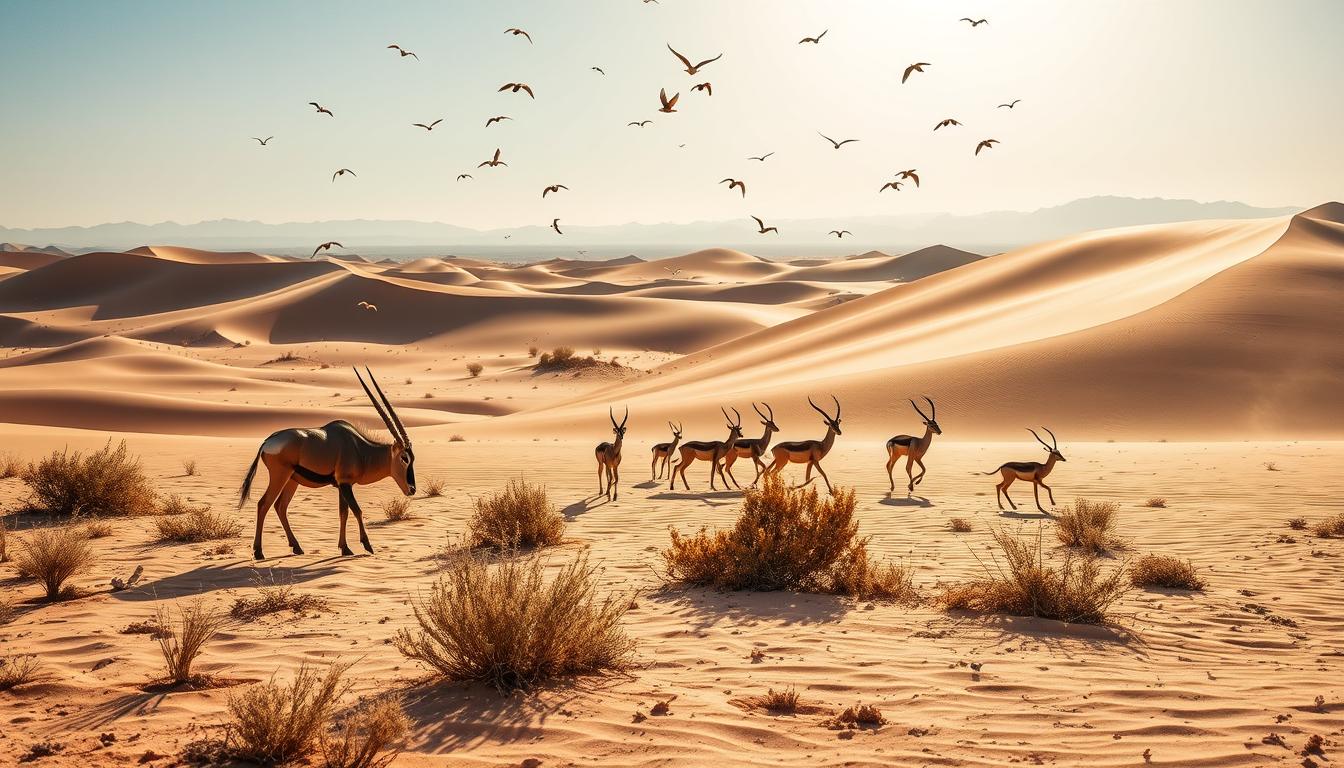
When you step into the RAK Desert Wildlife at dawn, it feels like entering a live story. The stars of this setting are the Arabian oryx and the Arabian gazelle. They are key to understanding what animals you’ll see on a Dune Buggy Tour in the desert.
Behavior and identification tips from your buggy seat
Look out for the Arabian oryx from your buggy. It stands out with its white coat against the desert sand. It has dark marks on its face and both males and females have long, straight horns. At dawn, they usually stand in the breeze, showing their side.
The Arabian gazelle seems smaller and has a warmer color. Its body is in shades of tan, with a light stripe on its side, and its horns curve gracefully. Gazelles are quick and tend to run away sooner than oryx. This helps you tell them apart during your tour.
Where you’re most likely to find herds during a Dune Buggy Tour
After it rains in winter, look for new green areas on the low dunes by gravel plains. This is where oryx and gazelles like to eat. Then, they move to groups of acacia or ghaf trees for shade. In cooler times, search for signs of their night feeding places.
Experienced guides slow down near certain spots that keep moisture, like gentle valleys and slopes. These areas attract animals, making them easier to spot on your tour.
Conservation status and local protection efforts
The Arabian oryx is a success story of wildlife coming back in the region after almost dying out. Safe areas and careful planning helped their numbers grow again. To help, they got health care and their movements are tracked.
Efforts to protect the Arabian gazelle focus on keeping their home safe, stopping illegal hunting, and looking after their gene pool. In the UAE, efforts include working with tour groups to limit where buggies can go. This keeps the animals from getting too stressed, while still letting people see them.
| Species | Key ID Traits | Typical Behavior | Likely Tour Locations | Conservation Focus |
|---|---|---|---|---|
| Arabian Oryx (Oryx leucoryx) | White coat, dark facial markings, long straight horns (both sexes) | Calm stance on ridgelines at dawn; small cohesive groups | Low dune crests near gravel plains; acacia and ghaf edges | Reintroduction, reserve protection, monitored releases |
| Arabian Gazelle (Gazella arabica) | Tawny to fawn, pale flank stripe, ringed slightly lyre-shaped horns | Skittish, agile bounds; early flushing from open ground | Post-rain grassy patches; leeward swales with seed heads | Habitat safeguards, anti-poaching, genetic management |
| Tour Context | From-buggy viewing, optics ready, quiet approach | Slow speeds at dawn/dusk to read signs and tracks | Border zones of dunes and plains favored by herds | Operator guidelines to protect Dune Buggy Tour Wildlife |
Keep an eye out for these animals while you enjoy your tour. It’s important to watch carefully and respect the desert’s wildlife. This makes your trip exciting and helps protect these wonderful creatures.
Elusive Predators: Sand Foxes, Caracals, and Desert Wildcats
Walking through dune corridors, the silence is your ally. On a guided RAK Wildlife Tour, the engines are kept low. This way, you can interpret the sand as if it’s a map. These animals stick to the shadows, but their presence is marked along each ridge and wadi. You’ll notice little hints, quick movements, and moments of waiting that bring real RAK Animal Sightings across Desert Wildlife RAK to life.
Tracks, scat, and signs to recognize on sandy trails
Keep an eye out for the Arabian red fox, also known as the sand fox. You’ll recognize it by its small oval footprints and narrow heel pad. Spotting scat that contains hair and tiny bones means it’s recently fed. The tracks of a caracal show a bigger, round pad without claw marks, as they retract their claws. Desert wildcats have compact, cat-like tracks that you can see in straight lines along dune sides and on slopes with plants.
Look around wadi banks, sheltered dune faces, and areas with thickets where small birds and rodents like to eat. On a RAK Dune Buggy Tour Wildlife adventure, the guides will teach you how to interpret the depth of footprints, the distance between them, and the direction of the wind. This helps judge how fresh the tracks are and guess where the animals might go next.
Twilight and night-time activity patterns near dune corridors
As the sun sets and rises, and it gets cooler, animals start to become more active. Your chances are better on cool, quiet nights, especially from October to April. You’ll move slower, with the team working to keep lights low, reduce sound, and avoid disturbing the hot spots.
You’ll likely make rounds near the openings of wadis and across low passes that animals use as paths. This is when you really see Desert Wildlife RAK in a new light. Your RAK Wildlife Tour becomes more interesting as you move carefully and look around slowly.
Photography advice for low-light RAK Wildlife Tour encounters
Choose fast lenses with apertures like f/1.8–f/2.8 and only increase your ISO a bit. Turn on image stabilization, focus ahead on where you expect animals, and rest your camera on a bean bag for stability. Use silent or electronic shutter modes to keep things quiet.
Don’t use a flash to avoid scaring the animals and causing red-eye; a red-filtered light is okay if your guide says it’s alright. For tips on driving safely and spotting animals without causing them stress, check out this desert buggy guidance. It’s full of good advice for RAK Animal Sightings.
| Predator | Track Signature | Prime Sign Zones | Best Windows | Quiet Approach Tips |
|---|---|---|---|---|
| Arabian Red Fox (Sand Fox) | Small oval prints, narrow heel; scat with hair/bones | Dune corridors, wadi banks, rodent runs | Dusk, dawn; calm cool nights | Idle engine, coast on declines, scan crosswind |
| Caracal | Larger round pad, no claw marks | Leeward slopes with cover, low saddles | Crepuscular peaks in cooler months | Park, wait in shadow, pre-focus on funnels |
| Desert Wildcat | Compact cat prints in linear trails | Dune edges, brushy hummocks, bird-rich pockets | First light and last light | Red-filtered light only if allowed, shoot silent |
Mixing patience with quiet, sightings of RAK animals become spontaneous and effortless. Choosing paths that work with the wind and land, your RAK Dune Buggy Tour Wildlife experiences grow quietly. They unfold step by step within the larger rhythm of Desert Wildlife RAK.
Birdlife Along the Dunes: Raptors, Larks, and Migratory Visitors
As you ride along ridgelines, warm air lifts you, turning the sky into your guide. On a RAK Wildlife Safari, you’ll learn lots about Desert Wildlife RAK. Make short stops on windy crests to see clearer and find animals during your Dune Buggy Tour Wildlife adventure.
Common raptors you may see soaring over slipfaces
Thermals help kestrels hover steadily over the land between dunes. In the cooler months, look up to see steppe eagles and booted eagles flying high. Buzzards stand on the look-out from lower spots. Pallid harriers fly low over the bushy areas as you explore quieter dune paths.
The morning light is perfect for spotting different birds. Always have your 8x–10x binoculars ready. A quick look can tell you a lot about a bird by its shape, wings, and tail.
Songbirds and larks adapted to arid environments
Desert and crested larks prefer sandy areas with some bushes, often singing at daybreak. Thick-billed larks search for seeds in gravelly spots. Wheatears bounce around fences, stones, and posts, looking out for bugs.
Stop during your wildlife drive near quiet wadis to listen to their songs. Your guide will pick places that don’t disturb nesting areas, making sure your visit has little impact on the Desert Wildlife RAK.
Migratory windows that boost RAK Wildlife Safari sightings
Between November and March, birds from the Palearctic region visit wadis full of plants: warblers and pipits are common. Spring and fall might also bring unexpected raptors, carried by the wind.
Plan to stop for birdwatching early in the morning. The wind on higher ridges helps you see better and lets birds glide longer. This makes your RAK Wildlife Safari more enjoyable and increases your chances of great finds.
| Bird Group | Likely Species | Best Time | Typical Behavior | Where to Look | Gear Tip |
|---|---|---|---|---|---|
| Raptors | Common kestrel, Steppe eagle, Booted eagle, Long-legged buzzard, Pallid harrier | Early morning; winter peak for eagles | Soaring on thermals, hovering, low quartering | Slipfaces, ridge lift, scrubby interdunes | 8x–10x binoculars to beat heat haze |
| Larks | Desert lark, Crested lark, Thick-billed lark | Sunrise for song activity | Perch-and-sing, ground foraging | Open sand, gravel fans, sparse shrubs | Compact scope for distant singers |
| Wheatears | Desert wheatear, Isabelline wheatear | Morning and late afternoon | Short sallying flights, perch scanning | Fence lines, rocks, low posts | Fast shutter speeds for darting moves |
| Migrants | Warblers, Pipits, Passing raptors | Nov–Mar; spring and autumn peaks | Foliage gleaning, ground feeding, glide-bys | Vegetated wadis, lee of dunes | Lightweight tripod for stable views |
Reptiles and Small Wonders: Geckos, Agamas, and Desert Invertebrates
When you step into RAK Desert Wildlife, you see creatures that move with care and live in the heat. These animals, found during a RAK Buggy Tour, love quiet places, shade, and untouched land. Every stop lets you see the amazing animals of Desert Wildlife RAK closely.
In the morning, spiny-tailed lizards sunbathe at their homes’ entrances. Desert agamas show off by doing quick “push-ups” on rocks. At night, geckos move quietly, leaving only small traces behind. These sightings are a big part of Wildlife You May Spot During Your RAK Dune Buggy Tour. It’s best when you slow down and look around carefully.
Heat-adapted behaviors to watch for during midday rides
Watch lizards raise their bodies off the hot ground, a trick to stay cool. You might see agamas using their tails to scare enemies or talk to other agamas. Many hide in the shade or burrows to escape the heat. These actions show how Desert Wildlife RAK lives during the hot hours.
When the sand gets very hot, stop near some plants and look at the shadows. If you’re very still, animals will start to move again. This way, you can see more animals from the RAK Buggy Tour during quiet times.
Safe viewing distances for snakes and scorpions
Always keep your distance from snakes, like sand or horned vipers, which live in sandy places. It’s rare to see cobras in the dunes, but don’t try to touch any snake. Wear shoes that cover your entire foot, and use a red light at night to see better and not startle animals.
Stay a few steps away from scorpions and don’t put your hands under rocks or plants. Your guide might ask you to stay in the vehicle. This keeps both you and the animals safe. By keeping distance, the animals you see during the RAK Dune Buggy Tour won’t feel scared.
Macro photography tips for tiny desert specialists
To photograph beetles, ants, and mantids well, use a macro lens between 60–105 mm. Turn off your car to avoid shaking, and use natural, soft light. Don’t step on the ground too hard or damage plants. These areas are important for the animals of Desert Wildlife RAK.
Try to make the background simple and wait for the wind to stop. Moving slowly and carefully can give you clear pictures and show real animal behaviors. This makes your collection of RAK Buggy Tour Animals and the Wildlife You May Spot During Your RAK Dune Buggy Tour even better.
Wildlife You May Spot During Your RAK Dune Buggy Tour
Wildlife You May Spot During Your RAK Dune Buggy Tour changes with the light, heat, and wind. In the early morning, you might see Arabian gazelles on the plains. In conservation areas, you could find Arabian oryx eating young plants. Guides from Desert Buggy Rental Dubai use tracks and recent rains to find good spots for seeing animals in RAK.
Kestrels fly above the dunes as the sun comes up, and desert larks look for seeds and bugs. In the colder months, you can see steppe eagles and pale wheatears. This adds excitement to watching wildlife during the RAK Dune Buggy Tour. When it gets hot, desert agamas and geckos show up on rocks and in cool places. Their quick movements are easy to spot on the light sand.
Evening time is good for seeing sneaky animals. Arabian red foxes move along the dunes, and hedgehogs look for food near water streams. The next morning, the sand’s marks tell stories of scorpions, gerbils, and beetles. These marks help decide where to go next on your RAK Wildlife Tour.
For families and people who like taking pictures, the Morning Desert Safari is great for seeing large animals and birds. The Evening Desert Safari is better for spotting predators and geckos because it’s cooler. Move slowly, keep a good distance, and be quiet. This way, you’ll see more animals in RAK without bothering them.
Your tour might change based on new animal tracks, shifting sand, and plants growing after it rains. This could lead you to unexpected places. Paying attention to these signs makes even common animals seem exciting. Each stop adds more sightings to your RAK Dune Buggy Tour Wildlife list.
Choosing the Right Experience: Dune Buggy Tour Wildlife vs. Other Desert Activities
You want the best view of Ras Al Khaimah’s living desert without missing the thrill. Match your pace to the land, and time your ride to when animals move. The right mix helps you see more while keeping the desert calm and natural.
Comparing Dune Buggy Tours, Quad Biking Tours, and Camel Ride spotting chances
Dune Buggy Tour Wildlife offers a broad view. In a single loop, you can glide over dunes, cross flat lands, and zip by dry riverbeds. This variety increases your chances of spotting different animals.
Quad Biking Tours offer agility on winding paths. A gentle pace keeps engines quiet, boosting animal sightings. But, if speed rises, the noise might scare away shy creatures.
A Camel Ride lets you move silently and close to the ground. It helps you spot animal tracks, fresh droppings, and small movements. Songbirds often stay put, letting you observe them closely.
Morning Desert Safari vs. Evening Desert Safari for animal activity
During a Morning Desert Safari, the cool air encourages animals and birds to come out. You might see oryx and gazelle feeding and birds basking in the sun. The light is perfect for photography at this time.
In the Evening Desert Safari, predators and reptiles become active. When it gets cooler, foxes roam the dunes, and insects buzz around. As shadows grow, be ready to capture the movement in the fading light.
Combining sandboarding and Desert BBQ Dinner with wildlife viewing
Try sandboarding near plants and then relax. Larks and wheatears often watch from these spots. If you stay back, their natural behavior continues.
Have a Desert BBQ Dinner at twilight. Look for fox shapes against the sky and listen for nocturnal birds. Desert Buggy Rental Dubai can organize Dune Buggy Tours, Quad Biking, or Camel Rides. This way, you enjoy both Morning and Evening Safaris to the fullest.
Pro Tips for Ethical and Effective RAK Wildlife Tour Sightings
Want to see wildlife up close but still be kind to them? When you’re on a RAK Wildlife Tour or Safari, being gentle on the gas and making smart moves help keep the RAK Desert Wildlife safe. Plus, you boost your chances of spotting animals you’ll never forget.
Noise, speed, and route etiquette to minimize disturbance
Keep engine noise low near green areas and wadis. Maintain a steady pace as you near ridgelines. Don’t charge straight into an animal’s sight. First, stop and look over the slope, then move on if it looks okay.
Stick to the paths to avoid harming the habitat or getting stuck. This way, your Safari stays low-key and peaceful, perfect for spotting wildlife naturally across the dunes.
What to pack: optics, lenses, and hydration for the UAE desert
Bring binoculars with 8x–10x magnification for quick looks around. Have a 70–200mm or 100–400mm telephoto lens for bigger animals and birds, and a fast prime lens for low light. Don’t forget extra batteries and memory cards—RAK’s heat zaps power quickly.
Drink lots of water—2–3 liters per person. Wear clothes that protect you from the sun, a big hat, and strong sunscreen. Packing a simple first-aid kit keeps you safe and focused during your RAK Wildlife Tour.
Safety protocols and Leave No Trace principles
Always buckle up and wear helmets when you need to. Listen to your guide and stay a safe distance from animals to not scare them. Throw away your trash properly and don’t use soap in natural water spots after it rains.
Leave rocks and logs alone—they are homes for small creatures. Being thoughtful on your Safari helps protect tiny homes and makes wildlife sightings better and more natural. Desert Buggy Rental Dubai is ready to help 24/7 at +971 52 440 9525 and [email protected]. They can guide you on when to go for the kindest way to see animals.
| Goal | Do This | Avoid This | Why It Matters |
|---|---|---|---|
| Calm approach to wildlife | Low revs near wadis; steady speed before ridgelines; stop and glass | Cresting fast into lines of sight; sudden throttle bursts | Prevents flight responses and improves RAK Animal Sightings |
| Habitat protection | Stay on existing tracks | Cutting new paths across dunes | Reduces fragmentation in RAK Desert Wildlife zones |
| Sharp visuals | 8x–10x binoculars; 70–200mm or 100–400mm; fast prime | Single lens for all scenarios | Keeps your RAK Wildlife Tour versatile from dawn to dusk |
| Heat resilience | 2–3L water per person; UPF layers; SPF 50+; spares for power | Minimal water; no sun gear; one battery | Protects health and uptime in RAK Desert Wildlife conditions |
| Ethical presence | Pack out waste; leave rocks/wood in place | Littering; moving cover objects | Sustains microhabitats vital to a healthy RAK Wildlife Safari |
| Operational safety | Seatbelts; helmets as required; follow guide distances | Unsecured riders; drifting near animals | Prevents incidents and preserves natural behavior |
Conclusion
You came to the dunes to experience nature’s untouched beauty, and Ras Al Khaimah does not disappoint. It offers everything from the Hajar foothill margins to wind-shaped wadis. Here, a variety of RAK Desert Wildlife waits to be discovered.
On your trip, you might see Arabian oryx and gazelles. Then, look up to spot raptors, larks, and migrating birds. On the ground, you’ll find fox tracks and geckos moving across the warm stones. This diversity is what makes RAK Dune Buggy Tour Wildlife so special.
When you go matters a lot. Aim for dawn or dusk to see the most activity and enjoy cooler temperatures. Keep your ride slow and quiet, and use gentle lighting to protect these desert dwellers. Try to cover different areas like dunes, gravel plains, and wadis to see more wildlife. Being patient and calm helps you have more meaningful encounters.
What you want out of the experience is important too. Choose a buggy route for wide scans of the area and to find birds and herds. Or, go for a Camel Ride to quietly observe more timid animals. Morning and Evening Desert Safari trips offer fun activities like sandboarding or a Desert BBQ Dinner, all while keeping the desert’s well-being in mind.
Whichever way you explore, doing so thoughtfully protects the wildlife. This ensures future tours in RAK remain just as exciting and wild. Are you ready to plan your adventure with careful timing and varied terrains?
Get in touch with Desert Buggy Rental Dubai by calling +971 52 440 9525 or emailing [email protected]. They offer 24-hour booking support to help you find the perfect time and route. This way, you’re guaranteed an unforgettable encounter with RAK Desert Wildlife.
FAQ
What wildlife can you expect on a RAK Dune Buggy Tour?
During your tour, you might see Arabian gazelle and Arabian oryx. When the sun sets, keep an eye out for the Arabian red fox near narrow valleys. You’ll also see birds like kestrels, larks, and steppe eagles.
Reptiles come out when it’s warm, including desert agamas and geckos at night. Dawn often reveals tracks of beetles, gerbils, and scorpions. These animals show the diverse life in the RAK Desert.
When is the best time for RAK Animal Sightings during a buggy tour?
The best times are dawn and dusk, from October to April. Cooler weather brings animals out to feed and birds to fly on air currents. Summer’s midday heat makes animals seek cool places.
Where are you most likely to see Arabian oryx and Arabian gazelle?
Look at the edges of low dunes and grassy spots after it rains. You might see oryx at sunrise and gazelles on the move in open areas. Guides know where to go for the best sights.
How can you identify oryx and gazelle from the buggy?
Oryx are white with a dark mask and straight horns. Gazelles are smaller, light brown, and have curved horns. Spotting droppings and footprints helps too.
What predators live in the dunes and how can you notice them?
Arabian red fox, caracal, and desert wildcat roam around, mostly during twilight. Their signs include the fox’s scat, the caracal’s paw prints, and the wildcat’s linear prints. Staying quiet can increase your chances to see them.
Any tips for photographing wildlife on a moving or parked buggy?
Use lenses with wide apertures, adjust ISO as needed, and stabilize your camera on the vehicle. Avoid flash lights; use only red-filtered ones approved by your guide. Focus where animals are likely to appear and use a quiet shutter.
For close-ups, turn off the engine to keep the camera steady.
Which birds commonly soar over RAK’s dunes?
Kestrels, steppe eagles, and other birds of prey are common here. You might also see desert and crested larks. Early mornings are perfect for bird watching during your tour.
What reptiles and small creatures should you watch for?
Look for spiny-tailed lizards and desert agamas during the day. Geckos are active at night. Always wear sturdy shoes and use a red-mode flashlight for safety.
How do seasons and weather affect RAK Dune Buggy Tour Wildlife sightings?
Cooler months and after the rain are the best times for seeing animals. Midday heat and wind make them hide for comfort.
What are the best practices for ethical wildlife viewing in Ras Al Khaimah?
Keep to the paths, reduce noise, and use binoculars. Avoid places where animals have young, keep the desert clean, and stay quiet. These tips will also make your wildlife safari better.
How do Dune Buggy Tours compare with Quad Biking Tours and Camel Rides for wildlife?
Buggy tours quickly show you different places. Quad biking needs you to be careful about noise. Camel rides allow for closer looks at birds and tracking. Choose based on what you want to see.
Morning Desert Safari or Evening Desert Safari—which is better for animal activity?
Mornings are great for watching herbivores and birds. Evenings are when predators and geckos are more active. For the best experience, try both and add other activities.
What should you pack for a wildlife-focused buggy tour?
Bring powerful binoculars, a versatile zoom lens, and a prime lens for low light. Also, carry extra batteries, memory cards, plenty of water, sun protection, a hat, sunscreen, and a small first-aid kit.
How do guides from Desert Buggy Rental Dubai improve wildlife encounters?
Guides know where to find animals by reading signs and choosing the best paths. They turn off engines to not disturb animals and help you see more wildlife. Contact them for more information and bookings.
Is it safe to stop for snakes or scorpions during a tour?
Keep a safe distance from snakes and scorpions. Your guide will tell you when it’s safe to get out. Wear protective shoes and use a red light at night to see without disturbing wildlife.
Can families and photographers tailor a RAK Wildlife Safari?
Yes. Combine morning and evening safaris for a full experience. Add activities like sandboarding and a desert BBQ for more fun and chances to see animals.
What route etiquette helps protect RAK Dune Buggy Tour Wildlife?
Drive slowly, use binoculars to check the way, and stay on marked paths. These practices help keep the animals safe and let you see more wildlife.
Do you need special permits or lights for night or twilight viewing?
Always follow your tour operator’s advice about lights at night. Some places limit night access to protect animals. Your guide will know where you can go safely and legally.
How does the Hajar foothill environment influence RAK Wildlife Tour sightings?
The cooler Hajar foothills with their water corridors and vegetation attract many animals. Different areas bring different animals, like gazelles to stabilized dunes and birds to flats.
What Leave No Trace practices should you follow on a RAK Wildlife Safari?
Take all trash with you, keep quiet, and follow your guide’s advice for safety. These actions help protect the desert and its inhabitants.
Categories
- Desert Buggy Rental (2,089)
- Dune buggy (4)
- Quad Bike Rental (1)
- Desert safari (1)
- Hot air ballon (2)
- dirt bike (4)
- Uncategorized (4)
Recent Post



Tags
400cc bike specifications All-terrain vehicle risks Balloon Ride Dubai BBQ Desert Dinner Big budget filmmaking Budget Travel Dubai Car prices in Dubai Choosing colors for desert Desert excursion with kids Desert Safari time recommendations Dress code in Dubai desert Dubai luxury car discounts Dubai Mall activities Dubai road tax Dubai winter Safari experience Dune Buggy Capacity Dune buggy vs quad bike packages Dune movie Emirates Airlines Evening safari dubai packages Evening safari tours Exciting Off-Road Safari Exclusive dune buggy prices Exiting a train with a stroller Exotic Car Adventures Extreme 4x4 off-roading Flying with Infant's Stroller Hollywood inheritance Hollywood Legacy Hummer Desert Safari Dubai Morning safari abu dhabi packages Morning safari sharjah tours Off-road adventure clothing Off-road dune buggy rentals Paul Atreides Private desert safari dubai experience Quad bike combo Dubai experience Quad biking abu dhabi Religious inspiration Safari without Dune Bashing Sci-fi gaming Swakopmund Desert Adventures Tourist attractions in Abu Dhabi Vehicle depreciation in Dubai Young adult literature