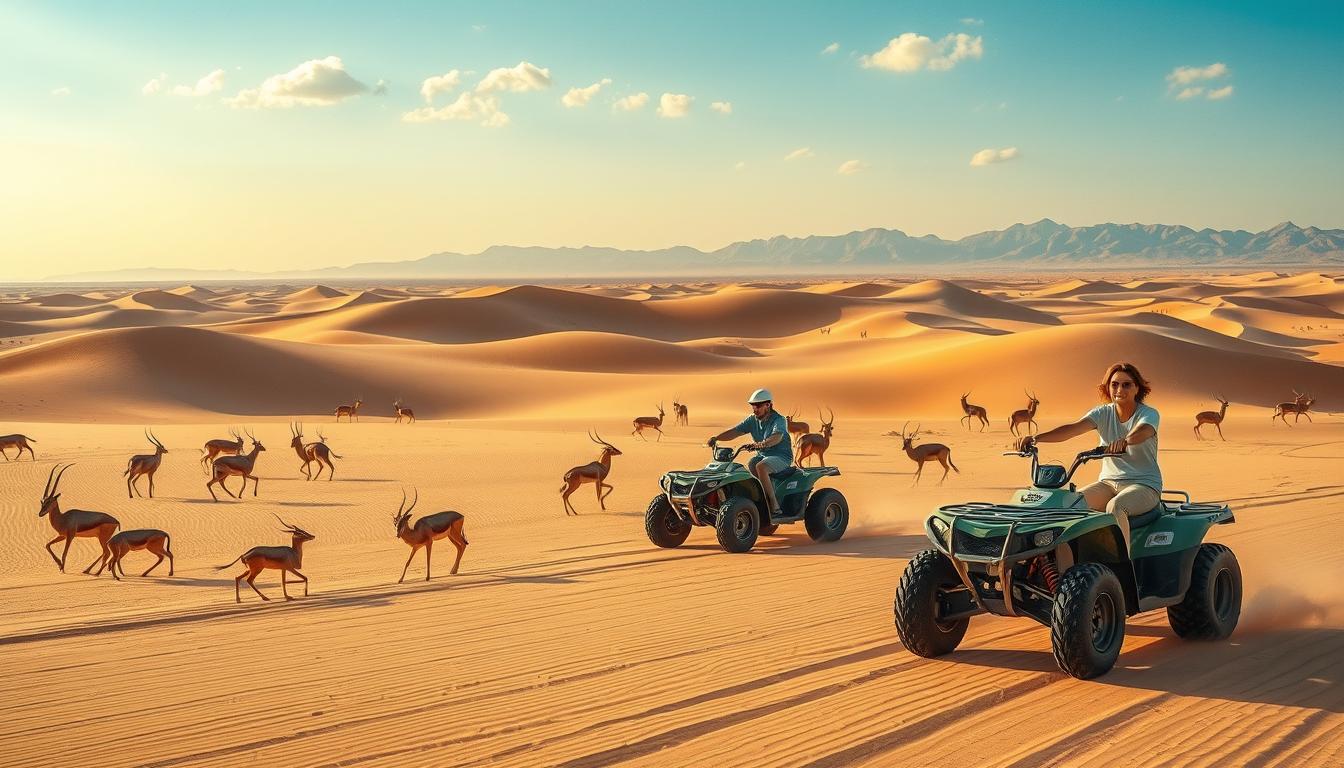
You feel the engine’s rumble through your gloves on. The red dunes send back a warm whisper. Right before you push forward, a lark takes flight from a dune, sharpening your focus. This moment unveils the wildlife of Sharjah in quick, true glimpses—like soft tracks in the sand, a swift tail movement, or a shadow gliding in the air.
Quad biking here is more than seeking thrills. It’s about understanding how the desert communicates. Through rippled dunes, gravel plains, and secret valleys, you encounter wildlife that thrives on precise timing and sheer will. With Desert Buggy Rental Dubai, your journey transforms into a dynamic guide. Patience here is rewarding, and any hill might unveil a memory to hold onto.
This guide helps you observe more while causing less disturbance. It offers insights on what wildlife you might see while quad biking in Sharjah, the best times for spotting them, and ways to maintain a good distance. It also shares tips on how to explore responsibly—like reducing speed near animals, taking gentle turns, and capturing pictures without harm—ensuring the desert’s health as you discover it.
Every small sign here is significant. Be it a newly dug burrow, a shifting sand pattern, or distinct bird tracks. Paying attention shifts the wildlife from mere whispers to vivid presence. This way, your ride evolves into a shared journey, not just a dash through nature.
Key Takeaways
- Riding quietly and patiently brings Sharjah’s wildlife into view.
- Different terrains like dunes, plains, and valleys are home to unique desert creatures.
- Knowing what wildlife you can see helps in planning your travel wisely.
- Smooth control of your quad bike helps protect the living spaces and improves your wildlife encounters.
- Searching for tracks, burrows, and perching spots helps spot animals more easily.
- Desert Buggy Rental Dubai encourages aligning your adventure with local seasons and respectful practices.
Sharjah’s Desert Ecosystems and What Makes Them Thrive
You journey through living scenes shaped by wind, warmth, and rare rain showers. On your ride, you uncover the patterns that keep Sharjah wildlife flourishing. You learn how desert animals in Sharjah make do with little water and wise timing. This understanding deepens your Quad biking wildlife adventures, letting you see desert animals everywhere.
Unique habitats across dunes, gravel plains, and wadis
Mobile red dunes near Al Faya shift with the wind. Their slopes shelter reptiles and small mammals. Fringe-toed lizards glide through the sand, while sabkha edges and rocky areas provide sunning and hiding spots for animals. On firm gravel plains, tough shrubs like Haloxylon and Acacia stabilize soil and support insects. These insects then attract birds.
After rains, wadis collect water, sparking life. Ephemeral flowers bloom, drawing beetles, butterflies, and songbirds. This varied landscape is perfect for Quad biking, presenting Sharjah’s wildlife in brief, vibrant glimpses along quiet paths.
How seasonal temperatures influence animal behavior
Summers get hot, exceeding 40°C, making most creatures active at dawn and dusk. At first light, you may see tracks leading from burrows, then quiet as the day heats up. In winter, from November to March, cooler weather prompts more animal movement, aiding in the spotting of raptors and ground feeders.
After it rains, seeds sprout, causing insect numbers to rise. This attracts birds like larks and wheatears. It’s during these times that desert animals in Sharjah are easier to see, showing off their daytime activities from trails.
Conservation areas and protected zones you should know
Sharjah maintains special areas and viewpoints to ensure both access and protection. Areas around Wasit Wetland Centre protect migratory paths. Paths near Mleiha Archaeological Centre keep riders from delicate dunes and green wadis.
Using marked paths lessens stress on desert life and preserves the soil. This careful way aids in creating unforgettable Quad biking moments while safeguarding the fragile ecosystems that support desert life in Sharjah.
| Habitat | Defining Features | Typical Activity Window | What You May Observe | Rider Tip |
|---|---|---|---|---|
| Red Dunes (Al Faya) | Shifting sand, sheltered slipfaces | Dawn, dusk in summer; extended daytime in winter | Fringe-toed lizards, sandfish tracks, fox prints | Scan leeward slopes for fresh burrows after light winds |
| Gravel Plains | Firm ground with Haloxylon, Acacia | Cool-season midmornings; evenings year-round | Larks foraging, beetle trails, raptor perches | Pause near shrubs to catch subtle bird movement |
| Wadis | Rain-fed channels, ephemeral blooms | Following rainfall events | Wheatears, butterflies, rodent runs to cover | Ride slowly along edges to reduce disturbance |
| Sabkha Margins & Rock Outcrops | Crusted flats, sun-warmed stones | Sunny winter mornings | Basking reptiles, small mammal burrows | Use soft throttle near rocks to avoid startling fauna |
| Protected Corridors | Marked routes, signage, patrol oversight | All seasons per local guidance | Consistent sightings with minimal impact | Follow posted signs to help safeguard Sharjah desert animals |
Wildlife You Can Spot While Quad Biking in Sharjah
As you ride into the soft light and open dunes, you start to see a story unfold. Tracks, shadows, and quick movements all around you hint at Sharjah’s rich wildlife. Moving quietly and patiently through the sand reveals signs that guide your next stop.
Iconic Sharjah desert animals to watch for on trails
Look closely at low burrow entrances and you might spot spiny-tailed lizards (Uromastyx aegyptia leptieni) sunbathing. Sandfish skinks (Scincus scincus) might also be seen diving into the sand near dune slipfaces. Near dune bases, Arabian red foxes (Vulpes vulpes arabica) may be spotted moving efficiently in a straight line.
Keep an eye out for kestrels gliding on air currents, and larks and wheatears taking brief rests between searching for food. These desert creatures are often the stars of quad biking adventures, especially when the heat haze lifts, and the desert becomes clearer.
Best times of day for quad biking wildlife sightings
Early mornings offer cool air and shadows that make spotting animals easier. The last 90 minutes of daylight are also great for observing wildlife as many animals come out to eat. During cooler months, mid-mornings can reveal reptiles sunning themselves near rocks and burrows.
Making short stops during these times helps keep the noise down and lets the desert life show itself. This careful approach means you can see more wildlife on your quad bike without scaring them away.
Reading tracks, burrows, and other desert animal signs
Looking at the desert sands can give you clues, like the sidewinder snakes’ trails or tiny lizard footprints near slipfaces. Fox tracks, with their four toes and oval pads, often lead along the edges of dunes. Look for paired impressions in the sand, signs of jerboa hops, sometimes with a little tail drag.
Burrows with round entrances usually house rodents, while Uromastyx lizards live in larger, oval-shaped dens marked by scattered scat. Look on the slopes sheltered from the wind for creatures seeking shade, and on fence lines for birds of prey. Turning off your engine occasionally might let you hear the small sounds of desert life, boosting your chances of spotting something special.
| Species/Sign | Where to Look | Prime Viewing Window | Spotting Tips |
|---|---|---|---|
| Spiny-tailed lizard (Uromastyx aegyptia leptieni) | Burrow mouths on sunlit slopes | Cool-season mid-mornings; late afternoon | Watch for stout tail and oval den edged with scat |
| Sandfish skink (Scincus scincus) | Soft sand near slipfaces | Morning warmth after sunrise | Look for rapid “swim” dives and fine, wavy surface trails |
| Arabian red fox (Vulpes vulpes arabica) | Dune bases and wadi margins | Sunrise; last 90 minutes before sunset | Seek straight-line trots and four-toed prints with oval pads |
| Hares (Lepus capensis/arabicus) | Open flats between low shrubs | Dawn and dusk | Identify sprint tracks with long strides and sharp turns |
| Kestrels, larks, wheatears | Fence lines, telegraph poles, shrub tops | Early morning; late afternoon | Cut the engine, scan perches, and follow short flights |
With careful scanning and gentle handling, quad biking in Sharjah turns into an exciting search. You’ll learn to map the desert’s wildlife through their prints, resting spots, and homes. This turns fast rides into thoughtful explorations, offering close encounters with nature that honour the desert’s rhythm.
Reptiles of the Red Sands: Lizards, Geckos, and Snakes
You ride into quiet dunes where the sun warms the sand. Life hides in plain sight. These moments are perfect for spotting wildlife while quad biking. Keep your speed low to catch the subtle movements of Sharjah desert wildlife.
Sandfish skinks and fringe-toed lizards near slipfaces
At the slipfaces of dunes, you might see the sand move. This is where sandfish skinks “swim” under the surface. Their scales and wiggling help them disappear quickly. You might also catch fringe-toed lizards speeding across the sand, thanks to their unique toes.
Slow down and look at the lower slopes. These quick glances can turn into unforgettable moments. They add excitement to your ride and deepen your understanding of the desert’s wildlife.
Spiny-tailed lizards basking on rocky outcrops
Spiny-tailed lizards are found on rocky ground. They’re best seen in the mid-morning during cooler months. These lizards are easy to spot due to their distinctive tails and poses.
Keep your distance and stay quiet. This way, you can watch them naturally without disturbing them. Being patient lets you enjoy wildlife sightings responsibly.
How to safely admire desert snakes from a distance
Snakes like sand boas stay hidden and are less active during the day. If you see one, stop and let it move away. Keep a safe distance, keep noise low, and don’t try to touch them.
Always wear boots if you get off your bike. Don’t put your hands in hidden spots. Stick to marked paths to keep stress off the wildlife. This ensures your encounters are safe for you and the reptiles.
Birdlife Over the Dunes: Raptors and Desert Songbirds
As you look up at the light sky, the desert starts to reveal its secrets. Raptors soar on the warm breezes, and little songbirds jump from one bush to another. These moments deepen our connection to Sharjah’s wildlife and turn Quad biking into a peaceful observation of movement and light over the sand.
Falcons, kestrels, and resident raptors on thermals
Keep an eye out for kestrels as they hover, hunting over the land. Sometimes, you might see a falcon swooping down from a thermal or a dune’s shelter. Also, during migration, look for harriers and ravens soaring or patrolling above. Remember to stay back to keep the wildlife of Sharjah’s desert safe and ensure your sightings don’t disturb them.
Larks, wheatears, and migratory visitors in cooler months
When it’s cooler, look for larks pecking at seeds on the ground. You’ll also see desert wheatears bobbing their tails around fences and bushes. Sudden rains bring insects, which attract wagtails and pipits. These changes make wildlife sightings while Quad biking stand out and help us notice the small shifts in Sharjah’s natural world through the seasons.
Spotting techniques and ethical birdwatching while riding
Slow down when you’re near plants and look around at poles, posts, and the tops of dunes. Turn off your engine and listen carefully; larks’ songs might give their locations away. When taking pictures, move slowly, let the birds get used to your presence, then take your shot. Stay at least 50 meters away from birds, avoid using recordings to attract them, and never chase them. This helps keep Sharjah’s desert wildlife safe.
For more tips on enjoying the desert’s birdlife and respecting their migration patterns, check out this quad-biking guide. This will enhance your experience of watching animals in Sharjah, focusing on quiet and careful observation.
Mammals on the Move: Foxes, Hares, and Desert Rodents
As you explore, the dim light and long shadows reveal tracks across the sand. They map the way to Sharjah’s quiet dunes and gravel plains. This is where the adventure to see Wildlife You Can Spot While Quad Biking in Sharjah begins.
Keep an eye out for signs of life—footprints, smells, and hidden homes. These hints let you see the desert’s animals. By controlling your speed, you make these encounters safe and memorable.
Arabian red fox behavior at dawn and dusk
Near camps, look where food remains attract bugs and rodents. You might see an Arabian red fox, alone or with a partner, exploring at dawn or dusk. Search for their distinct scent, perfect footprints, and droppings with fur or seeds.
Approach from the side, not directly, and slow down. This way, the foxes won’t get scared. Doing this allows for peaceful sightings.
Hares, jerboas, and nighttime activity around dunes
Hares sprint across open ground, hiding near bushes. You can tell they were there by their droppings and zigzag tracks. At night, jerboas leave behind unique footprints and tiny tail marks on the sand’s surface.
Look around dry riverbeds and rocky areas for signs of rodents. These places also draw in owls and foxes. It’s a chance to see a variety of Wildlife You Can Spot While Quad Biking in Sharjah at one spot.
Minimizing disturbance during quad biking animal encounters
Slow down near areas where animals are active. Turn off bright lights if animals look directly at them. Remember, don’t feed animals and let them choose their path away. Keep the engine running quietly to not disturb the peace.
If unsure, just stop and wait. This respect for their space leads to more enjoyable encounters and protects the animals for future visitors.
| Species/Sign | Where to Look | Best Time | Track or Clue | Respectful Approach |
|---|---|---|---|---|
| Arabian red fox | Track edges, camp perimeters, gravel plains | Dawn and dusk | Musky scent, small paw prints, scat with fur/seeds | Slow to idle, keep lateral distance, avoid spotlighting |
| Desert hare | Open flats near low shrubs and sparse grasses | Late dusk to early night | Zigzag prints, fresh pellets | Maintain steady line, do not chase, pause if it stops |
| Jerboa | Leeward dune faces and calm sand pockets | Night, especially after windless evenings | Two-footed hops with a central tail drag | Dim lights, pass wide, avoid lingering over burrows |
| Rodent burrow fields | Gravel plains and wadi rims | Night into early morning | Clustered holes, fresh spoil mounds | Skirt the perimeter, reduce noise, no off-route stops |
Responsible Quad Biking: Safety, Ethics, and Wildlife Respect
Riding carefully makes your Quad biking trip rewarding. In Sharjah’s desert, thinking about your actions helps protect the sand dunes. It also makes sure animals stay calm around visitors.
Maintain safe distances and low noise near sightings
See something move? Slow down to a walk or turn off your engine within 30–50 meters. Approach hilltops quietly since animals might be near by. Always avoid scaring animals with loud noises or quick moves.
Behaving this way keeps your encounters with animals peaceful and short. It also lessens stress on Sharjah’s desert wildlife. This lets you see animals behaving more naturally.
Stay on marked routes to protect fragile habitats
Use the paths provided to avoid harming animal homes or plants that keep the sand dunes stable. Avoid taking shortcuts. Listening to rangers and following area rules helps protect the environment.
Also, make sure to carry out all your trash. Keeping areas clean helps animals continue their natural food habits. This supports respectful and ethical Quad biking in the desert.
Photography tips without stress to wildlife
To take pictures, use a zoom lens or your phone’s zoom to stay far away. Move slowly, keep a low profile, and don’t stay long. If an animal looks stressed, move back.
Wear protection like glasses, gloves, and boots if you get off your bike. Quiet and careful behavior lets you capture real moments without disturbing the animals.
Pro tip: Plan stops where you can turn off your engines. This makes it quieter and increases your chances of seeing wildlife act naturally.
Best Seasons, Routes, and Times for Sharjah Animal Sightings
To see more animals in Sharjah, plan your trip with nature in mind. Match your adventure times to the desert’s natural patterns. This can make your Quad biking trips full of animal sightings.
Cooler months for peak wildlife in Sharjah desert
Choose November to March for the best experience. This is when it’s cool enough for animals like reptiles and birds to be more active. You’ll see more animals, and the cooler engines and firmer sand make your ride better.
Look for new greenery after it rains. This draws in birds and animals that eat plants. Try to ride in these areas, but be careful not to disturb the delicate wet lands.
Sunrise and sunset routes for enhanced visibility
Start your ride at sunrise. The morning light helps you see animal tracks and movement better. This is great for spotting wildlife in the desert.
Riding at sunset can also be magical. You’ll see the silhouettes of animals like foxes against the sky. Stick to areas with plants and rocks where animals are more active but avoid wet areas from recent rain.
How wind, humidity, and moonlight affect activity
Winds and humidity change animal behavior. On windy days, animal sounds and tracks may disappear quickly. On humid days, reptiles come out later. So, adjust your ride time to see more animals.
Full moons make animals more active at night. Riding early in the morning after a full moon can lead to exciting discoveries. Plan your trips with the moon phases for the best wildlife sightings.
Plan Your Quad Biking Wildlife Experiences with Desert Buggy Rental Dubai
Desert Buggy Rental Dubai offers smarter Quad biking experiences. Expert guides design routes based on where animals are active but stay on approved trails. Each briefing tells you about distance rules, how to take pictures responsibly, and how to be aware of the habitat. This ensures you enjoy Sharjah wildlife safely and without harming the desert.
They have different services based on what you like. Sunrise and sunset rides are planned to see more Sharjah animals. You can choose between private or small-group rides. This helps reduce noise for a better view of the animals. Their vehicles are also well-maintained, producing less noise and pollution. This helps protect the Wildlife You Can Spot While Quad Biking in Sharjah.
| Experience | Best For | Wildlife Focus | Why It Works |
|---|---|---|---|
| Quad Biking Tours | Agile access to dune bases | Tracks, burrows, and close ground signs | Compact quads reach slipfaces where reptiles and small mammals leave fresh prints |
| Dune Buggy Tours | Comfortable guided cruising | Wide-scan viewing of raptors and roaming foxes | Stable ride height improves scanning while keeping to marked routes |
| Morning Desert Safari | Cooler air and clear light | Reptile basking and early foraging | Soft sun highlights scales and tracks for reliable Sharjah animal sightings |
| Evening Desert Safari | Golden hour to twilight | Raptors on thermals and crepuscular mammals | Guides time stops as activity builds, boosting Wildlife You Can Spot While Quad Biking in Sharjah |
| Camel Ride & Sandboarding | Quiet movement in sensitive zones | Larks, wheatears, and subtle dune life | Low-noise pace reduces disturbance, ideal for careful Sharjah wildlife viewing |
| Desert BBQ Dinner | After-dark relaxation | Stargazing and nighttime listening | Ambient setup keeps fauna undisturbed while you tune into desert sounds |
You can book a tour any time, day or night, to fit your schedule for Wildlife You Can Spot While Quad Biking in Sharjah. Call +971 52 440 9525 or email [email protected]. They’ll help you choose the best time based on the weather and what you want to do.
Your guide will help you understand the desert better. They’ll teach you how to keep a safe distance from animals. This way, your Quad biking trip lets you experience the wonders of Sharjah wildlife. It also keeps the desert peaceful for future visitors.
Conclusion
When you go quad biking in Sharjah, the wildlife comes alive. You’ll see sandfish skinks dash into the dunes and notice fox tracks in the evening light. Knowing the landscape—dunes, gravel, and wadis—enhances your rides. You can enjoy great quad biking animal sightings while respecting the environment.
Plan your quad biking during cooler months and when the sun is low. Animals in the Sharjah desert are most active at dawn and dusk. The mid-day heat makes many seek shade. Use a gentle throttle and keep an eye out for animal signs. Always stick to marked paths to protect the desert’s delicate ecosystem.
If you’re eager to start, Desert Buggy Rental Dubai has guided wildlife tours. They offer 24-hour support at +971 52 440 9525 or [email protected]. You can book a tour for a sunrise start on quad bike tours in the desert. Choose quiet areas where the wind is calm for the best experience.
Your adventures become memorable when you ride slowly and observe keenly. Letting respect guide you makes a difference. With well-timed trips, careful pacing, and sticking to routes, you’ll have meaningful encounters with wildlife. You’ll get to see the animals of the Sharjah desert clearly. This will deepen your appreciation for the area’s wildlife.