

- 240 Views
- 26 Min Read
- (0) Comment
Do you remember your first breath of desert air? It’s warm, dry, and calming. In Sharjah, this feeling promises beauty, excitement, and a need to tread carefully. You want to make memories, not mistakes. So, it’s important to know what not to do on a Sharjah Desert Safari before you start.
When chasing a sunset or trying to get the perfect photo, it’s easy to overlook important rules and customs. You’re a guest in a place where families live and wildlife thrives. Showing respect starts with knowing the desert safari etiquette, rules, and choosing safe behavior.
This guide will teach you what not to do on a desert safari. You’ll learn how to avoid fines, protect the dunes, and respect local traditions. You’ll also find reliable options like 24-hour support, insured vehicles, and trained guides from Desert Buggy Rental Dubai at +971 52 440 9525 or [email protected] for a safe and enjoyable trip.
Key Takeaways
- Learn What NOT to Do on a Sharjah Desert Safari to stay safe, respectful, and lawful.
- Follow desert safari etiquette and desert safari rules to avoid fines and cultural missteps.
- Practice responsible desert safari behavior to protect dunes, wildlife, and camps.
- Use best practices for desert safaris to prepare for heat, sand, and sudden weather shifts.
- Choose licensed operators with insured vehicles and trained guides for safer experiences.
- Keep photography and drone use within UAE regulations and respect privacy at all times.
- Plan smart: hydrate, dress for the sun, and avoid risky stunts or off-route wandering.
Understanding desert safari rules and local etiquette in Sharjah
Sharjah values modesty, respect, and calm behavior. Knowing desert safari rules helps you act responsibly and avoid mistakes. Treat the camp as a shared space and follow your guide’s instructions. Choose your words and clothes wisely for a conservative setting.
Respecting cultural norms and dress codes
Dress modestly in loose, breathable clothes that cover shoulders and knees. Long sleeves, lightweight pants, and closed shoes protect you from sun and sand. They also fit well with desert safari etiquette in mixed groups and public rest stops.
Avoid sheer or tight outfits. Carry a light scarf or shawl for prayer times or when passing mosques. For more advice, check this guide on what to wear in the Dubai to stay respectful and comfortable.
Public behavior and language in conservative settings
Be courteous and calm in your tone. Avoid profanity, loud arguments, public displays of affection, and offensive gestures. During Ramadan or near mosques, do not eat, drink, or smoke in public during daylight hours.
In multilingual groups, choose clear, inclusive language and follow cultural briefings from your guide. This supports responsible desert safari behavior and reduces common mistakes on desert safaris linked to misunderstandings.
Photography etiquette around people and private property
Ask permission before photographing people, families, and women. Do not shoot military sites, government buildings, private homes, or restricted compounds. When unsure, ask your guide first.
Respect tribal camps, Bedouin-style setups, and private camel or horse farms. Keep gimbals and microphones discreet so you do not intrude on others’ privacy, aligning with desert safari rules and sound desert safari etiquette.
| Scenario | Do | Don’t | Why It Matters |
|---|---|---|---|
| Camp arrival | Greet staff politely; keep volume low | Shout or play loud music | Respects local norms and shared spaces |
| Clothing | Wear long sleeves, pants, closed shoes | Wear transparent or tight outfits | Balances modesty, safety, and heat control |
| Prayer times | Pause eating, drinking, and smoking in public | Consume items near mosques in daylight | Aligns with religious observance in Sharjah |
| Language | Use courteous, inclusive words | Use profanity or offensive gestures | Builds harmony in mixed-language groups |
| Photography | Ask consent; avoid restricted sites | Photograph families or private homes without asking | Protects privacy and follows legal limits |
| Gear use | Keep gimbals and mics discreet | Intrude with close-up filming | Prevents discomfort and complaints |
What NOT to Do on a Sharjah Desert Safari
You’re here for fun, not for trouble. Remember these tips to stay safe, follow local rules, and avoid accidents. Here’s what you should avoid on a Sharjah Desert Safari to have a great time.
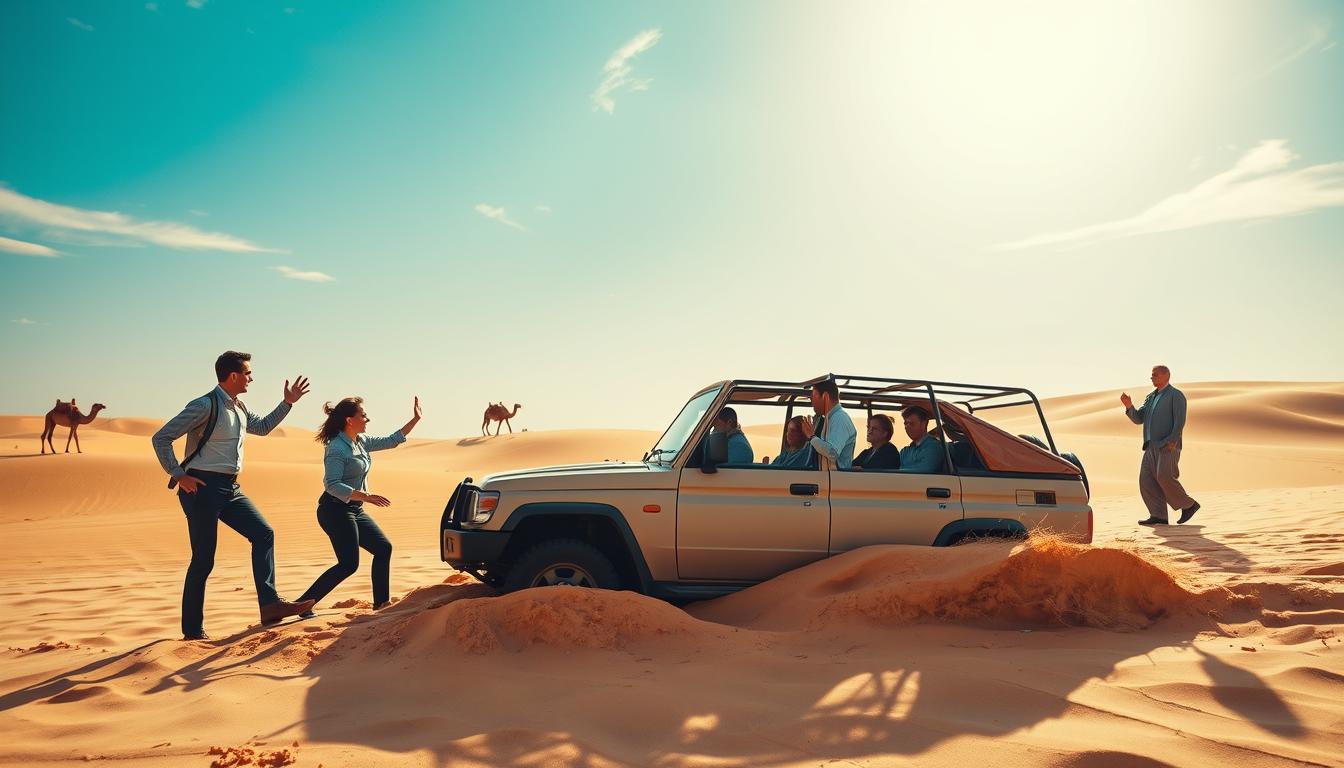
Listen first, ride second. The safety briefing is key. It talks about dangers, vehicle rules, animal encounters, and what to do in emergencies. Ignore it at your own risk. Always wear seatbelts in 4x4s and follow your guide’s signals on buggies or quads.
Avoid ignoring guide instructions and safety briefings
Follow hand signals for safe driving. Clarify any doubts before starting. This helps avoid accidents and is a must-do.
Do not wander off designated routes or camps
Stay within the group and designated areas. Wandering can be dangerous. Keep speeds low in camps and avoid tailgating on dunes.
Never attempt risky stunts for social media
Don’t risk your safety for a viral video. No standing on moving vehicles or riding without helmets. It’s not worth the risk.
Do not drive or ride under the influence
Never drive or ride if you’ve had alcohol or drugs. UAE laws are strict, and operators have zero tolerance. Stay sober for your safety.
Avoiding accidents on desert safaris: safety tips before you go
Preparation is key to avoiding accidents on desert safaris. These tips help you plan, stay healthy, and enjoy your adventure without worry.
Medical considerations and hydration planning
Before you go, talk to your doctor if you have heart issues, asthma, spine problems, are pregnant, or have had surgery. Dune bashing can be intense, so get the green light from your doctor. Choose softer rides if needed.
Bring your meds, including inhalers and EpiPens, and tell your guide about any health issues. Start drinking water 24 hours before and keep sipping it during the day. Add electrolytes to keep your body balanced.
Carry extra water and remember to drink often. For more on staying safe, check out this guide on what not to do in the.
Proper footwear and sun protection for desert conditions
Wear shoes with grip, like trail runners or light boots, and moisture-wicking socks. Avoid sandals and heels to prevent slips, burns, and punctures. This simple step is a big help.
Protect your skin and eyes: use SPF 30+ every two hours, wear a wide-brim hat or cap, and use polarized sunglasses. A buff or shemagh also protects your face from sand and wind.
Securing travel insurance and emergency contacts
Get travel insurance that covers motorsports, medical evacuation, and weather changes. Make sure you understand your policy before you go.
Save important numbers in the UAE—998 for ambulance and 999 for police—and your operator’s hotline. Share your plans with a friend, keep your phone charged, and download offline maps. Always stay with your guide.
| Preparation Area | What to Do | Why It Matters | Risk Reduced |
|---|---|---|---|
| Health Check | Consult a doctor for cardiac, respiratory, spine, pregnancy, or post‑surgery concerns; carry prescribed meds. | Matches activity intensity to your condition; ensures quick access to treatment. | Medical events during rides |
| Hydration | Hydrate 24 hours prior, drink regularly with electrolytes, avoid excess caffeine. | Maintains fluid balance and performance in heat. | Dehydration and heat stress |
| Footwear & Clothing | Closed‑toe grip shoes, moisture‑wicking socks, UPF layers, hat, UV400 sunglasses, buff/shemagh. | Improves traction, protects skin and eyes, blocks sand and wind. | Blisters, burns, eye irritation |
| Sun Care | Broad‑spectrum SPF 30+ reapplied every two hours. | Prevents sunburn and reduces heat load. | Sunburn and fatigue |
| Insurance | Buy policies covering off‑road motorsports, evacuation, and weather disruptions. | Financial and medical protection for unexpected events. | Uncovered medical costs |
| Emergency Prep | Save 998 and 999, operator hotline, share itinerary, carry power bank and offline maps. | Speeds response and keeps communication open. | Delays in rescue or coordination |
Vehicle and ride safety for dune buggies and quad bikes
When you’re out in the dunes, you face strong winds, sand, and steep drops. It’s important to follow the desert safari rules given by your operator. Treat every ride as if you’re on a shared road. These tips help you stay safe and avoid accidents on desert safaris in Sharjah’s changing landscape.
Why seatbelts, helmets, and goggles matter
Always wear a helmet that’s DOT- or ECE-certified. Make sure the chin strap is tight and the helmet fits right. Also, wear goggles to protect your eyes from sand and glare, and gloves for better grip.
In side-by-sides, buckle up and keep your arms and legs inside the roll cage. Use wrist restraints only if your guide tells you to. These steps help prevent ejection and keep your vision clear, which is important for staying safe.
Weight limits, passenger rules, and child safety
Always follow the manufacturer’s weight and passenger limits. Overloading can affect the vehicle’s stability and control. Keep your gear low and secure to prevent it from shifting on slopes.
Children must meet the age and height requirements set by the operator. Don’t use child seats in buggies or quads; they’re not designed for them. Let kids join rides that are suitable for their age and under adult supervision. Or, have them ride in a 4×4 with proper safety restraints. Following these guidelines helps keep all riders safe.
Speed control and safe following distances on dunes
Adjust your speed based on the terrain, ruts, and how well you can see. Approach dune crests slowly, look at the slip face, and never jump dunes. When going down, slow down and test your brakes often.
Keep a safe distance from the vehicle in front to avoid getting hit by sand. Use hand signals or radios to communicate, and stop if you can’t see the road ahead. Do a quick check before you start—make sure your helmet fits, your straps are secure, and your brakes and throttle are working right. These desert safari rules and tips are your best defense against accidents.
Common mistakes on desert safaris that damage the environment
Protecting Sharjah’s dunes starts with knowing desert safari etiquette and being responsible. The land takes time to heal, so every choice counts. Learn what mistakes to avoid and make better choices from the start.
Littering and microplastics in fragile ecosystems
Even small trash can last for decades. It harms foxes, reptiles, and birds. Always take your trash with you.
Don’t leave food or fruit peels. They attract pests and change natural diets. Use a sealable bag for trash and dispose of it properly. This is key to desert safari etiquette.
Off-trail driving and dune erosion
Stay on marked paths. Repeated driving can damage dunes and speed up erosion. One wrong turn can harm the landscape for years.
Avoid crushing plants like ghaf and tamarisk. Their roots hold sand in place and provide shelter. Being mindful of the terrain helps preserve the dunes.
Wildlife disturbance and ethical viewing practices
Watch wildlife from a distance. Never chase or feed animals. Sudden movements or loud noises can stress them.
Use red or low-intensity lights at night. Keep drones away from nesting areas. These actions help avoid harming wildlife and respect desert etiquette.
| Risky Action | Environmental Impact | Better Choice | Why It Works |
|---|---|---|---|
| Leaving wipes, filters, or caps | Microplastics ingested by birds and reptiles | Carry out all waste in a sealable bag | Prevents long-term contamination and ingestion |
| Driving off marked tracks | Dune ruts and accelerated wind erosion | Follow designated routes only | Protects dune stability and vegetation |
| Parking on vegetation | Crushed ghaf and tamarisk, habitat loss | Stop on firm, bare sand | Preserves root systems that anchor sand |
| Approaching or feeding wildlife | Stress, altered behavior, and dependency | Observe from a distance without food | Maintains natural foraging and safety |
| Night use of bright white lights | Disrupted nocturnal patterns | Use red or low-intensity light | Reduces disturbance while preserving visibility |
| Flying drones near nests | Nest abandonment and distress | Follow advisories; avoid nesting zones | Protects breeding success and species health |
| Poor vehicle maintenance | Oil and fluid leaks onto sand | Choose operators with spill kits and checks | Prevents toxic contamination at the source |
Desert safari do's and don'ts for responsible behavior
You set the tone for the dunes. By following desert safari do’s and don’ts, you show respect for the land, guides, and fellow guests. These best practices for desert safaris keep you safe while protecting fragile UAE ecosystems and local customs.
Leave-no-trace principles adapted to UAE deserts
Stick to durable surfaces like marked tracks, camp mats, and hard-packed sand. Avoid crushing vegetation and crusts that anchor dunes. This is responsible desert safari behavior that prevents erosion.
Pack out everything you bring. Separate recyclables if your operator provides bins; if not, carry them back to the city. Leave shells, rocks, and artifacts where you find them to preserve the landscape for others.
Keep wildlife wild. Observe at a distance, never feed, and secure food in sealed containers. Be considerate: keep music low and follow quiet hours at camps run by operators like Arabian Adventures or Platinum Heritage.
Campfire, shisha, and cigarette safety
Use contained fire pits or operator-provided setups. Never light fires on open sand or near brush. When you are done, douse with water, stir the ashes, and feel for heat before leaving.
Handle shisha coals in metal trays away from tents and fuel. Do not move hot coals by hand or place them on the sand. For smoking, carry a pocket ashtray and dispose of butts properly—no exceptions.
Waste management and reusable gear tips
Reduce before you refuse. Bring insulated reusable bottles, collapsible cups, and metal cutlery to cut single-use plastics. Skip glittery decor that sheds microplastics into the sand.
Use reef-safe sunscreen if your itinerary includes an oasis or coastal stop near Sharjah or Dubai. Wipe down gear to keep micro-trash from blowing away. These best practices for desert safaris align with desert safari do’s and don’ts and make responsible desert safari behavior simple for every traveler.
Best practices for desert adventures in extreme weather
Sharjah’s dunes are fun all year if you plan for the weather. Start early, wear the right clothes, and keep your gear safe. These tips help you stay safe during desert adventures.
Heat stress, dehydration, and sun exposure risks
In summer, it can feel like over 110°F (43°C). So, go on trips in the morning or late afternoon. Watch for signs of heat stress like headaches and dizziness.
Drink water often and use oral rehydration salts. Avoid energy drinks. Wear a hat, long sleeves, and sunscreen to protect yourself. These steps are key to staying safe in the desert.
Sandstorms and visibility: when to pause activities
Sandstorms can make it hard to see quickly. Listen to your guide and take shelter. Turn on hazard lights if you’re driving.
Wait until the wind dies down and you can see again. Secure loose items to avoid accidents. These actions help keep you safe during desert adventures.
Layering for cool evenings and early mornings
Temperatures drop at dusk and dawn, even in winter. Wear layers like a moisture-wicking base and a windproof shell. Bring a jacket for cooler moments.
Staying comfortable helps you stay safe. When you’re well-protected, you can react faster and travel smarter. This is how you avoid accidents in the desert.
| Condition | Primary Risk | What You Should Do | Why It Works |
|---|---|---|---|
| Midday heat (110°F/43°C+) | Heat stress and dehydration | Shift to early/late trips, hydrate with water and ORS, UPF clothing, SPF 50 | Reduces core temperature rise and electrolyte loss |
| High UV and glare | Sunburn and eye strain | Broad-brim hat, UV sunglasses, reapply sunscreen every two hours | Blocks UV exposure and prevents skin damage |
| Sandstorm onset | Low visibility and airway irritation | Shelter in vehicle/camp, hazard lights, goggles, face covering | Improves visibility and protects breathing |
| Strong gusts | Flying debris and gear loss | Secure loose items, avoid dune crests, follow guide’s route | Cuts impact hazards and disorientation |
| Cold dawn/dusk | Chill and reduced focus | Layer base-fleece-shell, carry compact jacket | Maintains warmth without bulk during activity |
What not to wear or bring on a Sharjah desert trip
Choose the right gear for sand and sun. Avoid open-toe shoes, flip-flops, and heels. Sand gets in, and there’s no support for your ankles. Wear closed, breathable shoes that fit well for soft dunes and uneven ground.
Heavy denim and dark clothes trap heat. Pick light-colored, quick-drying layers that resist grit. Don’t wear long scarves or dangling jewelry; they can get caught in vehicles and are dangerous during dune bashing.
Stay away from strong perfumes that attract bugs and bother others. Keep valuables and luxury watches in your hotel safe. Sand scratches metal and screens, and electronics get too hot in the sun.
Don’t bring glass bottles. Use a tough, reusable bottle instead to cut down on waste and prevent breakage. Carry a small daypack with zippers to keep out sand. It should have sunscreen, lip balm, and a compact first-aid kit.
Only bring necessary cash or cards and your photo ID, in waterproof pouches. Avoid clothes with graphics or slogans that might offend. What NOT to Do on a Sharjah Desert Safari includes ignoring local norms and respecting desert safari rules on dress.
Don’t bring drones unless you have permits in advance. Unmanned aircraft are regulated, and there are penalties. Keep your load light: a hat with a chin strap, sunglasses with UV protection, and a lightweight scarf or buff for sand are enough.
Smart packing supports safety, comfort, and desert safari etiquette while keeping your focus on the experience—not on fixing gear issues.
Food, beverages, and health: what to avoid consuming
Choosing what you eat and drink is key to a great day. Follow desert safari do’s and don’ts to stay energized and comfortable. This way, you can enjoy the adventure without worrying about stomach issues or dehydration.
Heavy meals before dune bashing and motion sickness
Avoid heavy, greasy meals before dune bashing. Opt for light snacks like bananas, crackers, or yogurt. If you’re prone to motion sickness, take medication as advised by a doctor 30–60 minutes before.
For motion sickness, sit in the front seat of the 4×4. Breathe evenly and keep your eyes on the horizon. These tips are part of the best practices for desert safaris and help avoid accidents.
Alcohol policies and hydration alternatives
Don’t drink alcohol before or during activities. In the UAE, operators strictly enforce no-alcohol rules during rides. Breaking these rules can result in removal without refund. This is a clear desert safari do’s and don’ts for your safety.
Stay hydrated with water and electrolyte-rich drinks. Opt for isotonic drinks, coconut water, or rehydration sachets over sugary sodas. These choices help maintain fluid balance in the heat and keep you alert.
Handling allergies and safe dining at desert BBQs
Inform operators about any allergies early on. Mention any dietary restrictions, such as nuts, shellfish, gluten, or dairy. Also, ask for halal, vegetarian, or vegan options if needed.
Confirm that food is prepared safely to avoid cross-contamination. Ask for ingredient lists if unsure. Stick to sealed items or simple grilled foods. Wash or sanitize your hands before eating and avoid ice from non-potable sources. These precautions are essential for a safe and enjoyable desert safari experience.
Photography and drone use: rules you should not break
Great shots start with respect. Follow desert safari rules and local aviation laws. This way, you avoid fines or losing your gear. Good desert safari etiquette also protects people’s privacy and the fragile desert environment.
Drone permissions and restricted airspace
Register your drone with the General Civil Aviation Authority. Also, comply with emirate-level directives before flying. Some areas near Sharjah and Dubai are under controlled or military airspace. So, do not launch without written approval.
Check NOTAMs and local advisories on flight days. Keep visual line of sight, respect altitude limits, and stay clear of wildlife. For a practical rundown of permits and on-site practices, review this guide on drone photography in the Dubai desert and coordinate with your operator.
Respecting privacy and prohibited locations
Do not film people without consent, specially families. Avoid government buildings, energy sites, and private camps. These are not only ethical red lines; they are legal ones.
Apply desert safari etiquette when shooting at camp: ask first, frame wide, and step back if anyone looks uncomfortable. These simple habits prevent the common mistakes on desert safaris that escalate into complaints.
Protecting equipment from sand and heat damage
Use sealed bags, UV filters, and lens hoods to block grit. Keep batteries shaded; heat cuts performance fast. Swap cards and batteries inside a vehicle or tent to limit exposure.
Avoid changing lenses in wind. Use a blower brush—not a cloth—to remove particles. These care steps align with desert safari rules for safety and help you keep filming through the day.
| Requirement | What to Do | What to Avoid | Why It Matters |
|---|---|---|---|
| Permissions | Register with GCAA; secure written approvals when near restricted zones | Launching without permits | Prevents fines and flight bans |
| Airspace Awareness | Check NOTAMs; maintain VLOS; respect altitude limits | Night flights or out-of-sight operations without approval | Reduces collision and loss risk |
| Privacy & Locations | Gain consent; avoid government sites and private camps | Filming families or sensitive sites | Meets laws and desert safari etiquette |
| Wildlife & Environment | Keep safe distances; fly quietly and briefly | Chasing animals or hovering low | Protects habitats and avoids common mistakes on desert safaris |
| Heat & Sand Protection | Shade batteries; use UV filters; clean with blower brush | Lens swaps in wind; wiping grit with cloth | Prevents damage and image artifacts |
| Data & Backup | Label files; back up to a portable SSD on-site | Single-card storage all day | Saves footage if devices fail |
Choosing the right operator to avoid unsafe experiences
Protect your trip by picking a licensed, safety-focused provider. Look for companies that follow best practices for desert safaris. Ask smart questions before booking to avoid mistakes.
Licensed guides, insured vehicles, and reviews
Check if the operator and guides have Sharjah and UAE permits. Make sure they have insurance for guests and vehicles. Look at recent reviews on Google and TripAdvisor for safety notes.
This ensures a safe desert safari experience. It also shows they follow best practices.
Group size, equipment quality, and maintenance
Find out the maximum group size. Smaller groups are safer. Ask for maintenance logs for buggies and ATVs.
Check for safety gear like roll cages and helmets. Make sure they clean PPE between tours. These steps are key to a safe desert safari.
Transparent itineraries and clear cancellation policies
Ask for a written plan with details like pickup times and activities. Age and weight limits should be clear.
Review the weather and cancellation policies before paying. A clear policy helps in case of bad weather.
Why booking with Desert Buggy Rental Dubai is recommended
Desert Buggy Rental Dubai has licensed guides and insured vehicles. They offer safety briefings and proper PPE. Contact them at +971 52 440 9525 or [email protected].
They offer Dune Buggy Tours, Quad Biking Tours, and more. Their 24-hour booking support ensures a safe experience.
| Safety Factor | What to Verify | Why It Matters | How Desert Buggy Rental Dubai Delivers |
|---|---|---|---|
| Licensing & Permits | Sharjah/UAE permits for operator and guides | Meets local laws and access rules | Licensed guides and approved routes |
| Insurance | Guest and vehicle coverage | Financial and medical protection | Comprehensive policy disclosures |
| Group Size | Maximum convoy numbers | Better oversight and spacing | Small, radio-managed groups |
| Equipment & PPE | Roll cages, harnesses, helmets, sanitized gear | Core to best practices for desert safaris | Modern fleet, cleaned PPE each tour |
| Maintenance | Service logs and pre-ride checks | Reduces breakdowns and risk | Regular servicing and inspections |
| Recovery & First Aid | Tow straps, compressors, radios, stocked kits | Critical for avoiding accidents on desert safaris | Standard recovery kits and trained marshals |
| Itinerary & Limits | Timings, activities, age/weight limits | Clear expectations; safer pacing | Detailed plans with strict limits |
| Weather & Cancellations | Transparent, fair policies | Adapts to desert conditions | Clear terms and 24-hour support |
Conclusion
Knowing what not to do on a Sharjah Desert Safari is easy. Just follow your guide and stay on the path. Wear the right clothes and respect local customs. Don’t try dangerous stunts, drink before riding, or break rules about cameras and drones.
Plan carefully for your trip. Drink water, use sunscreen, and bring light clothes for the night. Make sure you have travel insurance and know who to call in an emergency. Always keep the desert clean and respect wildlife.
Choose a reliable tour operator. Look for ones with licensed guides and well-maintained vehicles. For a great experience, contact Desert Buggy Rental Dubai at +971 52 440 9525 or [email protected]. Check out this resource before booking to see if you’re ready.
With good planning and common sense, you can have a great time on the desert safari. Remember these tips and enjoy the UAE dunes responsibly.
FAQ
What are the biggest don’ts on a Sharjah Desert Safari?
Don’t ignore your guide’s safety briefing. Stay on marked routes and avoid risky stunts for social media. Never drive or ride after drinking.
Avoid littering and disturbing wildlife. Follow photography and drone rules. These steps help you avoid fines, injuries, and cultural offenses.
How should you dress to respect Sharjah’s cultural norms?
Wear modest, breathable clothing that covers shoulders and knees. Choose long sleeves, pants, and closed shoes for safety. Carry a light scarf for mixed-group settings.
Avoid transparent or tight outfits and culturally insensitive graphics.
What public behaviors should you avoid in conservative settings?
Avoid profanity, loud arguments, public displays of affection, and offensive gestures. During Ramadan or near mosques, do not eat, drink, or smoke in public during daylight hours.
Use respectful, inclusive language and follow your guide’s cultural briefings.
What is the etiquette for photography around people and private property?
Always ask permission before photographing people—specialy families and women. Do not photograph military sites, government buildings, or private homes.
Keep cameras and gimbals discreet, and respect tribal camps, Bedouin-style setups, and private farms.
Why is it dangerous to ignore guide instructions?
Briefings cover terrain risks, convoy signals, vehicle protocols, and emergency procedures. Ignoring them can lead to rollovers, soft-sand traps, or encroachment on protected areas.
Following instructions is key to avoiding accidents on desert safaris.
Why shouldn’t you wander off designated routes or camps?
Off-route travel risks hidden bowls, steep slip faces, and soft sand. It also damages fragile dunes and may breach restricted zones.
Always stay within convoy or camp boundaries to protect yourself and the ecosystem.
What are examples of risky stunts you must avoid?
Do not stand on moving vehicles, hang out of windows during dune bashing, ride without helmets, or jump dunes. These actions can cause severe injuries and invalidate insurance.
Clear don’ts in any desert safari do’s and don’ts list.
Can you drive or ride after drinking alcohol?
No. UAE laws are strict, and reputable operators enforce zero tolerance. Do not consume alcohol or impairing drugs before or during rides.
Violations can lead to removal without refund and legal penalties.
What medical issues should you consider before booking?
If you have heart, respiratory, or spine issues, are pregnant, or had recent surgery, consult your physician. Inform your guide of conditions and carry necessary medications like inhalers or EpiPens.
Choose gentler activities or skip dune bashing if advised.
How should you plan hydration and sun protection?
Hydrate 24 hours in advance, bring electrolytes, and avoid excess caffeine. Apply SPF 30+ every two hours, wear a wide-brim hat or cap, UV400 sunglasses, UPF clothing, and a buff or shemagh for sand and wind.
Do you need travel insurance for a desert adventure?
Yes. Choose a policy covering motorsports, off-road activities, medical evacuation, and weather changes. Save emergency numbers (998 ambulance, 999 police), your operator’s hotline, and keep a charged phone with a power bank.
What safety gear is essential for dune buggies and quads?
Wear DOT- or ECE-certified helmets, impact-rated goggles, and gloves. In side-by-sides, fasten seatbelts and keep limbs inside the roll cage. Use wrist restraints only if advised by the operator.
These best practices for desert safaris reduce injury risk.
What are the rules for children and passengers?
Follow age, height, and weight limits set by the operator and manufacturer. Do not overload vehicles. Child seats are not suitable for buggies and quads—minors should join age-appropriate rides or ride in 4x4s with proper restraints.
How do you manage speed and spacing on dunes?
Control speed based on terrain and visibility. Approach crests at an angle, never jump dunes, and maintain generous following distances to avoid collisions and sand blindness. Stop if you lose sight of the convoy.
What environmental mistakes should you avoid?
Do not litter—microplastics, wet wipes, and cigarette butts persist for decades. Never drive off-trail or crush vegetation like ghaf. Avoid feeding or chasing wildlife, and use low-intensity light at night to reduce disturbance.
What are leave-no-trace essentials for UAE deserts?
Travel on durable surfaces, pack out all waste, and minimize fire impacts. Be considerate of others and respect wildlife. Use reusable bottles and cutlery, and separate recyclables when facilities exist.
This is responsible desert safari behavior.
How do you handle campfires, shisha, and cigarettes safely?
Use contained fire pits and fully extinguish with water, then stir and check for heat. Handle shisha coals in metal trays away from tents and fuel. Never flick cigarette butts—use pocket ashtrays.
What should you not wear or bring on a Sharjah trip?
Avoid open-toe shoes, heels, heavy denim, and dark heat-absorbing fabrics. Skip dangling jewelry, strong perfumes, glass bottles, and bulky bags. Leave valuables at the hotel safe. Do not bring drones without permits.
What foods and drinks should you avoid before dune bashing?
Skip heavy, greasy meals and alcohol. Choose light snacks like bananas or crackers. If prone to motion sickness, consult a doctor about medication and sit in the front seat of 4x4s.
Hydrate with water and electrolytes instead of sugary sodas.
How do you dine safely at a desert BBQ with allergies?
Inform your operator in advance about allergies and dietary needs. Confirm cross-contamination controls and ingredient lists. When uncertain, choose sealed items or simple grilled options, and sanitize hands before eating.
What are the rules for drones and restricted airspace?
Register with the UAE General Civil Aviation Authority and follow emirate-specific rules. Some areas are controlled or military airspace—do not launch without written authorization. Always check NOTAMs and local advisories.
How do you respect privacy and prohibited locations when filming?
Do not film people without consent, especialy families, and avoid government buildings, critical infrastructure, and private camps. Maintain line of sight, obey altitude limits, and keep clear of wildlife and nesting areas.
How can you protect cameras and drones from sand and heat?
Use sealed bags, UV filters, lens hoods, and silica gel packs. Avoid lens changes in wind, keep batteries shaded, and clean gear with blower brushes to prevent scratches and heat damage.
What should you do in extreme heat or sandstorms?
Plan morning or late-afternoon departures in summer. Watch for heat stress signs and sip water with electrolytes. In sandstorms, pause activities, shelter in vehicles or camp, use goggles and face coverings, and wait for visibility to improve.
How should you layer for cool desert evenings?
Pack a moisture-wicking base, a light fleece, and a windproof shell. Bring a compact jacket for sunrise camel rides or stargazing. Secure loose gear—high winds can turn items into hazards.
How do you choose a safe, licensed operator in Sharjah?
Verify permits, trained marshals, and complete insurance. Check recent reviews for safety briefings and professionalism. Ask about group sizes, maintenance schedules, recovery gear, first-aid kits, and clear cancellation policies.
Why is booking with Desert Buggy Rental Dubai recommended?
You get licensed guides, insured vehicles, and 24-hour booking support. Services include Dune Buggy Tours, Quad Biking Tours, Evening Desert Safari, Morning Desert Safari, Desert BBQ Dinner, Camel Ride, and sandboarding. Contact +971 52 440 9525 or [email protected] for compliant, safety-first operations that help you avoid accidents on desert safaris.
Categories
- Uncategorized (4)
- Desert Buggy Rental (2,089)
- Dune buggy (4)
- Quad Bike Rental (1)
- Desert safari (1)
- Hot air ballon (2)
- dirt bike (4)
Recent Post


Tags
African Safari Arabian Gulf day tours ATV passengers Best Areas to Stay in Dubai Best desert Safari tours Best shoes for sand dunes Best ziplines in Dubai Camel Ride Prices Dubai Danakil Depression adventure Desert Safari outfit guide Douz Desert Tours Dubai Extreme Sports Dubai Foodie Adventures Dubai Outdoor Activities Dubai safari rules Dubai Tour Packages Emergency Protocols Extreme Sports in Baja California Family-Friendly Attractions First-time visitors Dubai Flying in the morning Historical Sites Dubai Hot Air Balloon Elevation Hot air balloon temperature Hot air balloon temperatures Jordan desert excursions Night operations of hot air balloons Off-road braking techniques Outdoor Activities in Atacama Outdoor Recreation Protective clothing for quad biking Protective gear for quad riding Quad bike speed tests Quad bike tours Quad bike vs ATV Quad Biking Escapades Quad biking regulations in Dubai rent buggy dubai Renting a car in Dubai Sahara Quad Tours Simpson Desert Quad Biking Top months for hot air balloon tours UAE desert night heat Urban walking experience Women's dresses for hot air balloon ride