

- 225 Views
- 22 Min Read
- (0) Comment
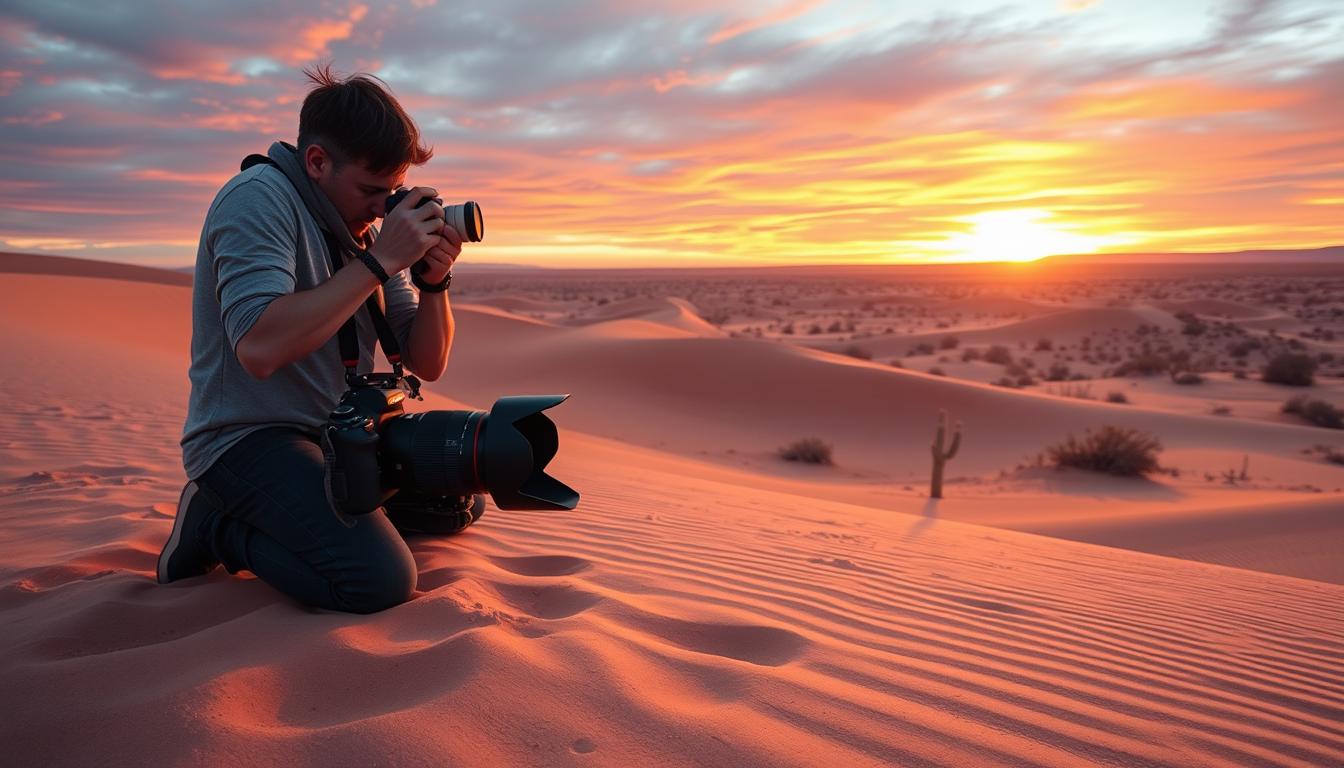
The silence hits you first when you leave the path. As the sand supports you, the horizon stretches out, empty and inviting. The low sun over Dubai’s dunes paints every curve with stories waiting to be captured. This guide shows you how to fully embrace the desert’s vastness, intentionally and without hurry.
Seek out reliable light, vibrant colors, and images that can withstand the desert’s challenges. Capturing desert scenes in the United Arab Emirates requires patience and wise decisions. Learn to read the dunes, track the moving shadows, and keep your equipment safe. This keeps your focus sharp on the perfect timing and your technique.
In this guide, find tips for desert photography in the UAE, from early morning Dubai tours to the mysterious Empty Quarter at dusk. Discover how to balance light, maintain textures, and create compositions that breathe life. For practical help, Desert Buggy Rental Dubai offers tailored tours to match your photography needs; call +971 52 440 9525 or email [email protected] for plans that capture the desert’s beauty.
Key Takeaways
- Work the UAE desert light with simple, repeatable steps in this Photography Guide.
- Use Desert Photography Tips to protect highlights and preserve dune texture.
- Plan shoots around the United Arab Emirates golden and blue hours for color and contrast.
- Compose with clean lines and minimal frames to honor scale and silence.
- Prepare for heat, dust, and wind so your focus stays on timing and story.
- Leverage Dubai desert tours for safe access; contact Desert Buggy Rental Dubai at +971 52 440 9525 or [email protected].
Understanding Desert Light for Landscape Photography Tips
The UAE’s dunes are about timing and purpose. Understand the sand as a reflector and the sky as a softbox. Mix practical tips with knowledge of Dubai’s desert light to keep colors rich and details sharp.
Golden Hour vs. Blue Hour in the UAE Desert
During the UAE golden hour, sunlight sweeps across the sand, creating deep shadows. This turns colors to warm gold and copper. It’s perfect for showing texture and shape in photos.
The blue hour gives even light and cool colors. The contrast is lower, making for peaceful skies and soft horizons. It’s great for simple, calm shots without harsh highlights.
Managing Harsh Midday Sun and High Contrast
Midday sun in the Emirates is strong. Adjust for bright spots, watch your exposure, and shoot in RAW for more control. Use a little negative exposure to protect against overbright areas.
Use bracketing when light varies greatly, and adjust shadows later. These tips help manage the strong desert light and glare during the day.
Using Backlighting and Silhouettes for Drama
Backlighting highlights the sand and adds depth with haze. Aim to shoot into the light to show off the desert’s small details.
For silhouettes, set your exposure for the sky to keep outlines clear. Adding camels or dune buggies against a bright background brings drama to your photos.
Polarizers, ND, and Graduated Filters for Desert Skies
Use a polarizing filter to reduce glare and enhance the sky. Just be careful to keep the tone balanced across wide shots. ND filters (3–10 stops) blur clouds and soften sand in low light or during the blue hour.
A graduated ND filter, around 2–3 stops, evens out bright skies against the glowing dunes at dawn and dusk. Using these tools thoughtfully can perfect your desert shots, balancing light and color beautifully.
Best Camera Settings for Desert Photography
In the UAE dunes, you deal with really strong contrasts. So start with the lowest ISO to get clear, broad-range images. Keep the ISO between 64–100 on most big cameras. Raise it only for fast shutter speeds if there’s wind or movement. RAW shooting is best for keeping colors and details in bright lights when taking Desert photos.
For big, sweeping views, use f/8–f/11 for sharp images all around. When shooting camels or riders, use f/2.8–f/4 for a soft background. Choose manual or aperture priority mode. Adjust exposure to manage the bright sand and sky without losing detail.
Be smart with your metering. If you have a Nikon, turn on highlight-weighted metering. For Canon, Sony, or Fujifilm, spot or center-weight the brightest part, then set your exposure. This method gives you better control in bright light.
Select shutter speeds based on your scene. Use 1/125–1/250 sec with a tripod for still shots. For action like dune buggies, go for 1/1000–1/2000 sec to stop the motion. To blur clouds or sand, use an ND filter, setting 1–30 seconds on a timer or with a remote.
Be confident in focusing. Use focus peaking on mirrorless cameras and zoom in for precise foreground shots. If using autofocus, choose single-point AF. Focus a bit into the scene for the best overall sharpness.
White balance affects the photo’s feel. Choose Daylight setting for even color. Or set to custom Kelvin for the golden or blue hour. You can tweak it later in RAW shooting with no problem.
When the sunlight is strong on the dunes, use exposure bracketing at ±2 EV over 3–5 frames. Turn on lens corrections to fix vignetting and distortion. For star shots, use in-camera noise reduction. Watch out for camera heat as it might cause issues.
Modern sensors handle light and shadow well. You might underexpose slightly on purpose to protect bright spots, then adjust shadows later. Always check your histogram to prevent loss of details in bright areas.
Heat is a big deal for your gear. Turn on auto power-off, keep everything cool, and don’t leave your camera in a hot car. Extreme heat can harm batteries and lower image quality over time.
| Shooting Goal | Recommended Aperture | Shutter Speed | ISO Strategy | Metering & Controls | Why It Works |
|---|---|---|---|---|---|
| Wide landscapes at sunrise/sunset | f/8–f/11 | 1/125–1/250 sec on tripod | Base ISO 64–100 | Aperture priority, −0.3 to −1 EV; watch histogram | Maximizes dynamic range and edge-to-edge sharpness |
| Action: dune buggies or riders | f/4–f/5.6 | 1/1000–1/2000 sec | Raise ISO as needed | Center-weighted or spot on subject; burst mode | Freezes motion and sand spray while keeping subjects crisp |
| Subject isolation: camels/portraits | f/2.8–f/4 | 1/500–1/1000 sec | ISO 100–400 | Manual or aperture priority; eye AF | Soft background with reliable subject focus |
| Long exposure clouds/sand | f/8–f/11 | 1–30 sec with ND | Base ISO | Manual; 2-sec timer or remote; long exposure NR if needed | Creates motion blur while preserving highlight detail |
| High-contrast midday dunes | f/8–f/11 | 1/250–1/500 sec | Base ISO; leverage ISO invariance if applicable | Highlight-weighted or spot on brightest sand; exposure bracketing | Protects highlights and enables clean shadow recovery |
This guide shows how to keep your camera settings right for Desert Photos. Balance your exposure and metering carefully. Use ISO invariance to your advantage. And always check the histogram to get perfect Desert shots.
Composing Desert Scenes: Leading Lines, Textures, and Scale
Snap Eye-Catching Desert Shots in the UAE dunes by mixing smart framing with basic Outdoor Photography Techniques. Think of shapes and how they flow. Use leading lines to guide the eye towards balance or minimalism. These tips will help you tell clear stories with vast sands.
Using Dune Ridges, Tracks, and Shadows as Leading Lines
Walk the crest at dawn or late in the day and align S-curves from ridge to horizon. Slope faces and shadows act as natural guides. This pulls viewers through the photo. Use a wide lens to exaggerate perspective on the UAE dunes.
Quad-bike and 4×4 tracks create converging paths. Start them from a corner to lead eyes forward. Backlit, shadows deepen contrast and outline forms. This technique keeps Desert Photo Ideas fresh and exciting.
Foreground Interest: Patterns, Ripples, and Desert Flora
Lower your angle to highlight ripples created by winds. Textures like footprints, beetle tracks, and cracked earth add interest. A small rock or dried plant can anchor the view before it wanders to far dunes.
Adding plants like ghaf seedlings against the sand offers contrast. Tread lightly to protect the delicate crusts. These choices improve compositions, especially when coupled with practical tips to enhance your photography skills.
Creating Scale with People, Camels, and Vehicles
Add a person in bright clothing on a ridge to illustrate scale. Motion from a camel train or a dune buggy adds a sense of size. The evening light enhances colors and depth.
A telephoto lens can compress details and enhance patterns. Mix a strong foreground with leading lines for impactful Desert Shots. These images look grand and clear across the UAE landscape.
Rule of Thirds vs. Centered Minimalism in Open Landscapes
Use the rule of thirds for a balanced story between sky and land. Place the horizon on a third line and let ripples lead the eye. This approach works well for many Desert Photo Ideas.
Choose a centered, minimalist layout when showcasing open spaces. An empty sky above smooth sand achieves calmness. Shooting both vertical and horizontal frames lets you capture leading lines from various views. This keeps your photography versatile.
Outdoor Photography Techniques for Heat, Dust, and Wind
Photographing the Desert in the UAE rewards careful planning. Use weather-resistant cameras and lenses from top brands like Canon or Nikon. Always have a dust cover ready. To keep sand out, use a zippered bag for your camera when you move.
Only change your camera lens in a safe spot or inside a car. Turn off the camera to avoid static. Keep the lens facing down during swaps. Protect the lens with a UV filter and hood. In case of dirt, use a blower and sensor swabs; brush off particles before wiping.
To fight wind, secure a carbon-fiber tripod with a weight. Lower its legs for stability. If wind blows, protect your camera with your body. On days with heavy wind, known as shamal, manual focus helps. It keeps your shots clear despite the dust.
Keep your equipment cool by storing it in the shade. Use insulated cases and keep electronics off hot surfaces. Swap out batteries often because heat affects them. Protect yourself with moisture-wicking clothes, a wide hat, quality sunglasses, and sunscreen. Drink water and take electrolytes to stay hydrated.
These techniques are essential for Desert Photography, especially when timing matters. Plan for cooler parts of the day. Always have a cloth for your gear. Handling your equipment with care and preparing for the weather helps you capture the perfect moment.
Photography Guide – How to Capture Stunning Desert Shots
This Photography Guide will show you how to Capture Stunning Desert Shots in the UAE. Follow these Desert Photography Tips to balance light, weather, and access. Your shots will be clean and reflect the desert’s beauty.
Essential Desert Photography Tips Before You Go
Look up the moon’s phase and the weather forecast before heading out. Choose a new moon for darker skies. Drive away from Dubai to reduce light pollution. Use apps like PhotoPills or The Photographer’s Ephemeris to plan your shots around sunrise and sunset.
Remember to bring water, snacks, and extra batteries. Let someone know where you’re going and when you’ll be back. Consider booking with Desert Buggy Rental Dubai for special access during your desert adventure.
Don’t forget a microfiber cloth, a blower, and lens wipes. These items are vital for keeping your gear clean in the desert’s challenging conditions.
Exposure Bracketing and HDR for Challenging Light
Try exposure bracketing with ±2 EV across 3–5 frames to even out the lighting. Combine the images into HDR using Adobe Lightroom, Adobe Photoshop, or Skylum Aurora HDR. Aim for natural tones without overdoing the saturation to maintain the desert’s beauty.
When metering, focus on the highlights to protect the sky’s details. This method provides balanced lighting, offering shots that are both clear and detailed.
Long Exposures for Moving Sand and Clouds
Use a sturdy tripod, a remote release, and a low ISO for long exposures. A 6–10 stop ND filter lets you capture cloud and sand movement while the dunes remain sharp.
Position your shots away from busy areas for the best composition. Monitor your histogram and adjust white balance to keep the colors true. This approach adds a sense of motion without sacrificing texture.
Night Sky and Astro Opportunities in the Desert
For night sky shots in the UAE, choose a fast lens (14–24mm at f/1.8–f/2.8) with ISO 1600–6400. Follow the 500 Rule or NPF Rule for sharp stars. Use magnified live view to focus on a bright star, then switch to manual focus.
Include silhouettes of dunes or camels to give your shots scale. Apply soft light painting to illuminate without overpowering the scene. On a clear, moonless night in the Empty Quarter, you can capture the vast, peaceful desert under the stars.
| Scenario | Key Setting | Technique | Result |
|---|---|---|---|
| High-contrast dunes at sunset | Bracket ±2 EV, 3–5 frames | Merge with HDR for natural tones | Balanced sky and shadow detail |
| Wind and moving clouds | 6–10 stop ND, ISO 100 | Long exposure on tripod | Silky sand and streaked clouds |
| Milky Way in the UAE interior | 14–24mm, f/1.8–f/2.8, ISO 3200 | 500/NPF Rule, manual focus | Sharp stars with dune silhouettes |
| Pre‑dawn blue hour | Base ISO, +1/3 EV | Tripod, mirror lockup/EB | Clean gradients and low noise |
Desert Photo Ideas You Can Shoot on Tours in Dubai
You can create amazing Desert Photo Ideas with proper timing and setup during tours. Plan to capture movement, faces, unusual shapes, and the colors of the sky. This makes for lively, stunning desert shots. It helps to think about your shots before starting your Dubai photography tours.
Action Shots: Dune Buggies, Quad Bikes, and Sand Spray
When on Dune Buggy and Quad Biking tours, focus on a spot where riders appear over dunes. Use continuous autofocus and fast shutter speeds, like 1/1600–1/2500 sec, to capture sand flying. Stay downwind to keep faces free of sand.
Get down low to snap exciting silhouettes and show speed. Use a mid-telephoto lens to stay safe and get close-up shots. These tips let you capture lively desert shots, adding action to your Dubai photos.
Portraits at Sunset: Camels, Bedouin Themes, and Attire
On a sunset safari, light your subjects from behind to outline them beautifully against the sun. Adjust exposure for skin tones, and use a reflector or flash with a CTO gel. Dressing in Bedouin style—abayas, kanduras, keffiyeh—adds depth to your photos.
Always get permission before taking photos and suggest poses. Side profiles and soft eye contact work great at sunset. Including a camel ride can add to the story of your Dubai photography.
Minimalist Abstracts: Ripples, Footprints, and Patterns
Search for elegant ridges, lone footprints, and neat ripples when it’s calm. Shoot with a telephoto lens at f/5.6–f/8 to bring out layers. These ideas are perfect at blue hour or in slight haze.
Keep your photos simple and well-organized. This way, you’ll create modern, timeless desert photos with a unique perspective.
Golden Tones and City Glow on the Horizon
As the sun sets, the outskirts of Dubai turn a deep gold. Start with close-up dunes, then show the city skyline. Wait for the city lights to blend into the evening sky for beautiful colors.
Use a tripod for clear shots at low light. Combine these scenes with shots of camp life, like lanterns and a BBQ dinner. These add warmth and candid shots to your Evening Desert Safari memories.
Gear and Protection: Cameras, Lenses, and Dust Safety
The UAE’s conditions mean you need the right protection for your gear. Go for cameras like the Canon EOS R5, Nikon Z9, or Sony a1. These work well with high-quality lenses to keep dust out. This combo is great for capturing the beauty of the desert without worry.
Pick a three-lens set-up to get the best shots. Use a 16–35mm for wide desert views, a 24–70mm for everyday shots, and a 70–200mm or 100–400mm for zoomed-in photos. Bring along some fast primes for nighttime skies. And don’t forget filters to manage light and color in your photos.
Always be careful with sand. Keep your camera in a bag with silica gel to protect it. If you need to change lenses, do it quickly and shielded from the wind. Use a light sheet to place your bags on so they stay clean. Choose tripods with twist-lock legs for easy cleaning after a sandy shoot.
Heat can drain your batteries. Take three per camera and keep them cool. Use fast memory cards and protect the extras. Clean your camera with a blower and microfiber cloth at day’s end. Pay special attention to the areas that keep the dust out of your camera.
When moving fast, like on buggies, keep safe by following professional advice. Stay clear of busy paths, use lens hoods, and have covers ready for dust. These steps will protect your equipment and let you keep shooting.
Pro tip: Keep your gear in a cool vehicle or wrapped in a light cloth between shots. Using cooling wraps and insulated cases also helps keep things at the right temperature and batteries ready.
| Item | Recommended Specs | Purpose in Desert | Effectiveness | Cost Level |
|---|---|---|---|---|
| Camera Bodies | Weather-sealed full-frame; dual card slots; reinforced mounts | Dust resistance and reliability during heat | Excellent | High |
| Lenses | 16–35mm, 24–70mm, 70–200mm; stabilized; sealed; UV filters | Versatile lens choices for desert scenes and protection | Very Good | High |
| UV Filters | Multi-coated, scratch-resistant | Front element shield; haze reduction | Good | Low |
| Rain/Dust Covers | Quick-access, sand-resistant materials | Barrier against blowing grit | Very Good | Low |
| Cooling Wraps | Heat-reflective, reusable | Temperature control for electronics | Good | Moderate |
| Silica Gel | Multiple packets in sealed bag | Moisture control during temp shifts | Good | Low |
| Cleaning Kit | Rocket blower, microfiber, solution, swabs | Safe camera cleaning after shoots | Excellent | Low |
| Power & Storage | 3+ batteries/body; fast UHS-II or CFexpress; 64 GB+ | Reliable capture in heat and action | Excellent | Moderate–High |
| Tripod | Twist-lock legs; easy to rinse and dry | Stable footing; simple post-sand cleanup | Very Good | Moderate |
With these tips, you can protect your camera and make sure it stays sharp. Combining the right lenses with good dust prevention and cleaning practices will keep your photos clear. This way, your gear will last longer, even in the challenging desert environment.
Local Access, Safety, and Logistics in the United Arab Emirates
In the UAE, smart planning is key for a great photography project. You need to keep your equipment safe, make sure your team follows the law, and stick to your schedule. Outdoor Photography Techniques need to fit the desert’s conditions, and safety rules must be in place before you start.
Permits, Protected Areas, and Respectful Shooting
Respect areas like the Dubai Desert Conservation Reserve and national parks. They may have rules about where you can go and what you can film. Always get the right permits for commercial shoots in Dubai, and ask the aviation authority before flying drones.
Always ask people if it’s okay to take their pictures, especially with cultural subjects. When you’re near communities or camel farms in the desert, keep things quiet, and don’t get in the way. Being respectful helps your photography go smoothly in the UAE.
Navigating Soft Sand: Vehicles, Tyre Pressure, and Routes
Use experienced guides and special 4x4s for driving on soft sand. Adjust your tyre pressure to help with the sand, then pump them back up for the road.
- Carry a shovel, traction boards, and a rated recovery strap.
- Stick to established routes and avoid slip faces to protect dunes.
- Stage vehicles for safe turnarounds on crests and read wind‑cut ridges.
Working with Desert Buggy Rental Dubai can make planning easier. They help with finding the best paths and times for photos. You can book their services at +971 52 440 9525 or [email protected].
Heat Management: Hydration, Clothing, and Sun Safety
The summer gets very hot, often over 104°F. Drink plenty of water and replace salts with electrolytes. Aim to shoot photos in the cooler parts of the day, like early morning or late afternoon.
Wearing light-colored clothes that cover you, a hat, and a neck scarf can protect you from the sun. Shoes that cover your feet shield you from the hot sand. These steps keep you safe and ready for action during desert shoots.
Emergency Planning and Communication
Tell someone your plans, check in regularly, and carry a charged phone and power bank. Think about using a satellite communicator and have paper maps, just in case.
Know basic first aid and have a kit ready. Make sure everyone knows the safety rules before you start. This ensures your photography doesn’t put anyone at risk.
Conclusion
The dunes in the UAE offer amazing light, texture, and size. These make your photos stand out. Use the golden and blue hour to create a mood. Let shadows, ridges, and clear horizons lead the viewer’s eye. Combine these tips with the right camera settings. This way, your photos will look great even in tough light conditions.
Using filters can manage bright skies. Bracketing and long exposures bring in depth and motion. After the sun sets, try astrophotography to capture the night sky. These steps are key in this guide. They help you take vivid, true-to-life photos of the desert.
Taking photos in the sand needs extra care. Keep your gear safe from dust and handle the heat and wind. Join reliable desert tours in Dubai. For help, check out Desert Buggy Rental Dubai. They offer various tours and activities.
Ready to capture it all? Plan your shoots around sunrise or sunset. Get your shot list ready and book in advance at +971 52 440 9525 or [email protected]. Using good techniques, a clear plan, and dependable support. You’ll leave the desert with pictures that capture its beauty. This shows why photographing the desert is a rewarding challenge. It’s true in Dubai and wherever deserts are found.
FAQ
What are the best times to photograph dunes in the UAE for golden tones and minimalism?
Catch the golden and blue hours for the best shots. During golden hour, sunlight turns the sand from beige to gold. Blue hour brings cooler skies and smooth contrasts for a minimalist look. Use apps like PhotoPills to find the perfect time. Be on dune crests for the best light and shadow play.
How do you manage harsh midday sun and extreme contrast in the desert?
Aim to get the highlights right and watch your camera’s histogram. Shooting in RAW helps. Use exposure tricks and HDR blending to keep details. A graduated ND filter can save the sky’s details. For tough light, focus on silhouettes or close-ups of sand patterns.
What are the best camera settings for desert photography in Dubai and Abu Dhabi?
Start with a low ISO for crisp images. For landscapes, go with f/8–f/11; use f/2.8–f/4 for close-ups. Use a tripod for still scenes; go faster for moving subjects like dune buggies. Adjust your metering for bright scenes and consider bracketing exposures.
Which filters work best for intense desert skies and long exposures?
A circular polarizer can make the sky pop and control glare. For smooth skies and sand, use a 6–10 stop ND filter. A soft grad ND evens out bright skies at sunrise and sunset. Be careful with polarizers on wide lenses to avoid uneven skies.
How do you compose desert scenes to show depth, texture, and scale?
Find lines in the sand or tracks for guiding the eye. Get low for detailed foregrounds and add items for scale. You can use the rule of thirds or center your subject for impact. This highlights the vastness and details together.
What Outdoor Photography Techniques help protect gear from heat, dust, and wind?
Opt for weather-resistant gear and lens covers. Change lenses carefully to avoid dust. Secure your tripod and store gear in the shade. Clean your gear with a blower and cloths. Always have spare batteries and drink plenty of water.
How do you shoot action shots of dune buggies and quad bikes with sharp sand spray?
Focus where the action will be and use continuous tracking. Use fast shutter speeds and shoot in bursts for clarity. Stay downwind to keep the lens clear and try low angles for an exciting view.
What are effective Desert Photo Ideas to try on tours in Dubai?
Try capturing the motion of dune buggies and the beauty of camels at sunset. Shoot the desert’s patterns during blue hour. Night scenes come alive with city lights and lanterns. These moments offer great photo opportunities during tours.
What are the Best Camera Settings for Desert Photography at night?
For stars, use a fast lens and adjust ISO between 1600–6400. Follow the 500 or NPF Rule to avoid star trails. Manual focus on a bright star for sharp shots. Set a cooler white balance for true night colors.
How can you plan legal, respectful access to UAE desert locations?
Honor areas like Dubai Desert Conservation Reserve and get any needed permits. Be mindful of drone laws. Always ask permission before taking photos of people. Travel with guides who know the area, follow the paths, and adjust your vehicle for the sand.
What gear kit works best for Photographing the Desert with flexibility?
Bring a variety of lenses to capture different views. Night photography shines with prime lenses. Don’t forget a polarizer, ND filters, and a soft grad. Pack plenty of batteries and memory, plus a headlamp and ground sheet for comfort.
How do you handle heat management for both you and your camera?
Protect your camera from the sun and use its heat settings. Switch out hot batteries. Dress in protective clothing and sunglasses, and apply sunscreen. Drink lots of water and use electrolytes to stay hydrated in the heat.
What is the safest way to try long exposures for moving sand and clouds?
A solid tripod and a remote or timer help with sharp long exposures. Choose safe spots away from danger. Try different angles and check for dust on your sensor before settling on your shot.
Can you book photo-friendly tours that align with light and composition goals?
Yes. Talk to Desert Buggy Rental Dubai about tours that suit photographers. They offer many activities and can schedule around the best light. Contact them at +971 52 440 9525 or [email protected] to plan your shoot.
What white balance settings preserve authentic desert color?
Use Daylight setting for consistent colors. For golden hour, set the Kelvin around 5200–6500K. During blue hour, 3500–4500K works well. Shooting in RAW lets you adjust colors later without loss of quality.
How do you keep sensors and lenses clean when Photographing the Desert?
First, use a blower to remove dust. Clean carefully after each day. Change lenses away from wind when possible. Clean your tripod with fresh water if it gets sandy. This keeps your equipment ready for the next shoot.
Categories
- Desert safari (1)
- Hot air ballon (2)
- dirt bike (4)
- Uncategorized (4)
- Desert Buggy Rental (2,089)
- Dune buggy (4)
- Quad Bike Rental (1)
Recent Post


Tags
Arabian Hospitality Beginner quad biking tips Buggy adventures Buggy Rental Services Buggy rentals in Dubai Buggy tours in the UAE Couples' Wildlife Safari RAK Deira Dubai Travel Experiences Desert buggy driving Desert buggy tour Desert terrain Dubai adrenaline tours Dubai Adventure Trips Dubai Off-Road Tours Dune Buggies Dune Buggy Rentals in Jumeirah Village Circle Dune Buggy Safari Emirates Hills Activities Extreme Desert Thrills Group Desert Safari Tours Kids Safety in Desert Safari Learning experiences in the UAE Middle East buggy tour Middle East cycling tour Off-road adventures in RAK Off-Road Buggy Rentals Off-Road Buggy Tours Off-Road Quad Tours Offbeat Dubai Experiences Outdoor Activity Attire Outdoor adventures in the UAE Photography Workshops UAE Quad biking for couples Quad Biking in RAK Quad biking trails RAK RAK (Ras Al Khaimah) Ras Al Khaimah dune safari Red Dunes of Ras Al Khaimah Travel Dubai Desert UAE adventure travel destination UAE desert excursions UAE desert experiences UAE off-road destinations UAE tourism capital