

- 190 Views
- 26 Min Read
- (0) Comment
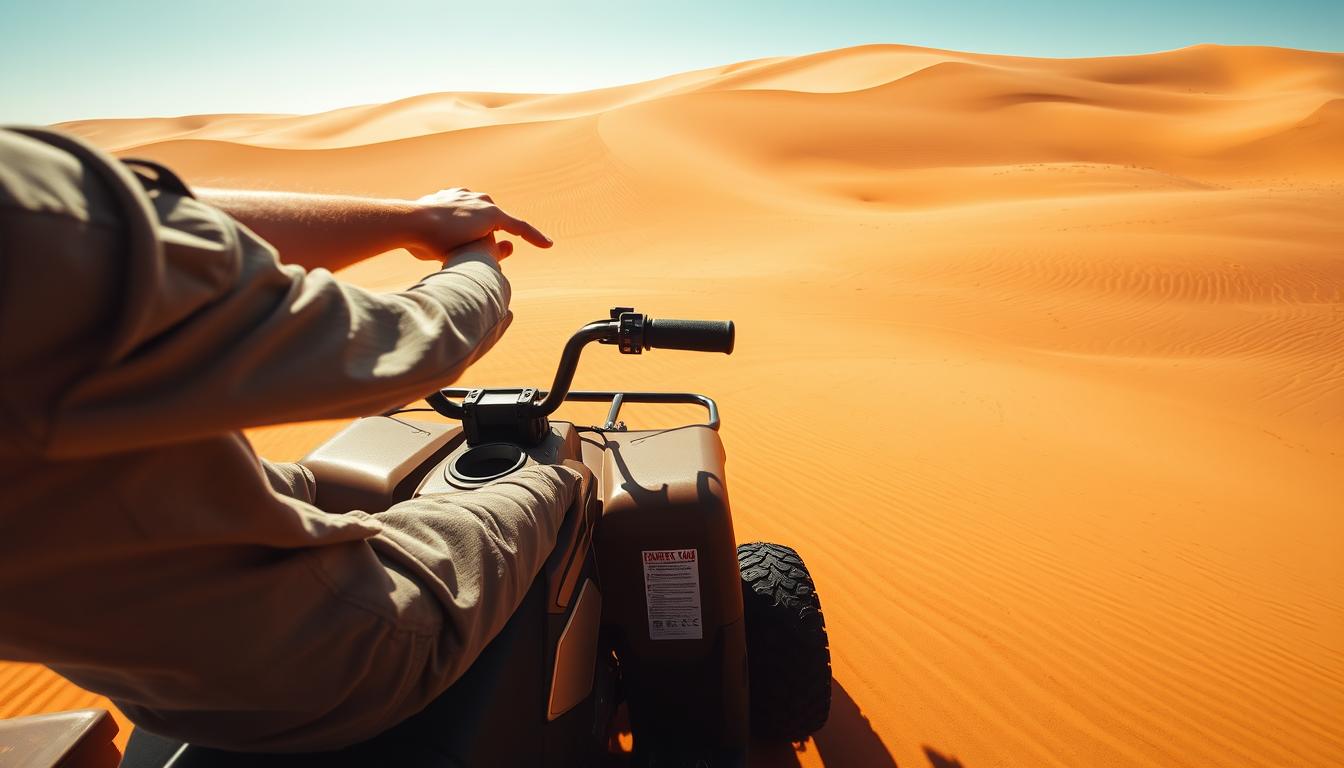
The first time you saw Al Badayer’s dunes glow at sunrise was unforgettable. Waves of red sand seemed to breathe. You felt the warmth in your palms on the grips, and the engine’s steady beat in your chest. You aimed for control over speed, wanting to master the desert’s rhythm safely.
This guide is for that moment. It will teach you how to control a quad bike on red sand as a beginner. You’ll get to know the UAE’s terrain, from Lahbab to Big Red. Ride after ride, your confidence will grow. You’ll learn at your own speed, building clear habits to follow.
If you want expert help and top-quality bikes, consider Desert Buggy Rental Dubai. They know the ins and outs of quad biking in the UAE. They offer smart setups and safe training. Contact them at +971 52 440 9525 or [email protected] for guided sessions that respect both the dunes and your limits.
Eventually, riding a quad bike for novices will become second nature. You’ll understand how to read the sand, control the throttle, and keep a straight line. Above all, you’ll relish the quiet strength in doing it correctly.
Key Takeaways
- You will learn step-by-step beginner quad bike control tailored to UAE red dunes.
- Calm throttle, smooth braking, and smart body position reduce risk on soft sand.
- Local terrain like Al Badayer and Lahbab requires reading dune faces before committing.
- Consistent pre-ride checks build trust in your bike and your judgment.
- Guided practice with Desert Buggy Rental Dubai supports safe progress.
- Quad Bike Riding for Novices focuses on control first, speed second.
- Respect for desert etiquette makes quad biking UAE safer for everyone.
Red Sand Quad Biking Basics for UAE Terrain
Red Sand Quad Biking Basics start with understanding the ground beneath your tires. Riding the UAE red dunes means dealing with fine, round sand grains. For those new to quad biking in the UAE, smooth movements, lower tire pressures, and consistent lines are crucial in soft sand riding.
Understanding Red Dune Composition and Soft Sand Behavior
Iron-rich sand gives Al Badayer and Big Red near Dubai and Sharjah a deep, red color and slippery feel. As it gets hotter, the top layer loosens, making your quad sink more. Light and steady throttle use is vital, and expect inclines of 30–34 degrees; take them at gentle angles.
After windy nights, sharp ridges and fresh cornices may appear. Treat these crests as fragile, keep an eye out for drop-offs, and balance your weight. This careful approach improves grip on the UAE red dunes.
Choosing the Right Time of Day for Stable Sand Conditions
Early mornings just after sunrise create cool, firmer sand that’s good for beginner quad biking UAE. The late afternoon is also favorable, but be wary of how shadows can obscure obstacles. Avoid the peak heat of midday as the sand loosens and control gets harder.
To start right and gain local tips, consider a licensed tour via top quad biking in Abu Dhabi’s red dunes that syncs your ride time with the best sand conditions and sharpens your Red Sand Quad Biking Basics.
Local Regulations and Etiquette in the UAE Desert
Follow the rules of desert etiquette UAE: only ride in allowed off-road areas, steer clear of protected spaces like the Dubai Desert Conservation Reserve unless you have a permit, and don’t take quads on paved roads. Stay on the right side when you can, let vehicles going uphill pass, and always have someone check before you go over a dune crest.
Always clean up after yourself, slow down near camel farms, and don’t disturb wildlife areas. Dress safely, know your riding limits, and heed your guide’s signals. These practices help make beginner quad biking UAE safer and keep the UAE red dunes accessible for all responsible riders.
Essential Safety Gear and Quad Bike Setup
Riding on red dunes becomes safer and more fun with the right gear and quad setup. Mixing good safety tips with a smart setup helps you control your bike easily, right from the start. Make sure your ATV safety gear is trusty and checks are easy and fast.
Helmet, Goggles, Gloves, and Body Armor Essentials
Pick a helmet certified by DOT or ECE, from brands like Arai, Bell, or Shoei. Pair it with tough goggles that won’t fog, from 100% or Oakley. And don’t forget gloves with padding to help you grip better and avoid blisters.
Dress in tough clothes and CE-rated armor for your chest, back, knees, and elbows, from brands like Leatt, Alpinestars, or Fox. Wear boots that support your ankles on rough sand. Adding a neck brace protects you during bumpy rides or falls. This gear is key for safe riding on UAE dunes.
- Hydration and comms: Take a hydration pack (2–3 liters) with added electrolytes, a whistle, and a charged phone or radio. Also, pack a simple first-aid kit and a small recovery strap.
Tire Pressure for Soft Red Sand Traction
Adjusting tire pressure helps your quad handle better on sand. For regular tires, use 4–6 psi. For thicker tires, 5–7 psi is better. Always check tire pressure when it’s cold, and then again after riding for a bit.
Keep the pressure low for better grip but avoid going too low to prevent damage during hard turns or when hitting edges. Smooth steering and careful driving will help you keep moving in soft sand without getting stuck.
Throttle, Brake, and Kill Switch Checks Before Riding
Make sure the throttle snaps back cleanly and the brake feels strong and consistent. Also, check the kill switch and lanyard to stop the engine quickly if needed.
Look over your quad for other essentials: correct oil and fuel levels, properly tensioned chain or CVT belt, tight wheel nuts, and functional lights. Ensure protection gear like skid plates and nerf bars are tightly fixed. Even if you rent from Desert Buggy Rental Dubai and they inspect it, do your quick checks. This will help you get used to your bike and ensure your safety gear works as it should.
How to Control a Quad Bike on Red Sand for Beginners
To gain control in the UAE dunes, stay calm, observe the ground, and use controls with purpose. As you learn, think forward, keep a smooth speed, and protect the red sand’s grip with gentle moves.
Neutral Body Position and Low-Speed Balance
Use a balanced stance: elbows out, knees slightly bent, looking straight ahead. At a slow pace, stand ready, with your body leaning back a bit and heels down. This helps absorb the bumps. Keep your arms relaxed to let the front wheel move freely and maintain balance on the soft sand.
If the quad starts to sink in deep sand, shift slightly back, but keep your body centered. This way, you won’t put too much pressure on the front tires and will keep good traction.
Progressive Throttle Control to Avoid Wheel Spin
Start increasing the throttle gently from a stop. A gradual increase helps keep momentum without the back tires digging in. If the rear starts to sink, ease off slightly, shift your weight back, then slowly increase power again.
See it as turning up a light slowly, not flipping a switch. Using the throttle this way is key to controlling a quad bike on red sand. It helps keep a good grip and reduces stress on the engine in the hot desert.
Feathering Rear Brakes for Stability on Descents
Go straight down and use the rear brake lightly but continuously. Use very little front brake to avoid the front dipping down. Look far ahead to keep your balance.
For tips on stopping quickly and safely, check out this guide on braking on a quad bike. Using the rear brake carefully helps you stay stable on red sand and keeps your path straight.
Reading Dune Faces, Ridges, and Slip Faces
Choose the windward side of dunes because they’re usually harder; the leeward sides are softer and steeper. Look for ridges, overhangs, and small dunes. Dark, smooth patches are often harder, while bright, soft areas may be more loose.
Always be careful near the top of dunes. Go up gradually and have an exit plan. Knowing this terrain helps beginners control their quad bike and stay balanced when the sand shifts.
Quad Bike Handling Tips for Soft Dunes
Riding red dunes combines skill with smart decisions. These tips teach you to understand the dune’s angle, choose a good path, and keep moving without straining the motor. For extra tips on getting ready and checks, see this desert quad guide.
Counterweighting on Side Slopes to Prevent Rollovers
On a slope, keep calm and apply sidehilling skills. Lean uphill, step on the uphill peg, and make the downhill tire stay light but grounded. If the front tire on the downhill side digs in, lightly speed up and lift your body up to shift weight better ATV.
When grip lessens or you feel unsure, turn downhill smoothly. Don’t make sharp turns uphill as it pressures the outside tires. Soft corrections keep you moving smoothly and the bike level on soft dunes.
Standing vs. Sitting: When to Shift Your Weight
Stand up when the sand is rough, with ruts, or whoops. Standing lets your legs absorb bumps and helps in shifting weight quickly. Keep your grip loose and follow the front to better manage soft dunes.
When on longer, harder paths, sitting saves energy and helps keep a steady speed. Stand before bumpy areas and crests, then sit when it gets easier. These tips help avoid tiredness and improve handling ATV.
Line Selection to Maintain Momentum on Climbs
Choose a path that is less steep and has supportive sand. Use existing trails for a harder surface but steer clear of deep ruts that can catch your tires. Accelerate steadily to keep going and avoid stalling.
If you start to slow down, it’s better to turn downhill early instead of struggling at the end. Always look ahead, plan your next moves, and choose smooth, wide turns. This strategy, along with sidehilling, makes your climb easier and safer.
Red Sand Riding Techniques for Smooth Control
Keep a steady pace on UAE’s red dunes. Use gentle S-curves to stay on top and find solid paths. Avoid stopping in soft spots to keep your ATV moving smoothly.
Control your speed carefully. With clutch-free control, keep a steady pressure to avoid overheating. On manual quads, try not to overuse the clutch to save your parts and keep going.
Lead with your body, then use the handlebars. Shift your weight to turn and avoid digging into the sand. This way, you won’t bury the front of the ATV and you’ll manage better in the sand.
Use the back brake more on steep drops. Try to use 70–90% rear brake and only add front brake on hard ground. Let the engine slow you down naturally, but don’t downshift too quickly.
Look ahead for changes in the sand like ripples or color shifts. Shadows can help you see changes in the dunes. Choose the best path and keep a steady speed.
Sand makes your ATV heat up quickly. Take short breaks to cool down, keep the airways clear, and don’t push the engine too hard. This keeps your ride smooth and your machine safe.
- Momentum: Keep rolling, trace S-curves, and avoid stopping in soft hollows.
- Throttle: Hold steady input for clutch-free CVT control; fine-tune throttle modulation on climbs.
- Steering: Lead with body weight and light countersteer to glide instead of dig.
- Braking: Favor rear brake; add front only when the surface firms up.
- Vision: Read shadows and textures to guide sand traction management.
- Cooling: Schedule breathers and keep airflow clear for smooth ATV handling all ride long.
Beginner Quad Bike Control Drills to Build Confidence
Building skill starts with simple moves on flat ground before you try big hills. ATV riders in the UAE use these exercises to get better at reacting, staying balanced, and controlling speed. Keep practices short, drink water, and notice what makes your biking better.
Figure-Eights on Flat Sand for Throttle and Steering
Place two cones 15–20 yards apart on flat sand. Do a figure-eight drill while standing. Look forward, keep elbows up, and lean on the outside foot through turns.
Gently increase speed to stay on top of the sand. Aim for smooth loops at a steady pace. If the front starts to slip, slow down, fix your path, and align yourself before trying again.
Stop-and-Go Starts to Manage Traction
Practice starting from a stop by slowly speeding up until the quad glides smoothly. If it starts to sink, ease off the speed, lean back, then smoothly speed up again. Keep doing this until it feels stable.
Try this on a small hill to get used to slopes. Relax your wrists and look ahead. You’ll get better at starting without any trouble.
Low-Speed Hill Approaches and Safe Abort Techniques
Go up a moderate hill slowly and at an angle. Only go up if it feels right. If you lose speed or control, turn downhill smoothly while using the back brake.
This way of stopping keeps you safe and protects the quad. Never hit the front brake on soft ground. Practice on easy hills with a friend watching. Note what tire pressure and body positioning help you the most.
- Session plan: 10–15 minute drill blocks, 5-minute cool-downs for you and the machine.
- Focus cues: eyes up, soft hands, smooth speed-up, using brakes gently, and making clean turns.
- Progression: Start on flat ground, move to a small hill, then try longer routes that include all exercises.
Managing a Quad Bike on Red Sand in Variable Conditions
In the UAE, dune conditions change a lot, so you need a flexible plan. Use strategies that keep the momentum but don’t spin the tires. Always watch for sharp edges and smooth spots created by wind and heat, using steady gas and gentle steering for easy desert riding.
Wind can make dunes sharper and create overhangs. Slow down before you reach the top and have someone check it out first. If you can’t see the path, go slow and test the ground before you speed up.
When it’s hot, the sand sticks less, and your engine works harder. Slow down, keep more space between riders, and stop to cool off. If your bike starts to overheat, ease up to help it cool down faster. Combining these tips helps both your traction and your engine.
Moist mornings or unexpected rain can make a hard shell over soft sand. It might seem okay at first, but be cautious. Start slowly, then speed up only if the ground can support you. This is important when riding on red sand that might give way under you.
Low sunlight can make it hard to see bumps and holes. Ride at an angle to see better and avoid the sun in your eyes. When it gets darker, slow down and signal to others early to stay safe.
Keep a good distance from others based on how dusty it is. In low visibility, keep at least five to eight seconds apart and ride in a staggered formation. This helps everyone see better and communicate, even as conditions change.
| Condition | Surface Change | Rider Adjustment | Bike Check | Why It Works |
|---|---|---|---|---|
| Strong wind | Sharper crests, lee cornices, erased tracks | Reduce crest speed, use a spotter, conservative lines | Confirm steering play and brake feel | Cuts risk of drop-offs and preserves control over unseen edges |
| High heat | Softer top layer, higher engine temps | Lower pace, extend gaps, add cool-down stops | Monitor CVT belt smell and temperature rise | Manages wind and heat effects to sustain traction and power delivery |
| Moisture present | Crust over soft substrate | Test with gentle throttle before climbs | Verify tire pressure stays desert-ready | Prevents sudden sink as the crust breaks under load |
| Low sun angles | Deep shadows, glare, poor depth cues | Lateral approaches, slower speed, early signals | Clean visor and check lights | Improves sightlines and decision time on hidden ripples |
| Dusty groups | Limited visibility and roost | 5–8 second gaps, offset lines | Horn and kill switch confirmed | Maintains contact and space for safe desert riding adaptation |
Include these tips in your riding plan and treat each dune as a new challenge. With consistent control and good space between riders, you’ll get the hang of riding a quad bike on red sand. This way, you respect the changing conditions and enjoy the ride.
Quad Bike Safety Tips for the Desert
Safe and fun UAE desert riding starts with smart habits. Use these tips to plan your ride wisely. Stay calm and in control by keeping your speed down, looking ahead, and talking with your group first.
Group Riding Signals and Spacing on Dunes
Set group riding rules before heading out. Use easy signals: hand up means stop, palm down to slow, tap helmet and point for danger, and one finger up for single file.
- Ride staggered on flat ground; go single-file when climbing or going down.
- Keep a safe distance, more so in dust, heat, or on tricky slopes.
- Choose a leader and a sweeper. Do headcounts at stops to stick together.
Share your planned path and take a charged phone plus GPS or radio for remote areas. With Desert Buggy Rental Dubai, you get guides and safety gear.
Heat, Hydration, and Sun Protection in the UAE
Staying hydrated in the desert is a must. Drink lots of water with electrolytes regularly. Rest in the shade and skip heavy clothes that don’t breathe well.
- Dress in UPF-rated clothes, wear a neck cover, and use SPF 30+ sunscreen.
- Look out for heat exhaustion signs like headaches, dizziness, and cramps.
- Keep drinks in an insulated pack and drink often, not just when stopping.
Following these Quad Bike Safety Tips will help you deal with the sun and heat. This way, you can focus on enjoying the dunes.
Navigating Blind Crests and Avoiding Drop-Offs
Always be cautious at blind crests. Slow down, stay to one side, and go at an angle to have an out. This helps if the other side is too steep or busy.
- Have someone watch ahead on new dunes and don’t jump over crests unseen.
- Look for dangers like slip faces, parked cars, and oncoming riders.
- If going down is unavoidable, lightly use the rear brake and stay straight.
Mix these tips into your UAE desert riding habits for a better experience. Good skills and communication make dangers manageable.
Quad Bike Control Skills for Climbs, Crests, and Descents
Riding red dunes is best when mixing confidence with care. Your skills should focus on managing momentum and maintaining a clear vision. Smooth movements help ensure safety on the UAE’s shifting sands.
Approaching Steep Climbs with Momentum and Line Choice
Look for the easiest path up, steering clear of deep tracks. Start powering up before the slope begins and keep pulling steadily. Lean slightly forward to keep the front end light but touching the ground.
If the front end lifts too much, ease off the power, then reapply smoothly. Stop trying if you lose momentum and prepare to try again. This method makes climbing and descending dunes more efficient and safer.
Cresting Dunes Safely with Controlled Throttle
Slow down as you near the top and approach with care. Keep your knees flexible to take in any bumps, ready to stop or steer. Always use a spotter on new crests; the other side may hold surprises.
Gently adjust the throttle to keep grip, then go forward when you know it’s safe. This technique improves your skills and ensures you manage your speed safely over dunes.
Descending with Rear-Brake Modulation and Straight Lines
Descend directly to prevent sliding sideways. Shift your weight back, focus ahead, and smoothly operate the rear brake. Use front brakes only on more solid ground.
If you start to slide, briefly let go of the brakes to stabilize, then brake softly again. This way, both climbs and descents become more predictable, ensuring safety on soft red sand.
Common Beginner Mistakes and How to Avoid Them
Pushing the gas too hard in soft sand is a big mistake for beginner ATV riders. This makes the tires sink and the CVT get too hot. Gently speed up, let out some air from the tires for better grip, and lean back to keep the quad on top of the sand. These steps are key Quad Bike Handling Tips for better traction right away.
Riding seated through bumpy areas makes the front end dig in and tires your arms. Instead, stand with a light stance, elbows high, and knees bent. Keep your grip on the handlebars light so they can move freely. This way, you stay safe on the dunes and keep the quad steady over bumps.
If you get stuck going uphill, don’t try to turn up the slope. That can make the quad flip over. Face downhill instead, hold the rear brake, and smoothly exit the situation. Practice this on smaller hills until it’s easy. This is essential quad biking UAE advice for navigating tight sand dunes.
Going fast over a hill without seeing what’s ahead is risky. Approach slowly at an angle, stop, and look around. Use a friend to watch out when the edge is steep or busy. This trick works well with other Quad Bike Handling Tips for staying safe on hilltops.
The heat in the UAE can be intense. Not drinking enough water makes you slow and prone to bad decisions. Make sure to take breaks for water, wear sun-protective clothes, and have electrolyte tablets with you. This is smart quad biking UAE advice to keep you alert.
Not checking your quad before riding can turn tiny problems into bigger ones. Always check the rear brake, how the throttle feels, and the kill switch before you head out. If you’re renting, make sure the rental place shows you how everything works, whether it’s a Yamaha, Can-Am, or Honda. Doing so helps prevent beginner errors ATV when you’re out in the desert.
Following too closely in dusty conditions makes it hard to see. Keep a safe distance and ride slightly to the side to see the path better. By doing this, you’ll avoid wheel spin and sudden stops, ensuring safe dune practices when riding through busy desert areas.
| Mistake | Risk in Red Sand | Fix | Why It Works |
|---|---|---|---|
| Over-throttling in soft sand | Wheel trenching and CVT heat | Steady roll-on, lower PSI, rearward weight shift | Builds traction to avoid wheel spin and reduces drivetrain load |
| Sitting through rough sections | Front digs, arm pump, loss of control | Stand in attack stance, elbows up, light grip | Decouples body from bumps for stable control on dunes |
| Turning uphill after a stall | High rollover potential | Straighten out, use rear brake, abort downhill | Keeps center of gravity low and predictable on slopes |
| Cresting blind at speed | Drop-offs and collisions | Slow approach, slight angle, use a spotter | Buys time to scan and pick a clean line |
| Ignoring hydration and heat | Fatigue and poor decisions | Planned water stops, UPF clothing, electrolytes | Maintains alertness for safe dune practices |
| Skipping pre-ride checks | Brake or kill switch failure on climbs | Test controls; request operator briefing | Prevents critical faults where recovery is limited |
| Riding too close in dust | Low visibility and slow reaction time | Increase spacing and ride offset | Improves sightlines and traction choices on red sand |
Mix these Quad Bike Handling Tips with careful speed and enough space between riders. This way, you’ll reduce beginner errors ATV, avoid wheel spin, and stick to safe dune practices. It’s exactly what the quad biking UAE advice suggests for the deserts around Dubai and Abu Dhabi.
Conclusion
You now know the basics of riding a quad bike on UAE’s red sand. Start by understanding how dunes are made. Ride at the best time and prepare your bike with correct tire pressure and safety gear. Keep a neutral body position, use the throttle smoothly, and lightly press the rear brake.
To get better, practice regularly. Work on different moves like figure-eights, starts and stops, and how to safely stop on hills. Learn to read the sand and avoid surprises. Keep a safe distance when riding in groups, watch out for heat, and stay hydrated. Always follow the local riding rules.
Looking to improve your skills at red dune locations like Al Badayer and Lahbab? Consider booking with Desert Buggy Rental Dubai. They’re available 24/7. You can pick from Quad Biking Tours, Dune Buggy Tours, and more fun activities. To book, call +971 52 440 9525 or email [email protected]. Applying these tips on real dunes will boost your confidence with every ride.
FAQ
What makes UAE red sand different, and how does it affect quad bike control?
UAE’s red dunes are special because they have very fine sand that’s also rich in iron oxide. This makes the sand act like tiny ball bearings under your tires, causing quick changes in traction. To handle these changes, you’ll need to adjust your tire pressure to be lower, be smooth with your throttle, and choose your path carefully to stay on top without sinking in.
What tire pressure should you run for soft red sand?
On soft red sand, you should start with 4–6 psi for 2-ply tires and 5–7 psi for tougher 6–8 ply tires. Always check tire pressure when it’s cold and check again after a bit of riding. Remember, lower pressure helps you float on the sand but be careful not to lower it too much to avoid tire damage.
When is the best time of day for beginner quad bike control on red dunes?
The best times are early morning or late afternoon. During these times, the cooler temperatures help harden the surface. This reduces your chances of sinking into the sand. Try to avoid going out between 12:00 pm and 3:00 pm. The heat during those hours makes the sand looser, increases engine temperature, and can make you feel more tired.
What safety gear do you need for red sand quad biking?
You should wear a helmet that meets safety standards, like those from Arai, Bell, or Shoei. Also, wear goggles to protect against fog, gloves, body armor that’s CE-rated, and guards for your knees and elbows. You should also wear good off-road boots. It’s wise to carry a hydration pack, use sunscreen, and consider a neck brace for extra safety.
How do you use throttle to prevent wheel spin in soft sand?
Start by rolling on the throttle slowly and keeping it steady. If you see the back wheels starting to dig into the sand, ease off a little. Shift your weight backwards to help, then gently increase the throttle again. For ATVs with CVT, make sure you avoid quick throttle changes to keep the transmission working smoothly.
How should you position your body for control on dunes?
Keep a neutral posture on the bike with your elbows up. Your knees should be ready to grip the bike. When you’re crossing rough areas, stand, lean back a bit, and keep your heels down. If you’re riding along a slope, shift your weight to the higher side to avoid tipping over.
What is the safest way to descend a steep dune?
While going down a steep dune, align with the slope, stand back just a little, and control your speed with the rear brake. Use the front brake only if you’re on more solid sand. If you start sliding too much, let go of the brakes for a second to find stability, then brake gently again.
How do you crest a dune safely as a novice?
As you near the top, slow down and approach at a gentle angle. Be ready to stop. Always assume there might be a drop-off unless you know it’s safe. Keep your knees ready to absorb any shocks from unexpected bumps.
What drills build beginner quad bike control on red sand?
Practice doing figure-eights around cones to get better at controlling throttle and steering. Practice starting and stopping to understand how traction works. Try approaching small hills at a slow speed and practice safely stopping using the back brake.
How do you choose lines for climbs to maintain momentum?
Look for the easiest path that goes up at a gentle slope. It’s good to follow paths that are already compressed, but stay away from deep tracks. Speed up before the slope starts and keep your steering smooth. If you start losing speed, turn and go down the slope in a wide, easy curve.
What are key local regulations and desert etiquette in the UAE?
Stick to areas that allow off-roading and stay off public roads. Some places, like the Dubai Desert Conservation Reserve, need a permit. Let vehicles going uphill pass first, and try to keep to the right. Always wear protective gear, clean up after yourself, and be careful not to bother any farms or wildlife you come across.
How do wind, heat, and moisture change riding techniques?
Wind can make dunes sharper and might erase your tracks, so be more careful. Heat makes the sand looser and can overheat your bike, so take it easy and cool down when needed. After it rains, the top layer of sand might be hard, but soft underneath, so check the ground with a light throttle before going up.
What pre-ride checks should you do before heading into the dunes?
Make sure your throttle snaps back and your brakes feel strong. Check that your kill switch works. Also, check your oil, gas, and the condition of your chain or CVT belt. Look at your tire pressure, and make sure your protective gear like skid plates are secure. If you’ll be out late, double-check your lights.
How should you manage group riding on dunes for safety?
Decide on hand signals before you start. On flat ground, spread out a bit, but line up one after the other on slopes. Stay a good distance behind the rider in front of you in dusty areas. Have a leader and a person at the end of the group and count everyone at each stop. Never go over a dune top without someone checking it’s safe first.
What are the most common beginner mistakes on red sand and how do you avoid them?
Beginners often use too much throttle, sit down too much, try to turn uphill, go over the top of dunes without looking, forget to drink water, and skip checking their bikes before riding. Avoid these by using your throttle carefully, standing up when it’s rough, planning how to get down if you stop going up, using spotters, drinking water regularly, and always checking your bike before you head out.
Where can you book guided sessions and reliable quad rentals in Dubai?
Contact Desert Buggy Rental Dubai for well-kept quads and expert advice on riding the Al Badayer and Lahbab dunes. They offer Quad Biking Tours, Dune Buggy Tours, Desert Safaris, Camel Rides, Desert BBQ Dinners, and sandboarding, all available 24 hours. You can reach them at +971 52 440 9525 or by email at [email protected].
What are the best quad bike riding techniques for novices on red sand?
Maintain a steady pace with gentle turns. Control the bike by shifting your body and lightly using the handlebars. Use the rear brake more on steep areas and always look ahead for changes in the sand. Practice in short sessions to stay sharp and protect the bike.
Categories
- Uncategorized (4)
- Desert Buggy Rental (2,089)
- Dune buggy (4)
- Quad Bike Rental (1)
- Desert safari (1)
- Hot air ballon (2)
- dirt bike (4)
Recent Post



Tags
2025 Outfit Trends Abu Dhabi 2025 Aerial photography Aerial View Al Naseem beach experiences Award-winning dining Dubai Bali Beaches Bangkok Nightlife Barcelona tourist spots Beaches in Goa Bespoke yacht trips Best time to visit Southeast Asia Bollywood-themed rides Customized Desert Excursions Desert Dunes Exploration Designer boutiques in Dubai Mall Designer fashion in Dubai Dubai beach resorts Dubai Marina cruise Dubai Night Sky Dubai Quad Biking Adventures Dubai spa experiences Dubai Wellness Retreats Easter in Malaysia Georgia sightseeing Hiring Photographer in Dubai Indoor experiences in Dubai Italian Cuisine Legoland Dubai rides Luxury spa retreats Malaysian Culture Malaysia trip Milan travel tips Photoshoot Ideas Private Desert Expedition Ritz-Carlton Dubai beach access Riverland Dubai entertainment options Riyadh Sightseeing Santorini Beach Activities Singapore Travel Guide Sydney Beaches Theme parks Thrilling Flight Experiences Thrilling Palm Jumeirah experience Water activities for kids