
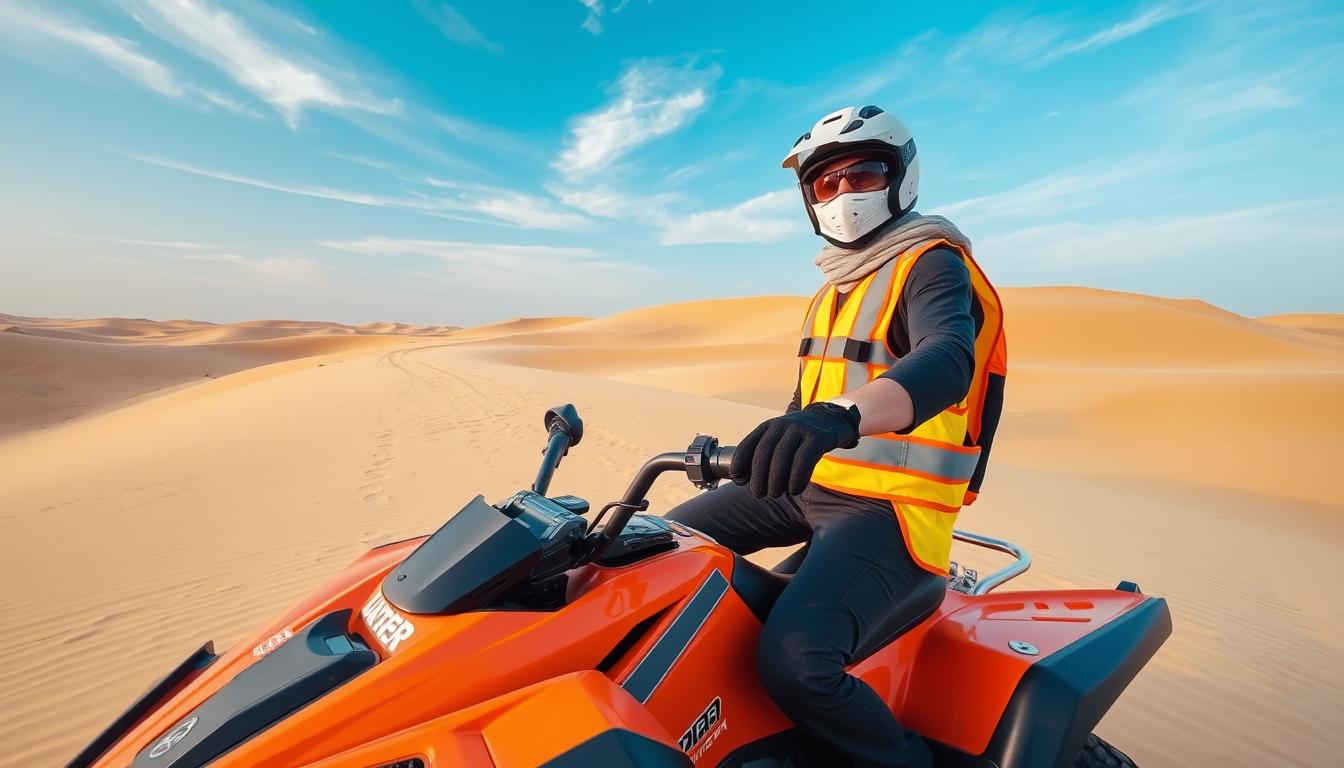

- 126 Views
- 29 Min Read
- (0) Comment
The engine’s hum wakes you before sunrise in Ras Al Khaimah. The skies turn pale gold. From afar, the dunes seem gentle, but dangers lurk. A single mistake can cause a crash. So, you plan every move to stay safe and enjoy the thrill.
This guide offers a mix of proven advice and practical steps for RAK’s terrain. It covers everything from navigating huge dunes to handling rocky paths. You’ll get tips tailored for the local weather, like adjusting tire pressure for better grip and positioning yourself right for different slopes. Riding with professionals like Desert Buggy Rental Dubai also means less risk, thanks to their guidance and well-kept vehicles.
If you’re just starting, you’ll quickly gain confidence. For the experienced, it’s a chance to refine your skills. These tips are crucial for anyone riding a Quad bike in RAK. They focus on staying hydrated, staying in touch, and always having a backup plan.
Start with a deep respect for the desert’s power. Then, mix in your skill. With the right advice, your quad biking in RAK becomes more than a thrill. It turns into a safe, repeatable adventure.
Key Takeaways
- RAK terrain changes fast—dunes, sabkha, and wadis require specific techniques and steady throttle control.
- Heat and wind shape risk; plan rides around cooler hours and clear visibility windows.
- Set tire pressures for sand traction and keep momentum without overspeeding on climbs and descents.
- Adopt balanced body positioning for crests, slip faces, and off-camber slopes.
- Carry water, communications, and an emergency plan suited to the Northern Emirates.
- Use professional guidance and maintained fleets to reduce risk on unfamiliar routes.
Understanding RAK Terrain and Weather for Safe Quad Biking
Ras Al Khaimah is a place where cautious riders do well. To handle the terrain and weather, clear habits and careful judgment are key. Always follow the RAK quad biking rules. Make a plan, be cautious, and stay safe before you start riding.
How Ras Al Khaimah dunes and wadis affect riding stability
The dunes near Al Wadi and Al Hamra are tricky, with steep and shifting sands. Approach the tops gently, control your speed, and watch out for hidden drops. In the wadis towards Jebel Jais, there’s a mix of gravel and rocks; stand up, stay loose, and let your bike find its way. These tips help you keep balanced, following RAK’s guidelines.
After it rains, wadis can have ruts and hidden rocks. Look ahead, hold the handlebars lightly, and avoid braking hard on the rocks. These precautions help you stay in control without struggling against the earth.
Seasonal weather patterns and heat management strategies
Summer brings intense heat and humidity. Shorten your rides, rest more, and drink plenty of fluids with electrolytes. Wear sealed goggles to protect against sand when the shamal winds blow, and keep a gap to see clearly.
Check the weather, especially after unusual winter rains that might leave mud. These steps help you stay safe and ready for sudden weather changes.
Reading sand conditions: soft sand, slip faces, and cresting
For soft sand, reduce tire pressure and keep moving steadily. Morning sand can change quickly from hard to soft. Keep looking ahead and adjust your speed smoothly to handle these changes.
Going down steep dunes, lean back and be ready on the brakes. When going over the top, go slow, control your speed, and be ready to adjust. These methods lower the risk of flipping over.
Time-of-day considerations for visibility and temperature
Ride early in the morning or late in the day for cooler temperatures and better light. Avoid midday when the light makes it hard to see dangers. Choosing the right time helps you see better and stay safe.
Bring extra water and electrolytes, take breaks in the shade, and adjust to the slowest rider. Starting with these simple steps means better safety for everyone.
Pre-Ride Inspection and Maintenance Checks
Riding safely and smoothly starts with checking your quad. Doing a thorough check is key for safety, especially in sand and steep areas.
Brake, throttle, and steering responsiveness tests
Check both front and rear brakes to ensure they’re firm, not spongy. When you squeeze them while rolling, your quad should stop straight. Make sure the throttle snaps back easily without sticking.
Try turning the handlebars all the way in each direction. There should be no grinding, and it should feel smooth. Also, check the steering parts to make sure your ride stays on track.
Tire pressure and tread assessment for dune traction
Tire pressure should be between 6–10 psi, depending on a few factors. Lower pressure is better for sand. Always use a reliable gauge to check before it gets hot.
Look at your tires for enough tread, cuts, or bulges. Good tires are essential for safety and handling in Ras Al Khaimah’s terrain.
Fluid levels, chain tension, and battery health
Make sure your engine oil, coolant, and brake fluid are all good. Fill up your fuel, and always plan for extra in case you go off-route.
Also, check your chain or belt and the battery connections. Loose parts can be a problem due to the dune’s vibrations.
Emergency toolkit and spares to carry in the desert
Your kit should have essentials like a plug kit, CO2 cartridges or a mini-compressor, and a tow strap. Also pack tools, spare fuses, zip ties, tape, an extra spark plug, and a tire gauge.
Don’t forget a shovel, a fire extinguisher, and a light for evening rides. These items help you stay safe and comply with safety rules in RAK.
Essential Safety Tips for Quad Bike Riders in RAK
Smooth and deliberate actions help you ride farther and safer. These tips for quad bike riders in RAK focus your attention. They keep you safe while you enjoy the dunes and off-road tracks. Make these habits a part of every ride to lower risks and keep the fun alive.
Core riding principles for dunes and off-road tracks
Maintain a steady throttle on soft sand. Avoid sudden twists that can bury the wheels. Pick straight paths when you climb and ease over the top. Make your turns on solid ground to reduce the chance of rolling over.
When going downhill, aim straight with a light throttle. This technique keeps the front of the bike up. Never jump if you can’t see where you’ll land. Following these tips helps you stay in control on the shifting sands of RAK.
Speed management on climbs, descents, and turns
Gain speed early when going up, then slow down as you reach the top to see what’s ahead. Don’t leap over the crest blindly. First check, then go. When coming down, pick your speed beforehand and avoid hard braking to keep from tipping over.
Approach turns at a manageable speed. Finish braking before you hit the turn’s tightest point, especially on sandy patches. Staying steady is key to safe quad biking in RAK.
Body positioning for balance on uneven terrain
Stand up with knees bent and elbows out for better bike control. Lean uphill on slopes to avoid flipping. On uphill runs, move forward for grip. Shift back on downhill paths to drive power to the wheels.
Use light grips and stay active with your feet to navigate bumps. These tips keep your posture right and aligned with the traction.
Situational awareness and hazard anticipation
Always be on the lookout for dangers like sharp ridges, sudden drops, and other bikers. Keep enough distance to stay clear of dust and surprises. Signal clearly and use lights at low light to stay seen.
Only ride as far as you can see ahead, and slow down if the path isn’t clear. Keep alert, keep communicating, and let the land’s shape inform your choices. These are the cornerstones of safety for quad bikers in RAK.
Personal Protective Equipment for Quad Biking in RAK
The desert terrain is more forgiving to those who gear up properly. When you’re in RAK, make sure you prioritize safety for quad biking. This way, you can enjoy the ride ahead without worrying about the risks. These tips will help you prepare a kit that’s good for the desert’s heat, sand, and wind.
Helmet standards and proper fit
Choose a helmet that meets DOT or ECE 22.06 standards, either full-face or off-road. It should fit snugly, secure with the chin strap, and have an even lining touch around your head. Always check the helmet’s shell and inner lining for any damage before you ride.
When renting, try on different sizes to find the best fit. If you’re borrowing one, check its certification and manufacturing date. A well-fitting helmet minimizes head movement during falls, enhancing overall safety while quad biking in RAK.
Goggles, gloves, and armored apparel
Choose goggles designed for sand, with anti-fog lenses and a foam seal to keep out dust. Carry an extra clear lens for riding in low light or at dusk. Goggles with good ventilation help maintain clear vision despite sweat and heat.
Wear gloves that offer palm padding and protect your knuckles for better grip and to prevent blisters. Equip yourself with CE-rated armor for your shoulders, elbows, and back, and wear pants that resist abrasion. Finish your kit with boots that support your ankles and have reinforced shanks. These protective pieces will help you enjoy longer rides with less risk of getting hurt.
Hydration packs, sun protection, and cooling layers
Keep a hydration pack with 2–3 liters capacity handy, and drink every 10–15 minutes through a bite valve. Use electrolyte tablets on longer rides to compensate for salt lost in sweat. Staying hydrated is crucial for safety during quad biking in RAK.
Use a broad-spectrum SPF 50 sunscreen and lip balm to protect your skin. Dress in a UV-protective jersey, wear a neck gaiter, and choose lightweight, long-sleeved clothing. Consider cooling vests or evaporative neck wraps to stay cool in the summer’s peak heat.
Emergency beacon, whistle, and first-aid essentials
For remote rides, carry a personal locator beacon or satellite communicator for emergencies. Include a loud whistle to signal for help across the dunes. Always attach these items to your person, not the quad.
Also, pack a compact first-aid kit that includes an Israeli bandage, sterile gauze, antiseptic wipes, tweezers, care for blisters, trauma shears, a triangular bandage, oral rehydration salts, and any personal medications. For more details on essential gear for safe quad biking, check out this guide on desert riding protection.
| Gear Item | Standard/Spec | Key Fit/Feature | Benefit in RAK Conditions |
|---|---|---|---|
| Helmet | DOT or ECE 22.06 | Snug fit, secure strap, intact liner | Reduces head injury risk and rotation on sand impacts |
| Goggles | Anti-fog lens, foam seal | Sand-specific vents, spare clear lens | Clear vision in dust, glare, and low light |
| Gloves | Padded palms, knuckle guards | Breathable, secure closure | Grip control and blister prevention on long rides |
| Armored Apparel | CE-rated elbow/shoulder/back | Abrasion-resistant pants, secure fit | Impact absorption and skin protection in falls |
| Boots | Reinforced shank | Ankle support, tall cuff | Foot protection on rocky patches and hot sand |
| Hydration Pack | 2–3 liters | Bite valve, electrolytes | Prevents heat stress and cramps under sun |
| Sun Protection | SPF 50, UV-rated fabric | Neck gaiter, long sleeves | Guards against burn and dehydration |
| Cooling Layers | Evaporative tech | Cooling vest or neck wrap | Lowers core temperature during midday heat |
| Emergency Beacon | PLB or satellite communicator | On-body carry, SOS function | Reliable alerts beyond cell coverage |
| First-Aid Kit | Trauma-focused | Bandage, gauze, antiseptic, ORS | Immediate care while awaiting help |
RAK Quad Biking Safety Regulations and Local Guidelines
You can ride on private and desert lands with permission. Always follow operator briefings, signs, and rules set by landowners. The guidelines and safety rules in RAK are there to protect you, other riders, and nature.
Age, licensing, and supervised ride requirements
The minimum age for riding varies with the quad’s engine size and the type of tour. In Ras Al Khaimah, young riders must use quads suited to their age. They must stick to routes set by operators and be watched closely. You might need a permission slip from a guardian and show an ID.
It’s not allowed to ride on public roads. You should only load and unload quads at legal spots or the tour’s starting point. Operators might ask you to declare you haven’t used drugs or alcohol. They can refuse service if you don’t follow the rules. This is in line with RAK’s quad biking guidelines.
Designated riding zones and protected areas
You’re only allowed to ride in areas the operator has okayed. It’s important to respect signs that keep you out of certain places. These include protected dunes, farms, areas around utility lines, and private meeting spots.
Don’t ride in areas set aside for conservation to keep the local plants and dune formations safe. The rules in RAK say you should stick to marked trails. This is especially true near where people live and where tourists gather.
Noise, environmental, and wildlife considerations
Keep the engine noise down near camps or homes. Slow down when you’re getting close to or leaving these areas. Make sure you take all your trash with you and lock up fuel containers to avoid leaks.
Give animals their space and try not to disturb their homes or tracks. Following these guidelines helps protect the environment. It’s important during both busy and quiet times.
Operator responsibilities and liability awareness
It’s up to you to ride safely, wear all the needed gear, and listen to your guide. Make sure you read and understand all the waivers. Know what the insurance covers and what it doesn’t before you start.
Find out what the protocol is in case of an accident or if you need help. The safety rules in RAK expect you to report any problems right away. Stop riding if the guide thinks it’s not safe.
| Requirement | What You Must Do | Why It Matters |
|---|---|---|
| Age & Supervision | Match engine size to rider age; minors ride under direct adult or guide supervision with consent and ID. | Reduces risk and aligns with RAK quad biking guidelines for youth safety. |
| Designated Zones | Stay on operator-approved routes; avoid protected dunes, farms, and utility corridors. | Prevents trespass and protects sensitive landforms under Quad biking safety regulations in RAK. |
| Noise & Wildlife | Limit revving near camps and homes; keep distance from wildlife; pack out all waste. | Maintains community goodwill and safeguards habitats and migration paths. |
| Highway Prohibition | Do not ride on public roads; use legal access points or tour bases for loading. | Meets traffic laws and avoids collisions with road vehicles. |
| PPE & Skill Limits | Wear helmet, goggles, gloves, and body armor; ride within ability and heed guide commands. | Cuts injury odds and ensures safe group coordination. |
| Liability & Insurance | Review waivers, deposits, and coverage limits; report any incident immediately. | Clarifies financial responsibility and speeds assistance if damage occurs. |
Route Planning, Navigation, and Group Riding Etiquette
Make your ride in Ras Al Khaimah smooth and safe with smart planning. Follow quad bike safety tips for mapping routes that fit your group’s skill level. Balance fun and safety by making your plan clear and setting group rules before starting.
Riding safety measures for quad bikers in Ras Al Khaimah include picking smart routes. These can help you get help faster and lower risks. Keep your plan simple, share it with everyone, and follow it unless things change.
Planning out-and-back routes with safe bailouts
Pick routes that are close to service roads or familiar trails. Mark bailout points like resort roads and gravel paths for quick exits if needed.
On longer trips, place fuel and water spots at halfway points. Make sure you know how far each rider can go. This ensures the group turns back with extra fuel, not running out.
GPS apps, waypoints, and offline maps for RAK
Load offline maps on Gaia GPS, Google Maps offline, or OsmAnd. Mark your start and end points, plus safe spots and dangers like steep slopes and rocky areas.
Always carry a compass as a backup. It’s vital for safety when your battery dies or your device gets too hot. Keep your phones and GPS devices cool to avoid damage.
Lead and sweep roles, spacing, and hand signals
Name a leader to guide the way and a sweeper to help if anyone falls behind. Make sure you can see each other, and spread out in dusty or windy conditions.
Learn hand signals for stop, slow down, and pointing out obstacles. These signals help keep everyone informed over the noise of the engines.
Lost rider protocol and regrouping procedures
If a rider gets lost, everyone should stop moving and mark their location. Try to contact them by radio or phone, then go back to where you last saw them.
Keep the group together, sending out only a small team to search. The rest should wait in a safe spot with water and shade. Stay there until everyone is back together or at a planned meeting point.
| Planning Focus | Action Steps | Benefit in RAK Terrain | Key Tools |
|---|---|---|---|
| Route Structure | Pick out-and-back paths parallel to service roads; mark bailouts at resort roads and gravel tracks | Faster evacuation and easier navigation across dunes and wadis | Route plan, bailout list, fuel/water cache notes |
| Navigation Setup | Preload offline maps; save start/finish, rejoin points, hazards; carry compass backup | Reliable guidance when GPS drops or devices overheat | Gaia GPS, Google Maps offline, OsmAnd, compass |
| Group Roles | Assign lead and sweep; maintain visual chain; widen gaps in dust | Smoother pace, fewer incidents, quicker responses | Radios, helmet intercoms, high-visibility flags |
| Signal Protocol | Standardize stop, slow, obstacle left/right, fuel/water signals | Clear communication despite engine noise and wind | Hand signal card, briefing before start |
| Lost Rider Response | Stop movement; mark location; radio call; retrace to last known point; avoid splitting the group | Rapid regrouping without compounding risk | GPS with markers, radio/phone, shade and water |
| Resource Management | Plan fuel/water caches; confirm range; set turn-back buffer | Prevents stranding and heat stress on long runs | Fuel cans, hydration packs, cooler bags |
Emergency Response and Desert Survival Basics
First, ensure the scene is safe. Turn off the engine, make sure the quad is stable, and look for any fuel leaks or fire dangers. These steps protect you and others helping. Keep your helmet on unless it’s hard to breathe.
Next, quickly check the person’s condition. Look at their airway, breathing, and circulation. Then, check for any disabilities and expose any injuries. To stop bleeding, press directly on the wound and bandage it tightly. Use a splint for broken bones. If you think there’s a spine injury, don’t move them unless it’s dangerous to stay.
If you need help, call 998 for an ambulance or 999 for the police. Give them your exact location using GPS. If there’s no cell service, use a satellite device and keep your messages short and regular. These steps ensure help can find you quickly.
Don’t wait to treat signs of heat illness. Find shade, loosen clothing, and cool down at the wrists and neck with water. If the person is awake and can drink, give them small sips of water with rehydration salts. For heat exhaustion, have them rest and cool down slowly. For heat stroke, which includes confusion and very hot skin, cool them down fast while waiting for help.
If you’re stuck, stay with your quad for safety and to be seen. Use a tarp or flag for shade, sip water slowly, and use a mirror or strobe to signal for help. At night, use a steady light to mark your location and save battery on gadgets.
Have important items within reach: a trauma bandage, a sling, rehydration salts, a splint, a whistle, and a satellite messenger. With these and smart thinking, you can make a big difference in an emergency.
Quick reference
- Shut down, stabilize, check for leaks.
- Airway, breathing, circulation, disability, exposure.
- Direct pressure for bleeding; immobilize fractures.
- Call 998/999; send GPS; use satellite if needed.
- Cool, hydrate, and rest; escalate for heat stroke.
- Stay with the quad, make shade, signal, conserve power.
Make these safety steps automatic every time you ride. Clear communication, proper cooling, and effective signaling can turn a scary situation into a safe one, right up until help arrives.
Common Quad Biking Mistakes to Avoid in Ras Al Khaimah
Smart riders learn from near-misses before they happen. Use these quad biking safety tips to stay in control on dunes and wadis. Remember to apply these riding safety measures every time you go out.
Over-throttling on ascents and crest jumping
Don’t full throttle on climbs. Wheelspin can dig your rear tires into the sand, stopping you. Instead, give steady power, lean forward, and pick a clean line to follow.
When you get close to the crest, slow down and check what’s ahead. Crest jumping might throw you into unseen danger or another rider. Following these tips can lessen the chances of rollovers and hard landings.
Hard braking on descents and side-sloping errors
Try not to brake hard when going downhill. Shift to a lower gear, use engine braking, and brake lightly while keeping straight. This way, you’ll descend safely.
Be careful on steep, soft slopes to avoid flipping over. Lower your angle, find harder ground, or cross at the bottom. These actions keep you safe on unstable ground in Ras Al Khaimah.
Riding alone without comms or water
Always have someone with you or be part of a group in remote areas. Make sure your phone and radio or a satellite communicator are fully charged. And don’t forget to bring at least 3 liters of water per rider for half a day outdoors.
Read up on safety like this quad bike safety overview before you ride. Good planning and regular check-ins mean help can get to you if necessary.
Ignoring fatigue, heat stress, and dehydration signs
Be aware of signs like headache, cramps, and feeling dizzy or cranky. If you notice these, stop in a shady spot, cool down, and drink water with electrolytes.
If you’re getting tired, take breaks every 30 to 45 minutes, especially during hot weather. Switch who leads, and plan activities based on the newest rider. These are easy tips that are very helpful in the desert heat.
Keeping up with these riding safety measures in Ras Al Khaimah—like using the throttle wisely, braking smoothly, staying hydrated, and good communication—can make risky situations manageable and safe.
Family and Beginner-Friendly Riding Safety Advice
Start in simple areas with smooth dunes and solid paths near Ras Al Khaimah’s tour centers. This advice makes initial rides smooth and simple. First, get a pro overview and do a short trial run. It will teach you about speed control, how to brake slowly, go straight uphill, and get off safely.
Choose quads that are easy to handle and have speed control. Ride at a safe, slow speed and give clear instructions. With a good coach-to-learner ratio, like 1:2, each beginner can learn quickly and safely.
In the summer, ride for 20 to 30 minutes, then rest in the shade. Drink water and have something with electrolytes. Wear the right protective gear that fits well: a good helmet, goggles, gloves, and chest protection. These tips help reduce tiredness and build confidence early on.
Learn easy hand signs for stop, slow down, or point out dangers. Ride in a line, keeping a safe distance in dusty areas. Don’t ride at night. Choose the morning or late afternoon when it’s cooler and you can see better. Also, always look ahead, not down at your wheels, and hold your elbows high for better control.
Ride on easy paths that don’t have sudden drops or hidden bumps. Stick to well-packed trails to join dunes and check in often. Always talk with a leader and the last rider to keep the right distance and speed.
Getting better is more important than going fast. Smooth actions, keeping your eyes ahead, and spacing out makes riding safer for everyone.
| Beginner Priority | Action | Why It Helps | Pro Tip |
|---|---|---|---|
| Terrain Choice | Use gentle dunes and firm corridors | Predictable traction for early skills | Scan ahead for soft pockets and avoid sharp crests |
| Bike Setup | Smaller engine with limiter or eco mode | Tames throttle to prevent over-speed | Test limiter during the practice loop |
| Coaching Ratio | 1 coach for every 1–2 novices | Faster feedback and safer corrections | Place the most nervous rider behind the lead |
| Session Length | 20–30 min rides with shade breaks | Prevents heat stress and decision fatigue | Hydrate and check helmet fit at each stop |
| PPE Fit | Properly sized helmet, goggles, chest protector | Reduces injury risk and improves focus | Do a quick chin-strap and goggle seal check |
| Group Flow | Single file with extra dust spacing | Better visibility and reaction time | Use “stop/slow/hazard” hand signals |
| Timing | Ride mornings or late afternoons | Cooler temps and softer light | Avoid night riding until skills advance |
Environmental Stewardship and Responsible Quad Biking
When you ride in the dunes, you’re part of a living landscape and ancient traditions. Mix your need for safe riding in Ras Al Khaimah with respect for the land and culture. This way, we keep our paths open and the desert thriving for future adventures.
Stay-on-track practices to protect dunes and flora
Use existing trails to avoid harming dune surfaces and plant roots. Avoid the ghaf and acacia areas that stabilize the sand. And, be gentle near the hardened surface of sabkha areas to avoid creating deep tracks.
Ride smoothly to not upset delicate plants. Doing this makes quad biking safer for you on the unpredictable desert slopes.
Waste management and leave-no-trace habits
Take all your trash with you. Keep small items like zip ties, bottle tops, and plastic wrappers in a bag so they don’t blow away.
Carry a portable ashtray and never bury hot coals; cool them and pack them out. These steps aren’t just good manners for quad bikers in Ras Al Khaimah—they keep our starting points clean for everyone.
Respecting Bedouin heritage sites and local customs
Stay away from tents, wells, and ancient paths. Keep the noise down near groups of people and ask before taking photos.
If you need a break, find a secluded spot. This shows your respect and minimizes our impact.
Wildlife safety and distance guidelines
Approach camels slowly and quietly to give them space. Turn down your lights at night so as not to shock any animals.
Stay away from the Arabian oryx, gazelle, and desert foxes. Do not chase animals for pictures. Riding calmly protects both the wildlife and your safety in the desert.
Why Choose Desert Buggy Rental Dubai for Safe Quad Biking Tours
Seeking a thrill with no surprises? Desert Buggy Rental Dubai ensures a safety-first approach, thanks to local knowledge and real field experience. You’ll enjoy clear paths, water breaks, and swift aid to maintain a fun yet secure pace.
Before you set off, you’ll get hands-on lessons based on RAK’s quad biking rules, safety standards, and tips designed for the weather and terrain you’ll face.
Professional guides trained in RAK quad biking guidelines
Your guide will break down the basics like throttle use, how to handle dunes, and the right way to signal with your hands. They’ll teach you about the shifting sands and how to spot dangers, keeping you alert and safe.
Every adventure sticks to RAK’s quad biking laws, so you’ll know about group distance, overtaking, and when to stop.
Well-maintained fleets and pre-ride safety briefings
All vehicles undergo a thorough check of brakes, tires, and other key parts before you ride. Tire pressure is adjusted based on the sand and temperature, ensuring a smoother and safer ride.
You’ll learn emergency procedures and how to communicate on the go, following RAK’s quad biking protocols for consistent safe practices.
Tour options: Dune Buggy Tours, Quad Biking Tours, Evening Desert Safari
Choose your adventure speed. Dune Buggy Tours cover wide areas with power and stability. Quad Biking Tours give you nimble control for the sand’s challenges.
Evening Desert Safaris offer milder weather and softer light, improving both visibility and comfort following RAK’s quad biking rules.
Contact: +971 52 440 9525 | [email protected] | Booking 24 hours
Schedule when it works for you. You’ll get all the details on where to meet, what to wear, and hydration tips, plus a safety tips reminder.
Extras for safety and fun: Morning Desert Safari, Desert BBQ Dinner, Camel Ride, sandboarding
Try a Morning Desert Safari for cooler conditions and better ground grip. Top it off with a Desert BBQ Dinner for some relaxation.
Finish with a Camel Ride and sandboarding. Our guides ensure these activities follow RAK’s quad biking standards for safety and eco-friendliness.
Conclusion
Safe quad biking in Ras Al Khaimah is all about being ready, accurate, and wise. Before you go, inspect your quad, fill up on fluids, check the tires, and take along protective gear, water, and a way to communicate. Plan your path, including backup routes and offline maps. These steps are the key to starting every ride feeling sure and ready.
Once you’re out there, ride carefully. Learn to read the changing sands, steer clear of unstable slopes, and keep a steady throttle. Control your speed uphill and downhill, and move your weight around to stay balanced. Following these safety tips makes riding through tough terrain feel manageable and safe.
Being wise wraps it all up. Honor the local rules, care for protected places, and respect ancient sites. Keep an eye on the weather and know your limits. Bring a first-aid kit and a way to call for help in an emergency. For expert help following these tips, Desert Buggy Rental Dubai provides experienced guides, good vehicles, and 24-hour booking at +971 52 440 9525 or [email protected]. This lets you concentrate on enjoying the ride.
Remember these safety basics every time you head out. Get ready properly, ride thoughtfully, and respect the environment. By doing this, your time in Ras Al Khaimah will be safer, smoother, and much more enjoyable.
FAQ
What makes quad biking in Ras Al Khaimah different from other UAE deserts?
RAK has tall, steep dunes and gravelly areas. It also has crusted flats. Riders face steep drop-offs, hidden rocks, and wind-shaped dunes. This means you need to adjust your tire pressure, control your speed carefully, and plan your path ahead.
What tire pressures should you run for dunes in RAK?
For quad biking, use 6–10 psi for better sand handling. If carrying extra weight, start with higher pressure. Always have a gauge and a way to add air for different terrains.
How do you manage climbs, descents, and turns on RAK dunes safely?
Climb in a straight line with steady speed. Avoid jumping blindly. Go down steep faces slowly to avoid flipping. Turn where the slope is gentle and the ground is firm to prevent rolling over. Always look where you want to go, not down.
What body positioning helps your stability on uneven terrain?
Stand with bent knees and arms up. Lean uphill on slopes. Move forward when going uphill and backward when going downhill. Keep a loose grip in rough areas to stay in control.
When is the safest time of day to ride in RAK?
Ride at sunrise or late afternoon for the best light and cooler temperatures. Avoid midday glare and extreme heat. Be extra cautious after rains and in summer, take more breaks.
How should you prepare for heat, wind, and blowing sand?
Drink plenty of water and bring electrolytes. Wear goggles and a face cover. On windy days, stay further apart and use clear signals. Take shade breaks and carry rehydration salts.
What pre-ride mechanical checks are essential?
Check your brakes, throttle, and steering. Make sure your fluids are full. Inspect tires, chain or belt, and battery. Don’t forget your tools and spare parts.
What tools and spares should you carry in the desert?
Bring repair kits, air source, tire gauge, tools, spare parts, and safety items. These help you handle common problems and keep moving.
What personal protective equipment do you need?
Use approved helmets, goggles, gloves, protective clothing, tough pants, and supportive boots. Add sunscreen, cooling gear in summer, and a hydration pack. Carry a whistle, emergency beacon, and a first-aid kit.
Are there age or licensing rules for quad biking in RAK?
Yes. Operators set minimum age rules. Minors need proper supervision. Follow all area rules, stay off public roads, and carry ID. Make sure you’re sober and fully equipped for safety.
Where can you ride, and what areas are off-limits?
Stick to allowed areas and follow all signs. Avoid protected lands, farms, and historical sites. Keep the noise down near homes and campsites, and follow local quad biking rules.
What are the key environmental and wildlife precautions?
Use existing paths to protect nature and trees. Take your trash with you. Avoid disturbing wildlife. Rest in places that won’t harm the environment.
How do you plan safe routes and bailouts in RAK?
Plan routes along known paths with safe exit points. Use GPS and compass. Make sure your group knows the plan and stays together.
What group riding etiquette improves safety?
Use a lead and end rider, keep in sight, and spread out in dust. Communicate with hand signals. Group up safely and don’t jump over hills next to each other.
What should you do if a rider gets separated?
Stop and try to contact them. Go back to the last spot you saw them. Keep everyone together while waiting. Call for help if needed with your location.
How do you handle crashes, injuries, or heat illness?
Secure the area, and turn off engines. Check for injuries and fuel leaks. Call emergency services with your location. Cool down anyone overheated and treat heat stroke fast.
What common mistakes should you avoid in RAK?
Don’t go too fast uphill or fly over tops. Brake gently going down. Avoid riding alone without a way to call for help. Stay hydrated and cool to avoid heat problems.
Is quad biking with a professional operator safer?
Yes. Experts offer training, maintained quads, safe routes, and emergency plans. They teach you about the terrain and weather. This makes your trip safer and more fun.
How does Desert Buggy Rental Dubai enhance safety?
You learn important skills and get a safe quad. Tours plan for every scenario. For more details, call +971 52 440 9525 or email [email protected].
What should beginners and families keep in mind?
Start on easy dunes with a short practice. Use quads that are easy to handle. Wear full protective gear and communicate clearly. Avoid riding after sunset.
What navigation and communication tools do you recommend?
Have offline maps and a charged phone. Use radios or satellite communicators in remote areas. Light your way if near dark. Tell someone your plans and when you’ll return.
How much water should you carry for a half-day ride?
Bring at least 3 liters of water per person. Add electrolytes to your water. Take regular breaks to drink and watch for signs of needing to rest or cool down.
Categories
- Desert safari (1)
- Hot air ballon (2)
- dirt bike (4)
- Uncategorized (4)
- Desert Buggy Rental (2,089)
- Dune buggy (4)
- Quad Bike Rental (1)
Recent Post


Tags
Abu Dhabi off-road tours Arabian Nights ATV Licensing Dubai Authentic desert experiences Comparison Corporate Retreat Activities Desert Conservation Desert Photoshoot Cost Analysis Desert Safari Differences Desert Safari Tour Desert Safari with BBQ Dubai adventure sports for kids Dubai Culinary Events Dubai itinerary Dubai Marina Adventures Dubai Spring Events Dubai summer travel Dubai tourist attraction Dubai Travel Photography Dubai Visa Checklist Dubai winter fashion Exclusive Travel Experiences Expat etiquette in Dubai Exploring Dubai Family-friendly shopping Family Fun Activities Family vacation watersports Gold jewelry Gold trading techniques Group quad biking Guided Quad Bike Rides Kid-Friendly Dune Buggy Tours Middle East Wildlife Off-road biking tips Off-Roading Choices Outdoor Excursions at Dawn Outdoor fun in the UAE Palm Jumeirah itinerary Parasailing in Dubai Quad Biking Weather in Abu Dhabi Role-playing activities Royal Heritage Sandboarding in UAE Water sports in Dubai Yas Marina Circuit