

- 139 Views
- 28 Min Read
- (0) Comment
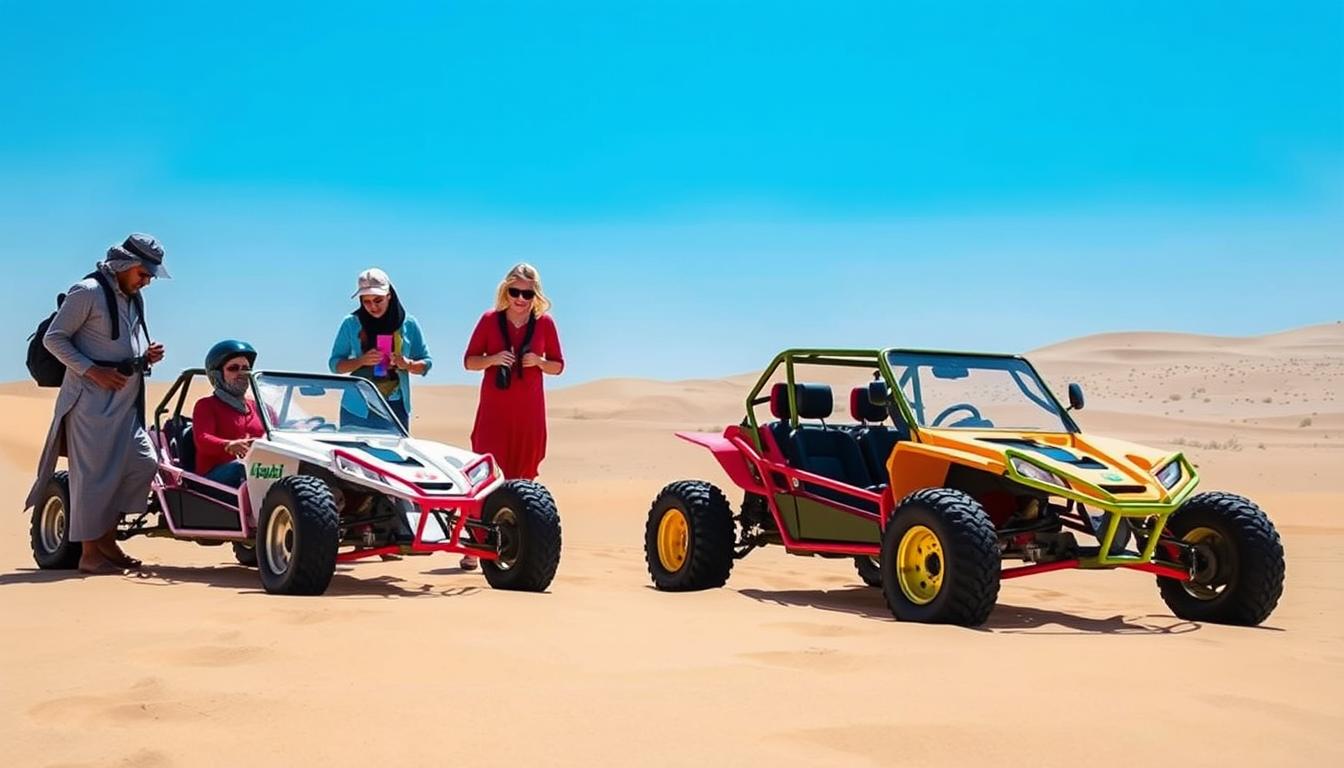
As soon as your tires touch the sand, you feel it—the silence, the warmth, the endless view. Every dune brings a new challenge and chance for adventure. To seek thrills without worries, your safety measures should start before you even turn on the engine. By adopting good habits, you ensure safety for yourself and others, treating the desert with the respect it demands.
This guide lays out crucial tips for buggy riders in the Sharjah Desert, helping you navigate with assurance. We tailor our advice to suit the unique terrain, climate, and rules of the UAE. Plus, we show how support from Desert Buggy Rental Dubai can make your experience better and safer. This includes a comprehensive briefing and checking your equipment. For more insights on professional preparation and gear standards, check out this dune buggy safety overview.
Imagine reaching the peak of a dune: the sand soft, the sunlight changing, and a steep drop before you. You take a deep breath, adjust your speed, and follow your plan. This sense of peace is what we aim for. When skills meet proper guidance, safety in Sharjah Desert buggy rides becomes instinctive. And every memory you create will be a happy one.
Key Takeaways
- Prepare with clear, step-by-step Sharjah Desert buggy adventure safety tips tailored to UAE conditions.
- Protect yourself with proven gear and habits that support Sharjah Desert buggy riding safety from start to finish.
- Master dune basics—reading terrain, pacing speed, and keeping sightlines—to stay in control.
- Inspect your buggy before every ride; small checks prevent big problems in soft sand.
- Plan routes, communicate clearly, and carry essentials for heat, visibility, and emergencies.
- Leverage guidance from Desert Buggy Rental Dubai to enhance safety, skills, and overall enjoyment.
Sharjah Desert buggy riding safety overview and why it matters
You ride the Sharjah dunes for the thrill and freedom, but you must respect the land. Sharjah Desert buggy riding safety is all about making smart choices: your speed, how far you go, and being aware. Using safety measures when riding in the Sharjah Desert protects you, your friends, and the sensitive desert environment. Consider these safety essentials as your guide for every trip.
Your goal is a smooth, predictable ride. You should prepare for the sun’s glare, changing sands, and unexpected steep drops. Keep your pace steady, watch for wind changes, and allow room for any mistakes so you can fix them.
Understanding the terrain: dunes, soft sand, and visibility
The Sharjah Desert changes every day. You will encounter soft sandy areas, stretches of hard-packed sand, and rocky spots. The dunes create gentle slopes on one side and steep declines on the other that might suddenly collapse.
Sharp ridge tops and hollows may conceal sudden drops. The heat, dust, and the low sun can quickly reduce visibility. Using essential safety gear like a high-visibility flag and approaching ridges carefully keeps your path clear.
Common risks for new and experienced riders
Getting stuck in soft sand, getting stranded on a high ridge, and sliding down steep dunes are common pitfalls. Approaching angles wrongly can cause your buggy to roll over. Crashes often occur if you can’t see well because of sunlight or dust.
Risks increase if you follow too closely, go too fast, or try to climb steeply without controlling your speed. Safety in the Sharjah Desert gets better when you match your pace to the ground, keep a safe distance, and communicate clearly. Focus on safe practices first; you can think about going faster later.
Local regulations and responsible off-road conduct
Follow the rules by staying in designated areas and avoiding ecologically sensitive spots, as per UAE’s guidelines. Always use a tall flag on your buggy for others to see you and give way to those going uphill. Minimize noise near camping sites and take all your garbage with you to keep the desert clean.
Avoid driving over plants and leave wildlife alone. If you’re not sure of the area, take a guide, carry a way to communicate, and stick to group rules. These safety tips for driving a buggy in the Sharjah Desert keep you in line with what the community expects and allow for safe rides in the future.
| Hazard | What You Notice | Primary Risk | Practical Response |
|---|---|---|---|
| Soft powder sand | Engine revs rise, speed fades | Wheel burying | Maintain light throttle, avoid harsh steering, preserve momentum |
| Slip-face descent | Steep, smooth leeward slope | Front-end dive or rollover | Approach straight, ease over crest, keep wheels pointed downhill |
| Razorback ridgeline | Narrow crest with unknown side | High-centering | Side-step along the ridge, test with minimal throttle, avoid sharp turns |
| Heat haze and dust | Blurred horizon, reduced depth | Hidden obstacles | Increase spacing, lower speed, use flag and signals for visibility |
| Rocky outcrops | Dark patches on hard pack | Tire or suspension damage | Scan far ahead, adjust line early, keep tires off sharp edges |
Pre-ride preparation and gear essentials for Sharjah Desert buggy riding
Before hitting the dunes, make sure your gear is right. The right equipment improves comfort and control, upping your safety. View your gear list as crucial, checking each item’s fit and function before you take off.
Mandatory safety gear: helmets, goggles, gloves, boots
Protect your head with a helmet that meets DOT or ECE standards. It helps during rollovers and from debris. Match it with goggles that resist impacts, won’t fog up, and have tear-offs for changing sand and temperatures.
Pick gloves that protect your knuckles and have a good grip. Wear boots that reach above the ankle, with strong soles for better pedal feel and ankle support. These steps will keep you stable over tricky terrain.
Clothing for desert conditions: sun, heat, and sand protection
Opt for clothes that are light and keep sweat away. Long-sleeved tops and pants lessen cuts and lower sun exposure, while a neck gaiter or balaclava keeps sand out of your face and neck.
Put on sunscreen that shields from all sun types and lip balm with SPF. A hat with a brim can offer more shade when you take breaks. This gear is key for desert rides and won’t weigh you down.
Hydration systems and heat management strategies
Take along a hydration pack holding 2–3 liters, and mix in electrolytes. Drink water before you start, then every 10–15 minutes to beat the heat.
Cooling towels and vented clothing help during stops. Look for shady spots or park near vehicles with awnings for breaks. These practices are vital for staying safe in the desert heat.
What to pack: recovery straps, first-aid kit, and communication
Have recovery straps or shackles, a small shovel, tire deflator, and a compressor ready. A first-aid kit, fire extinguisher, tools, and a spare belt are also must-haves.
Carry a satellite messenger or charged phone and a UHF/VHF radio. Also pack a bright dune flag, headlamp, emergency blankets, and ID with emergency numbers. Make sure to check your gear fits and is ready before leaving.
Vehicle inspection checklist for Sharjah Desert off-road buggy safety
Before you hit the dunes, make sure your ride is ready. Doing a careful check boosts safety and starts your day right. Follow these steps every time for a smoother experience.
Tip: Renting? Ask for a checklist or a quick guide from the operator. Also, look at this easy guide for a safe dune buggy ride in Abu Dhabi at pre‑ride inspection basics. It will help you stay safe on your adventure.
Tires, tread, and pressure for soft sand performance
Look for cuts and uneven wear on the tread. Check the sidewalls for any bulges or cracks. Set the pressure right to stay afloat but still grip during sharp turns.
Make sure all valve stems and caps are in place. Bring an air compressor for after the ride. Also, make sure the wheels are on tight.
Brakes, steering, suspension, and roll cage integrity
Brakes should feel strong, not weak. Check if rotors and pads are in good shape. The steering should move smoothly without any loose parts.
Inspect the suspension and roll cage carefully for any signs of damage. Everything must be secure for a safe ride.
Fuel, fluids, belts, and battery checks
Fill up the fuel and check engine oil, coolant, and brake fluid. Make sure the air filter is clean and fits well.
Look over belts for any wear and keep an extra just in case. Keep the battery connections tight and check the power.
Lights, flags, GPS, and emergency beacons
Turn on all the lights to make sure you’re seen. A tall flag will help too. Check your GPS is ready for the desert.
Have a way to call for help if needed. Make sure your buggy is ready by a quick test drive.
| System | What to Inspect | Pass Criteria | Action if Failed |
|---|---|---|---|
| Tires & Wheels | Tread, sidewalls, pressure, valve stems, lug torque | No cuts or bulges; pressure set for sand; stems capped; lugs torqued | Adjust PSI; replace damaged tire; re‑torque lugs |
| Brakes | Pedal feel, pad thickness, rotor condition | Firm pedal; even bite; no grinding or smoke | Service pads/rotors; bleed system |
| Steering & Suspension | Tie rods, rack play, arms, bushings, shocks | No looseness; no cracks; no oil leaks | Tighten/replace components; do not ride until fixed |
| Roll Cage & Seats | Tubes, welds, mounts, seat sliders, harness points | Crack‑free welds; solid mounts; smooth slider lock | Replace or repair; re‑secure mounts |
| Powertrain | Fuel level, oil, coolant, air filter, CVT/drive belt | Fluids at spec; clean, sealed filter; belt in good shape | Top up; replace filter/belt as needed |
| Electrical | Battery terminals, charge status, wiring | Tight, corrosion‑free posts; secure harnesses | Clean/tighten; repair wiring |
| Visibility & Nav | Headlights, brake lights, whip, flag, GPS, beacons | All lights bright; flag mounted; GPS loaded; SOS tested | Replace bulbs; mount flag; load maps; check device |
| Recovery | Rated points, shackles, accessibility | Clearly marked and easy to reach | Install proper points; reposition gear |
Sharjah Desert buggy riding precautions for dune navigation
When you ride the dunes, reading the sand is key. Setting clean lines and using clear signals refine your ability to make good choices. These steps lower your risk of accidents in the Sharjah Desert. They keep you and your group safe while maintaining your journey’s flow.
Reading the dunes: slip faces, ridgelines, and bowls
Observe the wind’s direction. Slip faces form where the wind leaves behind loose, collapsible sand. Avoid crossing these steep areas diagonally; aim for a straight, secure path instead.
Face ridgelines directly and check the other side before going over. Bowls can be tricky with their speed traps and limited vision. Enter them carefully, plan your exit early, and maintain a steady line. This approach is central to being safe while riding in the Sharjah Desert.
Approach angles, throttle control, and safe cresting
Keep your wheels straight and maintain a neutral angle when cresting dunes. Smoothly increase throttle to avoid losing control or digging in. Lighten pressure as you reach the top to safely check your path down.
Avoid turning sharply at the dune’s crest to reduce flipping risks. Keeping the buggy straight ensures a safe balance between speed and stability. By doing this, your ride through the Sharjah Desert stays predictable and secured.
Spotting, signaling, and maintaining line of sight
Use a spotter for navigating over blind crests and complicated bowls. Make sure ground signals are clear, then double-check by radio before proceeding. Always keep your fellow riders in sight and spread out to minimize dust.
Keep enough distance to see the vehicle ahead’s rear tires. If you can’t, you’re too close. For more advice, check out this essential safety resource. It will help you stay safe while enjoying the Sharjah Desert.
Night and low-visibility considerations
In difficult visibility like dusk, fog, or dust, slow down and increase the space between buggies. Turn on your lights and always stick to familiar terrain unless accompanied by a guide. Avoid riding in extreme conditions unless you’re well-prepared.
Using proper lighting, GPS, and effective communication methods is crucial at night. If visibility gets worse, it’s better to wait than to risk an accident.
| Dune Feature | Primary Risk | Safe Technique | Why It Works |
|---|---|---|---|
| Slip Face | Sand collapse and side rollover | Drive straight on stable lines; avoid diagonal traverses | Reduces lateral load and keeps tires on firm strata |
| Ridgeline Crest | Unknown drop and nose dive | Approach head-on, ease throttle, peek, then commit | Maintains balance and gives time to read the descent |
| Sand Bowl | Trapped momentum and poor exits | Enter low, scan exit, keep controlled speed | Prevents overclimb and preserves a clean escape line |
| Soft Flats | Wheel spin and trenching | Use progressive throttle and steady momentum | Builds traction gradually and limits digging in |
| Low Visibility | Dust-induced collisions | Slow down, increase spacing, use full lighting | Extends reaction time and improves recognition |
Make these practices a part of your routine for a consistent safety experience in the Sharjah Desert. Good communication and precise driving make buggy riding a lot safer and more enjoyable.
Essential Safety Tips for Buggy Riders in Sharjah Desert
The Sharjah sands are forgiving if you make smart choices. Follow these safety tips for a safer, longer ride in the Sharjah Desert. Stay calm, control your pace, and signal clearly to everyone with you. These tips are crucial for every desert adventure.
Ride within limits: speed, spacing, and group coordination
Adjust your speed for the terrain and how well you can see. Slow down in rough sand, over blind hills, and as the day ends. Keep enough space in dusty conditions to see clearly and stop safely.
Have a lead and last rider with radios, and agree on meeting points before tough spots. Count everyone regularly. By doing this, you avoid mix-ups and keep going smoothly.
Seatbelts, harnesses, and proper seating positions
Fasten seatbelts or harnesses tightly. Make sure they’re properly attached before starting. Keep your arms and hands inside the vehicle. Put your feet down firmly, sit straight, and face forward when you turn.
Remember these seating tips every time you get in and out. Being securely seated lessens tiredness and helps you manage bumpy rides better.
Avoiding rollovers and recovering safely if they occur
Don’t drive on very steep or slippery slopes. Go straight up or down hills, use steady gas, and don’t jerk the steering at the top. If the buggy tilts, don’t use your arms to protect yourself—just hold the steering wheel gently, tuck in, and let the buggy stabilize itself.
If you nearly flip over, stop to calm down and regroup. These tips reduce the chance of flipping and help you stay calm if it happens.
Emergency procedures: stop, assess, communicate
If there’s an accident, turn off the engine and look for fuel spills right away. Make sure everyone is okay and give first aid if you know how. Keep the area safe and call for help by radio or satellite if it’s needed.
Tell the rescue team where you are, and don’t move on until you’ve double-checked everything and everyone. Handling emergencies this way keeps small problems from getting big.
| Situation | Immediate Action | Why It Matters | Pro Tip |
|---|---|---|---|
| Heavy dust and low visibility | Increase spacing and reduce speed | Prevents pileups and missed hazards | Use the sweep to confirm visual on each rider at regroup points |
| Approaching a blind crest | Ease off throttle and straighten wheels | Maintains balance and traction | Spot from the side first if unsure of the drop |
| Suspected rollover start | Do not extend arms; tuck and hold wheel lightly | Reduces injury risk to wrists and shoulders | Keep harness snug to prevent torso movement |
| Minor collision or tip | Kill engine, check for leaks, assess riders | Prevents fire and secondary incidents | Mark location and log GPS for any report |
| Injury or mechanical failure | Call via radio/sat messenger; hold position | Speeds rescue and avoids getting lost | Transmit coordinates and a short status code |
Navigation, route planning, and communication in the Sharjah Desert
Planning before you go is key to mastering the dunes. Map a route that has clear start and end points, options for fuel, and alternative paths. This approach is fundamental to safe and enjoyable Sharjah Desert buggy rides.
Pro tip: Choose well-known areas to help protect the desert and make navigation easier. A good plan allows you to focus on the adventure, not getting lost.
Choosing marked trails and guided routes
Always stick to the trails marked for you and adjust your speed with the changing terrain. Follow the marked routes to avoid dangerous areas and getting stuck in sand. A guided tour gives you added safety, local insights, and helpful riding tips along the way.
Have a quick team talk before starting. Decide on your driving speed, how far apart you’ll drive, and what to do if problems arise. These steps are crucial for a smooth and safe journey.
GPS waypoints, maps, and satellite messengers
Use offline maps and GPS to mark important locations like your starting point and meeting spots. Share these waypoints with your friends so anyone can lead if needed. In areas with bad signal, carry a satellite messenger or PLB, and know how to use its safety features.
Learn more about staying safe while riding by checking out this guide on safe desert riding practices. It’s full of tips to keep you and your group safe and informed.
Radio protocols and hand signals for groups
Pick a main radio channel, decide on call signs, and keep messages short and clear. Always confirm that your messages are understood. Use hand signals for communication when radios fail, ensuring safety and understanding among the group.
| Planning/Comms Element | What to Do | Why It Matters | Key Backup |
|---|---|---|---|
| Route Selection | Favor marked loops and guided corridors | Reduces risk and protects terrain | Predefined bailout to staging area |
| Waypoints & Maps | Load offline maps; set GPX points for crests and bowls | Speeds decisions in low visibility | Shared GPX file across all riders |
| Check-ins | Use scheduled radio calls at landmarks | Keeps formation tight and accountable | Text check-ins via satellite messenger |
| Emergency Contact | Carry PLB or satellite device with tested SOS | Works beyond mobile coverage | Pre-briefed contingency numbers |
| Signals | Standardize hand signals for stop/slow/hazard/turn | Clarity when radios fade in dust | High-visibility whip flag acknowledgment |
Weather, timing, and seasonal considerations for buggy riding safety
Choosing the right time for desert buggy riding in Sharjah is crucial for safety. It’s important to think about the weather, including temperatures, wind, and sunlight. This helps keep everyone safe and makes sure your vehicle stays in good shape. Mixing local insights with safety tips can make your ride smoother and more enjoyable.
Use these Sharjah Desert buggy adventure safety tips to align your schedule with the climate and terrain.
Ideal ride windows: early morning and late afternoon
Riding at dawn or late afternoon is best. The cooler air is easier on you and the buggy’s engine. Also, when the wind is calmer, it’s easier to see and navigate. The soft light during these times helps make the terrain easier to manage, making your ride safer.
Try to avoid riding during the hottest part of the day. Shifting your schedule to ride in cooler times is a simple yet effective safety step.
Heat, sandstorms, and sudden weather shifts
Always check the weather before you head out. Look for information on heat, wind, and possible dust storms. If the wind is strong enough to cause problems with visibility or create dangerous terrain, it’s better to reschedule. Be on the lookout for sudden changes in the weather that could impact the sand.
If you’re caught in a sandstorm, find a safe spot to stop. Turn on your lights, stay close together, and keep communicating until it’s safe to continue. Following these tips can help you stay calm and safe.
Sun exposure, UV protection, and hydration planning
Dress smart to protect yourself from the sun. Wear clothes that shield you from UV rays, along with sunglasses and sunscreen. Remember to drink water regularly, bring enough for your trip, and don’t forget electrolytes. This helps keep you hydrated and balanced.
Take breaks to rest in the shade and plan your activities to avoid the hottest parts of the day. This strategy helps you stay safe and enjoy your adventure in the desert.
| Factor | Risk if Ignored | Action | Benefit |
|---|---|---|---|
| Ride Timing | Heat stress, engine strain, poor visibility | Start at dawn or late afternoon | Cooler temps, clearer dunes, better Sharjah Desert buggy riding safety |
| Wind & Dust | Hidden drop-offs, rider disorientation | Check advisories; postpone in high winds | Stable lines and safer cresting decisions |
| Storm Response | Separation, collisions, navigation errors | Stop safe, lights on, tight group, communicate | Controlled hold until visibility returns |
| UV & Heat | Burns, dehydration, fatigue | UV clothing, SPF 50+, timed hydration with electrolytes | Endurance, focus, and Buggy riding safety measures in Sharjah Desert |
| Break Strategy | Overheating, reduced reaction time | Work‑rest cycles; shade during stops | Consistent control and Sharjah Desert buggy adventure safety tips in practice |
Riding etiquette and environmental stewardship in Sharjah
In Sharjah Desert, we share the land with other riders and fragile habitats. It’s important to use precautions while buggy riding to protect the land. These steps also help keep rides smooth and safe for everyone in the dunes.
Respecting wildlife and protected areas
When near wildlife, slow down and give them room. Avoid making sudden loud noises or bright lights. Stay away from areas like nesting sites and seasonal wetlands.
It’s best to stop and look around if you’re unsure of where to go next. Choosing routes carefully helps protect local wildlife and keeps you safe.
Minimizing track impact and avoiding vegetation
Try to ride on existing trails to avoid damaging new areas. Avoid skidding or tearing up areas covered in plants, or soil with crusts. Choose hard surfaces like sand or gravel for parking.
Always take your trash with you and secure loose items tightly. By doing so, we ensure that trails stay open for everyone.
Noise control and courtesy to other riders and campers
Be quiet near campsites and places where people enjoy the view. Let others know when you’re coming and don’t stir up too much dust. Always let slower groups and those going uphill have the right of way.
Using clear signals and riding calmly makes the experience better for all groups. These good habits help keep the desert enjoyable for everyone.
| Etiquette Focus | What You Do | Why It Matters | Safety Tie-In |
|---|---|---|---|
| Wildlife & Reserves | Slow, give space, follow signs | Prevents stress and habitat damage | Sharjah Desert buggy riding safety through fewer unpredictable encounters |
| Track Discipline | Use existing lines, avoid vegetation | Limits erosion and track proliferation | Sharjah Desert buggy riding precautions reduce rollover and soft-sand traps |
| Noise & Dust | Ease throttle, pass cleanly | Improves comfort for riders and campers | Sharjah Desert off-road buggy safety via better visibility and control |
| Staging & Litter | Park on durable surfaces, carry out waste | Preserves access and scenery | Avoids debris hazards and keeps routes clear |
| Right of Way | Yield to uphill and slower groups | Reduces conflicts and near-misses | Promotes predictable movement across dunes |
Professional guidance: Sharjah Desert buggy riding essentials with Desert Buggy Rental Dubai
Ride with expert help and clear instructions. With Desert Buggy Rental Dubai, you learn Sharjah Desert buggy riding basics in simple language. They combine planning with Essential Safety Tips for Buggy Riders in Sharjah Desert to keep you safe and happy on the dunes.
Your briefing includes gear checks, how to behave on the dunes, group distances, and what to do in emergencies. Buggies are checked for safety, and support cars have tools, radios, and first-aid kits. These tips ensure a smooth ride as you discover the desert.
Guided Dune Buggy Tours and safety briefings
Pick a tour that matches how skilled you are. Instructors teach you about speed control, how to ride over dunes, and where to stop safely. You’ll practice hand signals, checking radios, and how to sit right, making the essentials instinctive.
Guides lead you safely, avoiding risky spots. They teach you to read the sand, keep safe distances, and use safety tips in different conditions.
Service options: Quad Biking Tours, Evening Desert Safari, Morning Desert Safari
Choose the ride and time that suits you. Try Dune Buggy Tours for any skill level, or Quad Biking Tours for individual control. Morning Desert Safari is cooler, while Evening Desert Safari has better light and calmer weather.
Every choice includes planning, advice on staying hydrated, and Essential Safety Tips for Buggy Riders in Sharjah Desert for the current conditions.
Enhance your adventure: Desert BBQ Dinner, Camel Ride, sandboarding
Add special and fun activities without compromising on safety. Enjoy a Desert BBQ Dinner with local tastes after the ride. A calm Camel Ride and sandboarding add more fun at a relaxed pace.
Guides take care of the details, from planning to safety gear, so you can have a safe, smooth, and fun experience with lots of good tips.
How to book: 24-hour reservations, +971 52 440 9525, [email protected]
Book anytime, choosing the best time for the weather. Call +971 52 440 9525 or email [email protected] to book and confirm your group’s details and extras.
Your confirmation includes info on gear, drinking water, and timing, getting you ready before you reach.
Conclusion
Before you start your engine, you set the stage for a safe ride. Gear up with a certified helmet, goggles, gloves, and boots. Then, check your tires, brakes, steering, fluids, and the roll cage. Make sure to carry water, a first-aid kit, recovery gear, and a way to communicate like a radio or satellite messenger. Map out your path, tell someone your plans, and keep track of your location. This helps you navigate the sand, weather, and visibility smoothly.
When driving on the sand, maintain a steady speed and keep distance between buggies. Use someone to help you see when going over dunes and approach angles softly to prevent accidents. Remember to control your speed on steep slopes, use clear hand signals, and stop if it becomes dangerous. Drink water regularly, protect your skin from the sun, and obey local rules to safeguard the environment and animals.
Riding safely in the Sharjah Desert means staying within your abilities, keeping others in sight, and checking safety equipment like flags, lights, and GPS before it gets dark. If you’re looking for extra peace of mind, consider booking a guided tour with Desert Buggy Rental Dubai. They offer expert advice, help, and bookings 24/7 at +971 52 440 9525 or [email protected]. By being prepared and respectful of the desert, you can have an exciting and safe off-road adventure.
FAQ
What makes buggy riding safety in the Sharjah Desert different from other off-road areas?
The Sharjah Desert features shifting dunes, soft sand, razorback ridges, and sudden drops. Changing visibility is a challenge due to glare, heat haze, and dust. Riders must display a dune flag, adjust tire pressure, and crest carefully. Managing the heat, staying hydrated, and communicating within the group are crucial here.
What mandatory safety gear should you wear for Sharjah Desert buggy riding?
For your safety, wear a helmet that meets DOT or ECE standards, goggles that are impact-rated, armored gloves, and boots extending over the ankles. Also wear long sleeves and pants, a neck gaiter, and sunscreen of SPF 50+ or higher. A tight-fitting seatbelt or harness is key for rollover protection.
How do you set tire pressure for soft sand performance?
Lower tire pressure as advised by the buggy manufacturer to improve sand performance while maintaining tire safety. Always check your tires’ sidewalls and tread before letting air out. Bring along a tire deflator and an air compressor to adjust air levels after. Do a quick test drive to ensure stability.
What are the most common risks for new and experienced riders?
Common risks include getting stuck in the sand, high-centering on ridges, steep descents, and rollovers due to bad approaches. Tight dust space can lead to collisions. Heat stress and dehydration are worst at noon. Risks increase when speeding or following too closely in poor visibility.
What local regulations and etiquette should you follow in the UAE?
Respect off-road designated areas and steer clear from protected reserves. Always use a dune flag for being seen, keep noise down by camps, and allow uphill traffic the right of way. Take your trash with you, avoid harming plants or animals, and ride with a guide. Carrying good communication gear is a sign of responsibility.
How do you read dunes safely—slip faces, ridgelines, and bowls?
Expect to find the leeward side of dunes to be slip faces. Approach ridges head-on, keep a steady pace, then slow down just before the crest to look over. Keep the wheels straight on top. On entering bowls, maintain an exit path in mind. Traversing steep slip faces diagonally increases risks of a collapse.
What spacing and speed rules should you follow in groups?
Align your speed with the terrain and visibility levels. Space out more in dusty conditions and adopt a staggered layout. Have a leader and a tail rider equipped with radios, decide on meeting spots, and keep track of everyone. This setup reduces the chance of dust-related crashes.
How do you prevent rollovers—and what if one starts?
Avoid climbing steep slip faces sideways, keep straight lines when going up or down, and don’t turn sharply at the peak. Should a rollover occur, keep your arms in, hold onto the wheel lightly, curl up, and wait to stop. Turn off the engine after stopping and check for leaks or injuries.
What should you pack for Sharjah Desert buggy riding essentials?
Pack recovery straps, a shovel, tire tools, a first-aid kit, and a fire extinguisher. Include spare belts and air filters. Also, bring a satellite messenger, a radio, a visible dune flag, a flashlight, an emergency blanket, and an ID with emergency numbers.
How do you manage heat, sun, and hydration in the desert?
Ride early or late to avoid the hottest parts of the day. Drink lots of water from a hydration pack, especially with added electrolytes. Wear UV-protective clothing, reapply strong sunscreen, and use goggles. Rest in the shade and wear cooling close or vented gear.
What vehicle inspection steps improve Sharjah Desert off-road buggy safety?
Check your buggy’s tires, brakes, and steering before heading out. Also, look at the suspension and make sure there are no leaks. Check the vehicle’s frame and seats are secure, fill up on fuel, and ensure all electrics like lights and GPS are working. Always confirm your recovery setup is secure.
What navigation and communication tools are best in the Sharjah Desert?
Download maps for offline use and set waypoints. Swap route info with your group. Take a satellite device for areas with poor cell service and test out emergency signals. Pick clear radio channels and signals for group use, supplementing with hand signals as needed.
How should you ride in low visibility or at night?
Slow down, increase the distance between buggies, and use all available lights. Always see the buggy ahead and avoid new areas without a guide. Night rides require full lighting and experienced riders as well as strong navigation and emergency plans. Consider delaying in bad weather.
What emergency procedures should you follow after an incident?
First, secure the area and turn off the vehicle. Check for fuel leaks and account for everyone. Use radios or satellite devices to communicate, sharing your location. Stick to your group’s emergency steps. Don’t proceed until everyone is okay and the vehicles are checked.
What weather and timing considerations matter most?
Pick morning or late afternoon to avoid intense heat and strong winds. Always look at the weather forecasts for updates. If a storm is coming, find a safe spot to wait it out together. Keep the lights on and stay in touch until it’s clear.
How can you reduce environmental impact while riding?
Keep to paths to lessen your mark, watch out for plants and animals, and steer clear of sensitive areas. Lower your noise around animals and camps, let uphill riders pass, and take your trash with you. Respecting the environment helps keep off-roading spots open.
Why book a guided tour for Sharjah Desert buggy adventure safety?
Guided tours come with route planning, safety talks, help if you get stuck, and solid communication tools. Buggies are kept in top shape, and guides help with spacing and spotting. These tours are great for beginners and those wanting local insights.
What services can you combine with buggy riding for a full experience?
Besides buggy riding, try out quad biking, a morning or evening desert safari. Add in some sandboarding, a camel ride, and finish off with a BBQ dinner. This makes for a complete desert day during the cooler parts of the day.
How do you book with Desert Buggy Rental Dubai?
Booking is possible anytime. Call +971 52 440 9525 or send an email to [email protected]. They can help set a perfect time and give tips on safely enjoying the desert.
What are the top Sharjah Desert buggy riding safety measures to remember?
Always wear approved safety gear and do a thorough vehicle check. Lower the tire pressure right and put up a dune flag. Know your limits, keep a distance, use someone to help at crests, and have navigation and a satellite messenger ready. Stay hydrated, protect from the sun, and know the local rules for a safe ride.
Categories
- Uncategorized (4)
- Desert Buggy Rental (2,089)
- Dune buggy (4)
- Quad Bike Rental (1)
- Desert safari (1)
- Hot air ballon (2)
- dirt bike (4)
Recent Post



Tags
Acceleration of 400cc bikes Adventure travel with children Age-appropriate fiction Buggy handling Camel riding safety tips Celebrity cars Collector car market Desert clothing guide Dubai desert safari restrictions Dubai Desert Safari weather Dubai safari adventures Dubai scrap car market Dune adaptations Dune book summary Dune buggy engine size Dune Buggy Tour Dune movie advisories EasyJet cabin baggage rules Evening Desert Activity Exotic Car Rental Extreme sports vehicles Family activities in Abu Dhabi Family fun at Dubai Mall Flying with Baby Stroller Footwear fashion High-performance buggies High-Speed Buggies Hollywood actor Lightweight buggy speed Local Desert Experiences Luxury desert safari cost Morning desert safari sharjah packages Respect in Dubai Sand dune elevation Sandy Outfit Ideas Scenic Desert Drives Sci-Fi for 14 Year Olds Sci-fi movie production costs Speed performance Squad dune buggy experiences Steve McQueen's estate Tips for buying a car in Dubai as a tourist UAE buggy regulations Unique car models Gulf region Unique vehicles in Dubai