

- 175 Views
- 20 Min Read
- (0) Comment
As you step onto the sand before sunrise, the cool, clean air greets you. The dunes of Ras Al Khaimah appear calm, but excitement builds within you. You’re not just there for the view, but to uncover signs of life. A slight footprint, a distant sound, or the glimpse of horns on the horizon. Suddenly, the wildlife of RAK Safari becomes more than just animals to check off a list. They are a sign that the desert is alive and aware of your presence.
This guide will show you the wonders of the desert. You’ll meet the Arabian oryx, sand gazelles, spiny-tailed lizards, and birds gliding on the breeze. You’ll find tips on how to enjoy these encounters while respecting the desert. By the end, you’ll know the best time to go, where to look, and the subtle signs that make a quiet desert journey unforgettable.
If the dawn’s early light calls to you, you’ve found the right place. We’ll explain how these ecosystems work and the best times for wildlife sightings. Our aim is straightforward: to enhance your experience, minimize disturbance, and create lasting memories with respect and clarity.
Key Takeaways
- Wildlife is most active at dawn and dusk, when the light is cooler and softer.
- The desert hosts a variety of animals, from iconic mammals and stealthy cats to resilient reptiles and swift birds.
- Search for tracks, burrows, and sounds to guide your wildlife encounters.
- Approach slowly, keep a safe distance, and observe without intruding.
- To increase your chances of sightings, explore across dunes, gravel plains, and wadis.
- Bring water, sun protection, and binoculars for safety and better viewing.
- Cherish and protect the environment to ensure your memories and the wildlife flourish.
Introduction to RAK Safari Wildlife and Desert Ecosystems
You step into a world sculpted by wind and time. The Ras Al Khaimah (RAK) desert wildlife thrives among dunes, gravel, rocks, and shaded valleys. With a RAK Safari guide, you’ll understand the land and spot wildlife wisely.
Think layers, not emptiness. Dunes conceal burrows. Gravel plains are perfect for speedy creatures, and valleys gather water for plant and insect life. This variety makes reptiles, birds, and mammals visible when the time is right.
Why Ras Al Khaimah’s dunes are a wildlife hotspot
Sand ridges offer hiding spots. Slipfaces shield nests from the wind. Nearby gravel plains and valleys provide food and water. This creates a haven for Ras Al Khaimah wildlife, perfect for observing with an experienced guide.
How desert-adapted species thrive in extreme conditions
Oryx and gazelles conserve water and eat tough plants. Foxes hunt at cooler times to avoid the heat. Sand cats walk on hot surfaces with fur-covered feet and hunt at night. Reptiles warm up in the morning sun, then hide to stay cool. These methods help them stay active, especially during optimal viewing times.
Exploring slowly pays off. Short nature walks and camel rides show you signs of life like tracks and burrows. These clues enhance your guide’s plan for spotting wildlife.
Best seasons and times for RAK desert wildlife watching
October to April is best, as cooler weather increases animal activity. Early morning and late afternoon are ideal times for bird watching and seeing animals move. At night, using warm or red lights will let you see nocturnal predators.
Booking a knowledgeable guide who knows the desert’s conditions will improve your wildlife sightings. You’ll make the most of your adventures in Ras Al Khaimah’s desert.
Desert Wildlife You May Spot During Your RAK Safari
The dunes welcome you with clear light and a calm breeze. It’s the best time to spot wildlife in Ras Al Khaimah. You’ll find tracks, hear calls, and see shapes on the sand. Quiet times, quick actions, and wildlife sightings make RAK Safari unforgettable. Watch closely and be patient.
Tip: Keep your binoculars handy. Look for movement on dune tops, wadi edges, and bushes. Wildlife often shows up when the sun is low.
Signature species: Arabian oryx, sand gazelle, and desert foxes
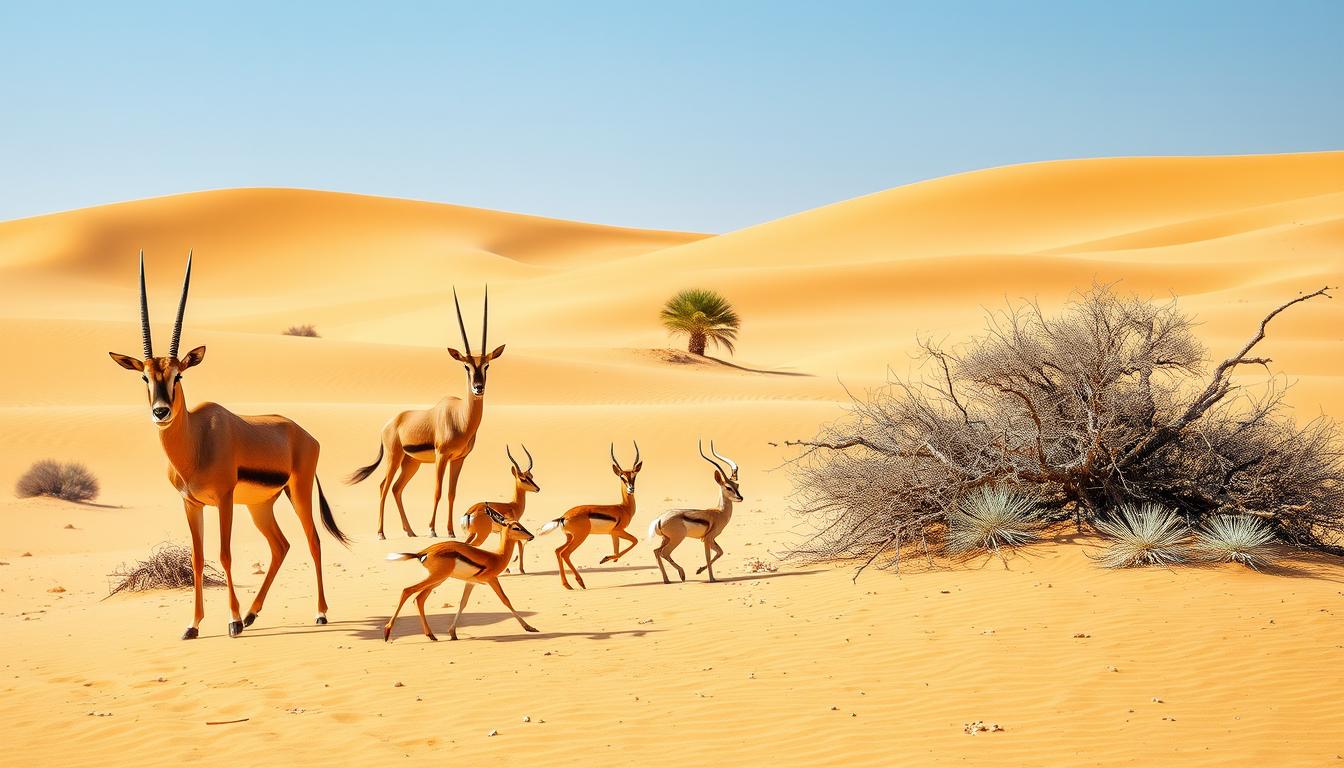
The Arabian oryx impresses with its long horns and light coat. You might see a pair walking together during your safari.
Sand gazelles are quick and grace the dunes’ edges. Their light steps throw sand in perfect arcs. These gazelles are a highlight of the safari.
Desert foxes, like the Arabian red and Rüppell’s fox, have slim bodies and bushy tails. They move like shadows, listening carefully before venturing into the open at dusk.
Elusive encounters: Arabian sand cat and Gordon’s wildcat
The Arabian sand cat prefers the dark and soft dunes. Look for its low, quick shape and the neat paw prints it leaves behind.
Gordon’s wildcat sticks to rocky areas. Search the ledges and shaded spots. You might lock eyes with one before it vanishes.
Reptiles and birds: spiny-tailed lizards and desert larks
Spiny-tailed lizards bask outside their burrows in the sun. Fringe-toed lizards create fine lines and shapes in the sand.
Desert birds like larks and wheatears are common. You’ll see them on the ground or perched on rocks. Kestrels soar and dive above, a beautiful sight.
Tracking signs: prints, burrows, scat, and calls
Oryx and gazelle leave hoof prints. Foxes leave prints with clear claw marks. Sand cat tracks are rounder and softer.
Look for wide, slanted holes from dhub lizards. Small round holes mean rodents. Scat analysis can tell you what the animals have eaten, aiding your search.
Listen for sounds to find animals. Larks sing at dawn, and owls hoot at dusk. These sounds often lead to wildlife sightings in Ras Al Khaimah.
Iconic Mammals of Ras Al Khaimah’s Desert
When you enter the dunes, you find RAK Safari wildlife thriving on little water amid shifting sands. The Arabian oryx is a standout among desert animals in Ras Al Khaimah. Once extinct in the wild, it now lives in managed areas, moving in small herds. They feed on grasses, ghaf, and acacia. Keep your eyes peeled for pale horns shining in the sunlight.
Sand gazelles like open dunes and gravel plains. You’ll often spot them at dawn or dusk. They stop to look around for danger before moving on. The Arabian hare, or Lepus capensis arabicus, dashes between shrubs. It’s a quick browser that disappears in a flash. These moments show the vibrant life in Ras Al Khaimah’s desert without any disturbance.
Desert foxes add a quiet drama to the region. The Arabian red fox roams near wadis. Meanwhile, the smaller Rüppell’s fox stays on rocky areas. They both hunt for insects, rodents, and small birds, mainly active after dark in summer. Their silent movements and sharp senses make for memorable RAK Safari wildlife moments.
Spotting the Arabian sand cat is a challenge. It preys on gerbils and jerboas, listening for the slightest sounds underground. Gordon’s wildcat, a version of the African wildcat, moves through rocky wadis and thickets, staying away from people and clear paths. Being patient and staying still might help you see these rare animals in the Ras Al Khaimah desert.
Fieldcraft is key. Utilize 8x–10x binoculars, keep engines quiet, and always approach from downwind to hide your scent. Give moms with their young plenty of room. Being careful helps keep wildlife in Ras Al Khaimah’s desert genuine and undisturbed.
Birdlife of the Dunes and Wadis
Step softly into the morning light, and the desert comes alive with birds. Use the RAK Safari guide to find your way, listening for the soft whispers of nature. In Ras Al Khaimah, move with care near wadis, as wildlife gathers there.
Carry a simple field guide app and a small scope. These tools will help you see more during your RAK desert adventure.
Raptors and hunters: kestrels, eagles, and owls
Watch for common kestrels hunting over the ground. They look for lizards and mice to eat. In the colder months, see the steppe eagles and greater spotted eagles in the sky. Near rocks, listen for the deep hoot of the Pharaoh eagle-owl.
The little owl might be spotted at dusk. It waits quietly, looking for its next meal in the wadis.
Keep quiet at dawn to hear these predators. A good spotting scope lets you see them from afar without being loud.
Songbirds and ground-dwellers: larks, wheatears, and sandgrouse
At sunrise, desert larks and hoopoe larks sing while flying high. The isabelline and desert wheatears jump around, catching bugs. Look for sandgrouse in the early mornings, flying to water.
Match bird calls to what you see with the guide. For the best wildlife watching, stay downwind and let the birds approach you.
Migratory visitors during cooler months
From October to March, birds travel across the Arabian Peninsula. Shrikes, pipits, and wagtails come after the rain. Raptors also visit, looking for food over the wadis.
After it rains, the desert fills with insects and birds. For the best views, explore at dawn or dusk. This is when the cool months bring most birds.
Pro tip: For great wildlife views in Ras Al Khaimah, watch the edges and listen before you look. Being patient often pays off.
Reptiles, Invertebrates, and the Nightlife of the Sands
You step into dusk and the dunes start to come alive. The spiny-tailed lizard, or dhub, waits at its burrow, enjoying the last rays of sunlight. Get too close, and it might hiss or whip its tail. These moments are what make RAK Safari wildlife so special, reminding us to watch quietly.
On soft slopes, two kinds of lizards glide under the sand. They use their fringed toes to spread their weight and move in a way that reduces drag. Stay quiet and look for small ripples in the sand. Spotting these signs makes animal watching at RAK Safari even more exciting without bothering the desert creatures.
At night, geckos hunt on rocks and bushes, sticking to surfaces with their special toes. Snakes are harder to spot, but you might see sand boas or hear a saw-scaled viper. Always wear shoes and use a light to see the ground in front of you.
Invertebrates are busiest when it’s dark. You’ll see beetles, ants, and mantises doing their thing. Watch for camel spiders chasing after their dinner, and scorpions shining bright under a UV light. Using a red-filtered light helps you see without startling them.
Summer nights are full of activity as creatures escape the day’s heat. Be careful not to disturb their homes by moving rocks or reaching into hidden places. When taking pictures, use a gentle light and a quick shutter speed. This way, you capture great photos without harming the wildlife or their environment.
| Species/Group | Active Time | Behavior to Watch | Safety & Ethics Tips | Photo Notes |
|---|---|---|---|---|
| Spiny-tailed lizard (dhub) | Daylight, late afternoon | Thermoregulates at burrow mouth; hisses and tail-whips when threatened | Keep distance; never block burrow entrance | Use natural side light; low angles highlight texture |
| Fringe-toed & sandfish lizards | Day to dusk | “Sand swimming” with fringed toes and sidewinding motion | Stay off soft crests to avoid collapse | Fast shutter; track faint surface ripples |
| Geckos | Night | Foraging on rocks and shrubs | Use red-filtered light; avoid direct beams to eyes | Diffuse light; focus on eye shine and toe pads |
| Sand boas, saw-scaled vipers | Twilight to night | Ambush hunting; minimal movement | Wear closed shoes; give wide berth if encountered | Telephoto; maintain distance for sharp, safe frames |
| Darkling beetles, ants, mantises | Night | Patrolling, scavenging, ambush | Avoid stepping on trails; no baiting | Macro with soft fill; emphasize patterns and silhouettes |
| Scorpions | Night | Fluoresce under UV; slow, deliberate movement | Do not handle; watch where you place hands | UV reveal plus gentle ambient for detail |
Pro tip: Keep your voice down and move smoothly. This keeps things peaceful, making your visit memorable. Plus, it helps protect the desert wildlife for others to enjoy.
Ethical Wildlife Spotting and Photography Tips
Follow this RAK Safari guide to enjoy seeing animals in Ras Al Khaimah with care. Your actions matter in every animal meeting, from the way you walk up to how you take photos.
Respectful distances and low-impact behavior
Always keep a distance that doesn’t bother the animals. If an animal stops eating, watches you, or walks away, you’re too close. Stop, move back, and give it space to relax.
Stay on paths to protect the desert ground and plants. Don’t disturb animal homes, avoid using food to attract them, and speak softly. Turn off your car when watching animals for a peaceful experience.
Listen to your guide and follow the rules and protected area signs. This guide helps keep animal watching in Ras Al Khaimah safe for everyone.
Lighting, lenses, and settings for desert shots
Choose a lens between 100–400mm to get close-up shots without getting too near. Wide lenses are great in the early morning and evening for capturing the scenery and light. These times are perfect for pictures that tell a story.
Use fast shutter speeds for moving subjects and image stabilization. Adjust your camera to highlight details in the sand, and watch the exposure. For night animals, avoid flash. Use soft or red light to protect their eyes.
Shooting with the sun at your side brings out details in the wildlife and scenery. This helps you take great photos while keeping a good distance.
Safety considerations for you and the animals
Drink water regularly, use sunscreen, and have a first-aid kit ready. Be careful where you step to avoid venomous creatures. Always see the ground clearly.
Make sure your equipment doesn’t disturb animal homes or plants. If the weather gets worse, go back to your car. Making safe choices helps protect both you and the animals.
Trust your guide’s advice in all situations. Working together makes the animal watching experience in Ras Al Khaimah better and keeps everything ethical and unforgettable.
RAK Safari Routes, Times, and Conditions for Best Sightings
Planning your route and timing is key for seeing desert wildlife in RAK. Cooler hours and clear skies help a lot. As you explore dunes, gravel plains, and wadis, you discover the unique lives of desert animals and the vast wildlife of the RAK Safari.
Morning vs evening desert safari: pros and cons
Morning drives offer crisp light and cooler sand, which makes birds more active. Mammals leave fresh tracks from their night outings, easy for you to follow. Plus, there are fewer cars on popular paths, making it easier to watch wildlife.
Evening safaris glow in the golden hour, waking up the night creatures. Raptors head home and sounds travel far at dusk. You must navigate carefully in the dark to keep animals and your group safe. For tips on timing, check this guide on best desert safari times.
Dune, gravel plain, and wadi habitats to target
Search the dune tops for foxes, birds, and lizards. Look at the sheltered sides for nighttime tracks. Early morning is a great time to see where animals passed at night.
Gravel plains are perfect for spotting gazelles, oryx, and birds. Their trails by ridges and bushes make for great photos and observation points.
Wadis are lifesavers for animals, with trees and plants that keep water. You’ll find hares, birds, and raptors here, offering a concentrated spot for animal watching without needing to stray far.
Weather, moon phase, and seasonal influences
Rain brings out insects and herbivores into the open. During hot months, animals are more active at night, so get your lights and maps ready. Wind hides sound and smell, but quiet days are perfect for seeing wildlife.
The moon lights up your night safaris. A full moon helps you see without bright lights, while a new moon is great for stargazing but means you need careful lighting. This protects the nighttime desert creatures.
Before leaving, make sure to know the area’s rules and check your gear. Adjust your vehicle and plan breaks according to the landscape to keep your focus on the wildlife rather than car troubles.
Plan Your Experience with Desert Buggy Rental Dubai
Planning a smooth experience is key. Think like a RAK Safari wildlife guide. Match the area, time, and speed with what you wish to see. This ensures you enjoy RAK desert wildlife and spot various animals during your safari.
Service options: Dune Buggy Tours, Quad Biking Tours, Evening and Morning Desert Safari
Dune Buggy Tours offer control over dunes. Quad Biking Tours are great for moving between wadis and plains. Choose a Morning Desert Safari for fresh animal tracks and clear light. An Evening Desert Safari shows you animals becoming active at sunset and night. Each choice comes from expert RAK Safari advice.
Pick paths that connect dunes, flats, and green areas. This improves wildlife watching. It keeps animals calm and your viewing constant.
Enhancements: Desert BBQ Dinner, Camel Ride, and sandboarding
Add a Desert BBQ Dinner for more time under the night sky. A Camel Ride allows gentle travel to see more animals, following the Desert Wildlife theme of your RAK Safari. Mix in sandboarding for fun without missing out on animal sightings.
Combine these activities with short breaks for watching. This gives you more chances for spotting animal behavior and taking photos.
Booking hours and how to reserve your wildlife-focused safari
You can book anytime, planning for early mornings or late afternoons. Consider weather and moon phase. Request a trip focusing on wildlife. Ask for a guide who knows tracking, ethics, and safety.
Get ready with binoculars, a camera with a long lens, sunscreen, and sturdy shoes. Check this desert safari deals page for prices and availability that fit your plans.
Contact details: +971 52 440 9525 | [email protected]
To book, call +971 52 440 9525 or email [email protected]. Tell them your preferred start time, what areas you want to focus on, and if you’ll be taking photos. Mention any needs for better access or safety so the team can plan the best safari for you.
Conclusion
Imagine stepping into a living desert, where every dune whispers secrets. On a RAK safari, you’re up close with the tough Arabian oryx, quick sand gazelles, sneaky foxes, and warm spiny-tailed lizards. As the sun rises, the desert awakes with the song of larks and the keen gaze of raptors, ready for you to witness unforgettable moments.
Getting the best experience requires timing and respect. Learn to understand the habitats, follow the signs in the sand, and walk gently. Viewing animals the right way keeps both you and the wildlife of Ras Al Khaimah safe, while also improving your chances to see more. Use the sunlight to your advantage—the morning for birds, late afternoon for stunning snapshots, and nighttime to unveil the desert’s secrets.
Rak Safari tailors trips based on animal behaviors and the right seasons, making wildlife easier to spot and capture in photos. Desert Buggy Rental Dubai offers customized adventures to meet your wishes, whether for dawn bird watching, a family trip, or a serene night drive. They’re ready to help 24/7 at +971 52 440 9525 or [email protected].
Approach the desert with calm and respect, keeping sounds to a minimum and giving animals their space. By letting the desert’s rhythm guide you, your presence adds to the beauty without harm. This is the secret to creating memorable, respectful animal encounters in Ras Al Khaimah’s northern deserts.
FAQ
What desert wildlife can you expect to see on a RAK Safari?
On a RAK Safari, you might see Arabian oryx, sand gazelles, and Arabian red foxes. You could also spot Rüppell’s fox, Arabian hares, and sometimes the Arabian sand cat or Gordon’s wildcat. Reptiles include spiny-tailed lizards, fringe-toed lizards, geckos, and some snakes.
Bird lovers can look forward to seeing kestrels, eagles, desert larks, wheatears, and sandgrouse. The variety of animals makes a safari in Ras Al Khaimah exciting.
When is the best time for Ras Al Khaimah wildlife spotting?
The best time for spotting wildlife is from October to April. This is when it’s cooler and animals are more active. Dawn and dusk offer the best chances to see animals. At night, look for sand cats and owls with guided red-light drives. This way, you see more animals and they’re less stressed by the heat.
Which habitats in RAK are most productive for wildlife?
For the best wildlife sightings, head to dune crests for foxes and lizards. Gravel plains are great for spotting oryx, gazelles, and sandgrouse. Wadis have lots of vegetation, attracting hares, larks, and birds of prey. This variety of environments supports a wide range of animal interactions.
How do you increase your chances of seeing elusive species like the Arabian sand cat?
For a chance to see the Arabian sand cat, go out on cool, calm nights. Look in sheltered dune areas with little human activity, and take it slow with a guide. Search for their distinctive tracks and listen for rodents. Be patient and minimize your impact on the desert.
What are ethical guidelines for RAK Safari wildlife viewing and photography?
Always keep a safe distance from animals. If they seem bothered or move away, you’re too close. Stick to existing paths, don’t disturb homes, and don’t feed animals. Use long lenses and soft lights at night, and turn off your engine when watching animals. Following these rules helps keep the wildlife safe.
What bird species are common on morning safaris?
Morning safaris are alive with the sounds of desert and hoopoe larks. You’ll also see wheatears on the rocks, kestrels in the air, and sandgrouse visiting water sources. In winter, look out for eagles, shrikes, pipits, and wagtails, adding to the experience.
Are reptiles active during the day?
Many reptiles enjoy the daylight. Dhub lizards can be seen basking in the sun near their burrows. When it gets too hot, they hide in the shade. Fringe-toed and sandfish lizards prefer warm sand, and geckos come out after dark. Always wear closed shoes and be careful where you step.
What field signs help you find animals?
To find animals, get to know their tracks, homes, droppings, and sounds. Oryx and gazelles have unique hoof prints; fox tracks show four toes with claws. Sand cat prints are round and hard to see. Listening for birds at dawn and owls at dusk is helpful too.
How do weather and moon phase affect sightings?
Weather and the moon greatly impact animal sightings. Clear, calm days are best for seeing and hearing wildlife. Rain brings out insects and the animals that eat them. A bright moon helps spot nocturnal creatures without bright lights. Dark nights are great for stargazing but use a red light carefully.
Is a morning or evening desert safari better for photography?
Both morning and evening offer unique photography opportunities. Mornings have fresh tracks and active birds. Evenings provide beautiful light, animal movements, and birds settling for the night. Choose based on what you want to photograph. Longer lenses help capture wildlife without disturbing them.
What gear should you bring for a wildlife-focused RAK Safari?
Bring binoculars, a good zoom lens, extra batteries, and sun protection. Closed shoes and water are a must. A light telescope could help see distant animals. For nighttime, red lights are essential to not disturb the animals while observing them.
Can you book specialized routes for wildlife photography with Desert Buggy Rental Dubai?
Yes, you can. Ask for tours that include dunes and plains at the best times. Choose early morning or late afternoon for the best light. Guides who know about tracking and respectful viewing can enhance your experience. Adding a camel ride could give you quieter moments between sights.
What are the booking hours and contact details?
You can book any time, day or night. Call +971 52 440 9525 or email [email protected]. Let them know you’re interested in wildlife and when you’d like to go. They’ll help make sure your safari suits your needs.
Are Desert BBQ Dinner and sandboarding compatible with wildlife-focused trips?
Definitely. Start with wildlife viewing at sunrise and sunset. Afterward, enjoy sandboarding or a desert BBQ under the stars. This plan minimizes disruptions to animals and maximizes your fun in the desert.
Is it safe to do night drives for wildlife in Ras Al Khaimah?
Night drives are safe with a knowledgeable guide and the right lights. Move slowly, use gentle lighting, and stay on safe paths. Be on the lookout for reptiles on warm nights. These drives can reveal the desert’s nocturnal creatures.
Categories
- Desert Buggy Rental (2,089)
- Dune buggy (4)
- Quad Bike Rental (1)
- Desert safari (1)
- Hot air ballon (2)
- dirt bike (4)
- Uncategorized (4)
Recent Post



Tags
400cc bike specifications All-terrain vehicle risks Balloon Ride Dubai BBQ Desert Dinner Big budget filmmaking Budget Travel Dubai Car prices in Dubai Desert excursion with kids Desert Safari Dubai dress regulations Desert Safari Excursions in Dubai Desert Safari time recommendations Dress code in Dubai desert Dubai road tax Dune Buggy Capacity Dune buggy vs quad bike packages Dune movie Emirati culinary traditions Evening safari dubai packages Evening safari tours Exciting Off-Road Safari Exclusive dune buggy prices Exiting a train with a stroller Exotic Car Adventures Extreme 4x4 off-roading Flying with Infant's Stroller Hollywood inheritance Hollywood Legacy Hummer Desert Safari Dubai Luxury car hire Morning safari abu dhabi packages Morning safari dubai packages Morning safari sharjah tours Off-road adventure clothing Off-road dune buggy rentals Off-roading gear Private desert safari dubai experience Quad bike combo Dubai experience Quad biking abu dhabi Religious inspiration Safari without Dune Bashing Sci-fi gaming Swakopmund Desert Adventures Tourist attractions in Abu Dhabi Vehicle depreciation in Dubai Young adult literature