

- 618 Views
- 22 Min Read
- (0) Comment
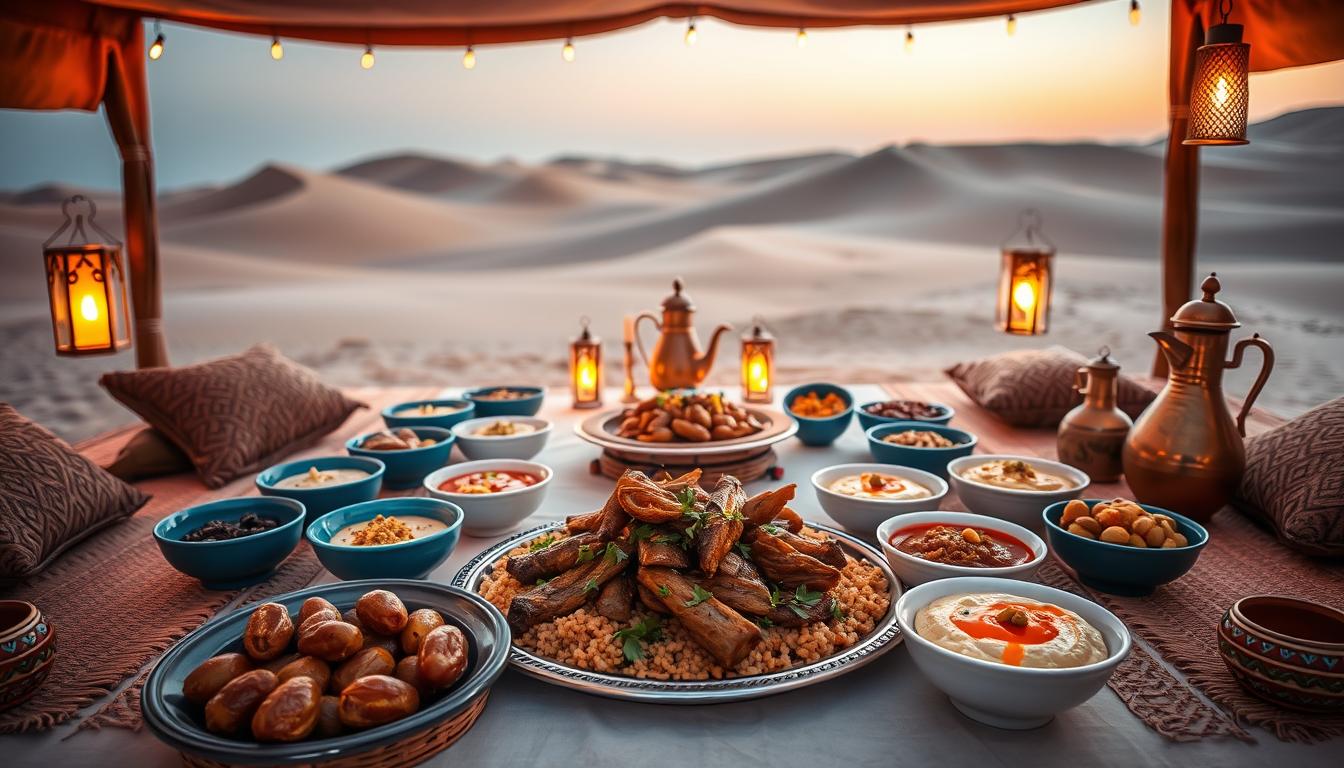
The dunes turn gold at sunset, and a hush falls over the desert. The scent of cardamom and saffron wafts through the air. It’s a moment that shows why Traditional Emirati Food Served in Desert Camps is special. It’s a time of warmth, a taste of dates and ghee, and a place where stories and stars meet.
Stepping into this Desert dining experience, you find the heart of Emirati cuisine. Bedouin traditions guide the meal, and every dish shows respect and care. You enjoy UAE traditional meals cooked slowly and Arabian delicacies grilled over embers. They’re served with a smile that feels like coming home.
Time seems to slow down here. You hear the sound of charcoal and the gentle flow of gahwa. You learn how spices, smoke, and sand create unique flavors. The dunes make dinner into a memorable experience. If you’re curious, check out this desert BBQ dinner to see tradition meet the sky.
Key Takeaways
- You discover Emirati cuisine best where it began—under desert skies, beside a live fire.
- Traditional Emirati Food Served in Desert Camps blends Bedouin heritage with modern comfort.
- UAE traditional meals and Arabian delicacies highlight dates, saffron, cardamom, ghee, and slow-cooked meats.
- The Desert dining experience deepens flavor through smoke, spice, and open-air cooking.
- Desert Buggy Rental Dubai helps you pair dining with adventures like safaris and dune rides for a full journey.
- Choosing the right camp ensures authentic hospitality, respectful etiquette, and memorable tastes.
Emirati Cuisine Overview for Your Desert Dining Experience
You enter a pantry shaped by dunes and sea. Emirati cuisine mixes coastal trade with desert wisdom. This creates flavors that are warm, fragrant, and calm, not hot.
Outdoor dining in the desert uses slow heat and patient cooking. This brings out depth without overwhelming your taste buds.
From the Gulf to the campfire, you taste restraint and balance. Cardamom lifts the aroma, saffron adds color, and loomi gives a citrus hush. These notes guide communal meals that invite you to share, pass, and savor.
What defines authentic Emirati cuisine in the UAE
Authentic plates draw on desert resilience and maritime routes. You find wheat and rice served beside local fish like hammour, with lamb or chicken for hearty mains. Clarified butter adds richness, while rosewater and turmeric round the edges.
In practice, you see one-pot meals, gently spiced broths, and rice crowned with meat. This approach keeps food nourishing for long evenings and makes Arabian delicacies feel both familiar and new.
How Bedouin food culture shaped modern Arabian delicacies
Bedouin food culture prized slow cooking, fuel-saving pots, and shared platters. That spirit lives on in dishes finished over embers or sealed in sand-insulated pits. Techniques persist, but today you also get lighter oils or lean cuts when you ask.
As nights cool, Outdoor dining in the desert mirrors camp traditions. Communal service and steady heat turn simple grain-and-meat recipes into Emirati cuisine classics you recognize across the Emirates.
Common ingredients: dates, saffron, cardamom, ghee, and lamb
Dates sweeten and sustain, saffron paints the rice, and cardamom perfumes coffee and stews. Ghee or samna brings glossy depth, while lamb offers tender texture that stands up to slow heat.
| Ingredient | Role in Emirati Cuisine | Typical Use at Desert Camps | Flavor & Aroma Notes |
|---|---|---|---|
| Dates | Staple energy source and natural sweetener | Served with gahwa, folded into sauces, or chopped into salads | Honeyed, caramel, softly chewy |
| Saffron | Color and subtle floral lift for rice and sweets | Bloomed in warm water, then added to rice dishes | Floral, hay-like, delicate |
| Cardamom | Aromatic backbone for coffee and stews | Crushed into gahwa and meat marinades | Citrus-bright, minty, warming |
| Ghee | Depth, gloss, and heat stability | Used for tempering spices and finishing grains | Buttery, nutty, rich |
| Lamb | Preferred protein for festive and daily meals | Slow-cooked, grilled, or buried to roast in embers | Tender, savory, robust |
These building blocks tie tradition to today. When combined with Bedouin food culture methods, they shape Arabian delicacies that suit modern tastes while staying true to place.
Traditional Emirati Food Served in Desert Camps
As you enter, the smell of fire and food greets you. Chefs prepare Authentic Bedouin dishes with care. They use slow heat, simple spices, and warm hospitality. You sit on cushions, ready to enjoy the flavors of the place and time.
Signature UAE traditional meals you can expect
Get ready for a feast of UAE traditional meals. You’ll find dishes like machboos, mandi, and kabsa. These are fragrant rice dishes topped with lamb or chicken.
Thareed is a layered bread with stew, while harees and jareesh offer a mix of wheat and meat. Madrouba is a spiced porridge, and regag and khameer are warm breads. For dessert, try balaleet and ligamat for a sweet end.
Why desert camp settings enhance flavor and authenticity
Live-fire grills and tandoor ovens add a special touch. They bring out the true flavors of Authentic Bedouin dishes. Gahwa, poured from a brass dallah, adds to the moment. Serving together brings everyone closer.
To learn more about Bedouin traditions, check out this guide to embracing Bedouin traditions on a desert safari. It shows how fire, craft, and etiquette make the dining experience special.
Seasonality and regional variations across the Emirates
Menus change with the seasons and location. In cooler months, expect slow-cooked meats and stews. Warmer times bring seafood, salads, and coolers.
Coastal camps focus on seafood, while inland areas highlight lamb and camel milk products. Seasonal dates and festive dishes add variety. This keeps the food rooted in nature and fresh for each visit.
Authentic Bedouin Dishes to Try Under the Stars
Emirati cuisine comes alive when the fire crackles and the dunes glow. These dishes show quiet craft, balanced spice, and respect for resources. Their textures and aromas define Arabian delicacies and anchor UAE traditional meals in memory.
Harees and Jareesh: slow-cooked wheat and meat classics
Harees cooks cracked wheat with lamb or chicken until it’s creamy. A finish of ghee adds gloss, while cinnamon can warm it up. It’s a gentle, nourishing bowl for cool desert nights.
Jareesh is similar but uses coarsely crushed wheat for a rustic bite. Cooks may add tomato, yogurt, or dried limes for a mild tang. It’s savory comfort that feels light.
Madrouba and Thareed: comforting, hearty plates
Madrouba is a silky porridge of rice beaten with chicken or fish. Turmeric, cardamom, and sometimes loomi bring depth without heat. It’s slow food, simple and elegant, made for campfire meals.
Thareed layers crisp or soft regag with a rich stew of vegetables and meat. The bread soaks the juices yet keeps structure, giving you spoon-and-bread pleasure in every bite. This shows balance and restraint in Emirati cuisine.
Balaleet for breakfast and Ligamat for dessert
Balaleet pairs saffron-and-cardamom sweetened vermicelli with a thin omelet. The sweet-salty contrast wakes your palate at dawn or rounds out a savory spread. It bridges breakfast tradition with desert charm.
Ligamat arrives golden and airy, scented with saffron and cardamom. A drizzle of date syrup or honey and a sprinkle of sesame make each bite crisp outside and tender inside. These treats capture Arabian delicacies in a joyful, shareable form.
| Dish | Main Base | Key Accents | Texture | Best Moment | Cultural Note |
|---|---|---|---|---|---|
| Harees | Cracked wheat with lamb or chicken | Ghee, light cinnamon | Creamy, smooth | Cool evenings | Icon of UAE traditional meals for Ramadan and gatherings |
| Jareesh | Coarsely crushed wheat | Tomato, yogurt, dried limes | Rustic, tender bite | Sunset dinners | Shows Bedouin ingenuity with grains and preserved citrus |
| Madrouba | Rice with chicken or fish | Turmeric, cardamom, loomi | Silky, beaten porridge | Late-night campfire | Proof that Emirati cuisine values subtle spice over heat |
| Thareed | Regag bread with meat-vegetable stew | Absorbed pan juices | Layered, sauced | Family-style platters | Celebrates sharing and bread as the heart of Authentic Bedouin dishes |
| Balaleet | Vermicelli with omelet | Saffron, cardamom | Sweet-savory, delicate | Breakfast or suhoor | Brings contrast prized in Arabian delicacies |
| Ligamat | Yeasted dumplings | Date syrup or honey, sesame | Crisp shell, airy center | Dessert by the fire | Festive favorite in UAE traditional meals and street stalls |
Tip: Enjoy these plates slowly, letting the grains, ghee, and gentle spice tell their story under the desert sky.
Grilled Meats, Rice Feasts, and Arabian Delicacies
You enjoy the smell of cardamom and the excitement of dining in the desert. Platters come out family-style, showing off Emirati cuisine. Rice feasts and grilled meats are the stars, with Arabian delicacies adding to the feast.
Mandi, Machboos, and Kabsa: spiced rice traditions
Mandi is cooked slowly in a pit, making the rice tender. Machboos mixes saffron rice with lamb or fish and loomi. Kabsa has its own spice mix, with nuts and raisins adding flavor.
These dishes are key to Emirati cuisine. They’re served on shared trays with fried onions and herbs. For more info, check out this overnight desert safari.
Shuwaa-style slow roasts and mixed grills
Shuwaa-style lamb or goat is marinated and roasted for hours. Mixed grills offer kebabs, kofta, and shish tawook. They’re served with tahini, toum, or herb relishes.
Pro tip: Try a slice of roast with rice and lemon for a perfect balance.
Sea-to-desert flavors: grilled hammour and prawns
Grilled hammour is brushed with lemon, garlic, and coriander. Spicy prawns add a bright note to the dish. This mix shows the best of Emirati cuisine, blending land and sea.
| Dish | Key Spices & Aromatics | Cooking Method | Typical Garnishes | Best Moment in Outdoor Dining in the Desert |
|---|---|---|---|---|
| Mandi | Cardamom, cloves, saffron | Pit-roasted meat over rice | Fried onions, nuts | When embers glow and smoke perfumes the rice |
| Machboos | Loomi, cinnamon, black pepper | Layered rice with lamb or fish | Fresh herbs, lemon | As spices bloom and steam lifts from the pot |
| Kabsa | Cardamom, cloves, bay leaf | One-pot rice and meat | Raisins, toasted almonds | Right before serving, for peak aroma |
| Shuwaa-style Roast | Garlic, cumin, coriander | Wrapped, slow-roasted for hours | Sea salt, lemon | After sunset, when the meat turns pull-apart tender |
| Mixed Grills | Paprika, sumac, parsley | Charcoal-grilled skewers | Tahini, toum | Hot off the coals, with crisp flatbread |
| Grilled Hammour | Lemon, garlic, coriander | Open-fire grill | Olive oil, herbs | As sea breeze notes mingle with campfire smoke |
| Spiced Prawns | Paprika, turmeric, cumin | Quick grill over high heat | Chili, lime | Served immediately for snap and sweetness |
In this setting, Arabian delicacies become a shared ritual. Generous rice mounds, caramelized onions, and citrus wedges are passed around. The flavors deepen, and the stars shine brighter, creating a unique dining experience.
Breads, Dips, and Sides That Complete the Meal
Warm griddles and chilled mezze welcome you to your plate. The campfire coals add a smoky touch. This mix of flavors makes Emirati cuisine special, perfect for Traditional Emirati Food Served in Desert Camps.
The sides balance out the rich meats. They add crunch, spice, and sweetness from dates. These sides bring out the best in UAE traditional meals, making them a feast of Arabian delicacies.
Regag and Khameer breads fresh from the griddle
Regag is a thin, crisp sheet cooked over a convex griddle. It’s great with thareed or just ghee and date syrup. Each bite is light and crackling.
Khameer is soft, sweet, and scented with saffron and cardamom. It pairs well with salty cheeses and slow stews. It adds a gentle lift to every bite of Emirati cuisine.
Hummus, moutabbal, and muhammara with local twists
Classic hummus gets silky with local olive oil and cumin. Moutabbal is charcoal-grilled, adding a smoky flavor. Muhammara is rich with toasted walnuts and pomegranate molasses, adding nutty heat.
These mezze are perfect for Traditional Emirati Food Served in Desert Camps. They invite you to scoop, share, and enjoy UAE traditional meals at your own pace.
Pickles, salads, and date-based condiments
Bright khall pickles cut through rich lamb. Cucumber-yogurt salads cool your palate. Tabbouleh and fatoush add crunch and lift.
Date-based condiments add a sweet-sour spark. Try dibs, a glossy date syrup, or a fiery date-chili relish. They tie dishes together and echo the dunes’ warmth in a clean, modern way.
| Item | Key Traits | Classic Pairing | Flavor Role |
|---|---|---|---|
| Regag | Ultra-thin, crisp, griddle-baked | Thareed, ghee, date syrup | Crunch, lightness, easy scooping |
| Khameer | Soft crumb, saffron-cardamom notes | Cheeses, stews, grilled meats | Warmth, gentle sweetness, aroma |
| Hummus | Silky chickpeas, cumin, olive oil | Mixed grills, fresh breads | Creamy base, herbal lift |
| Moutabbal | Charcoal-smoked eggplant, tahini | Lamb skewers, khameer | Smokiness, depth, sesame richness |
| Muhammara | Roasted peppers, toasted walnuts | Regag chips, chicken kebabs | Nutty heat, sweet-tart balance |
| Khall Pickles | Briny, crisp, citrusy | Mandi, machboos | Cut fat, reset palate |
| Cucumber-Yogurt Salad | Cool, herbed, tangy | Spiced rice dishes | Refreshment, contrast |
| Date Condiments | Dibs, date-chili relish, date vinegar | Grilled lamb, seafood | Sweet-sour spark, glaze-ready |
Desert Beverages and Coffee Rituals
You step into a circle of warmth where kettles sing over coals and scents drift on the wind. This is Outdoor dining in the desert shaped by Bedouin food culture. Every sip tells a story of survival and welcome. The rhythm of Emirati cuisine meets the hush of dunes for a memorable Desert dining experience.
Gahwa (Arabic coffee) etiquette and cardamom aroma
Gahwa comes in a brass dallah, brewed lightly with green beans, cardamom, and a hint of saffron. It’s poured into small finjal cups and offered from right to left as a sign of respect. You accept with your right hand, drink in small sips, then give a gentle shake of the cup to signal you are finished.
Karak tea and saffron-infused milk drinks
Karak tea, strong and creamy with spice, brings comfort on cool nights. Influenced by South Asian traders, it pairs well with dates and grilled fare from Emirati cuisine. For a softer profile, try warm milk infused with saffron or cardamom to round out your Desert dining experience.
Refreshing laban and rosewater coolers
Laban, a salted, buttermilk-style drink, restores minerals after dune rides and long walks. Rosewater with mint, lemon-mint juices, and tamarind or jallab coolers keep hydration front and center during Outdoor dining in the desert. In this balance of wellness and welcome, Bedouin food culture shines.
Outdoor Dining in the Desert: Atmosphere and Ambience
You arrive at golden hour, when dunes glow and the breeze cools. Low seating, majlis cushions, and lantern light set a calm rhythm. Grills spark to life, guiding your appetite.
Open flames add gentle smoke that wraps each bite. The sand’s steady warmth supports slow cooking. Chefs knead bread beside braziers. Your Desert dining experience grows richer as the sky deepens and the first stars appear.
Live stations showcase Traditional Emirati Food Served in Desert Camps. Fresh flatbreads, simmering stews, and grilled meats are on display. Windbreaks, carpets, and winter shawls balance comfort with tradition, so you can linger and savor.
Minimal light pollution opens a canopy for stargazing, while soft oud music and the crackle of charcoal create a shared mood. Eco-wise charcoal management and careful water use keep the scene respectful. You taste classic Arabian delicacies as firelight dances over copper pots and clay ovens.
With each plate, you notice how texture and temperature align—crisp bread, tender lamb, fragrant rice. The setting turns small details into memory: the hush between dunes, the flicker of lanterns, and the round, bright flavors that define your meal.
Local Emirati Culinary Traditions and Storytelling
You step into a circle of light on the sand, where hosts welcome you with dates and gahwa. This Desert dining experience is filled with Local Emirati culinary traditions. Every gesture, from the subtle spice to the shared platters, tells a story of Bedouin food culture and coastal trade.
Hospitality shapes the narrative. You taste the legacy of pearl-diving crews who relied on dates, dried fish, and rice from Indian Ocean routes. You also sense inland herding habits in the lean cuts, slow cooking, and careful use of saffron and cardamom, which guide today’s Emirati cuisine.
From pearl-diving heritage to modern UAE hospitality
As platters arrive, you hear about merchants trading with Persia, India, and East Africa. This trade brought rice, spices, and coffee, now key to your Desert dining experience. Shared trays and serving elders first turn dinner into a story of place and people.
Generosity is the rule. You are invited to take more, sip slowly, and notice the gentle layering of flavors. This keeps Bedouin food culture alive while welcoming the world.
Cooking techniques: tandoor pits, clay pots, and griddles
In an open pit, tandoor-style heat seals in the aroma of mandi. Clay barni pots cradle stews that simmer until tender, while heavy-bottomed deg vessels turn rice light and fragrant. On a convex griddle, paper-thin regag bakes in seconds, ready to fold around ghee or cheese.
Scarcity once demanded skill, not excess. These methods show why breads are thin, spices stay restrained, and smoke adds depth—a hallmark of Emirati cuisine grounded in Bedouin food culture.
Music, dance, and cultural performances with dinner
As you dine, the beat of ayyala and harbiya sets a steady rhythm. The oud and qanun weave soft melodies between courses, drawing links from sea shanties to campfire songs. The music turns your Desert dining experience into a living archive, carried by voices and drumbeats.
Storytelling unfolds plate by plate. By the time sweet dumplings and fragrant tea appear, Local Emirati culinary traditions feel personal—told through steps, strings, and the warmth of shared food.
How to Pair Activities with Your Desert Dining Experience
Start with excitement, then slow down. Begin with dune bashing or Dune Buggy Tours to get your energy up. Then, enjoy a sunset photo stop and a calm camel ride. This mix creates a perfect Desert dining experience.
Choose your meal based on the time of day. Morning Desert Safaris are great with light foods like balaleet and fresh breads. Evenings are for hearty grills and rice feasts, perfect for when the desert cools down.
End with a thrilling activity before the sun sets. Try sandboarding, then relax with gahwa and mezze in the majlis. Here, Emirati food meets the stars, making every bite special.
Match your meal to your interests. For seafood, pick a camp near the coast for fresh catches. For slow-cooked meats, look for pit-roast setups. Both ways, you enjoy Traditional Emirati Food cooked over an open flame.
Consider the season when planning. In hot months, choose early morning or late evening activities. Stay hydrated with coolers and enjoy longer evenings by the fire with spiced teas.
For a deeper experience, explore camel trekking and Bedouin camp life. It shows how activities and meals naturally go together, honoring Local Emirati traditions.
Follow this simple guide to balance your day and enjoy every flavor.
- Kickoff: Dune bashing or Dune Buggy Tours to boost adrenaline and appetite.
- Golden hour: Sunset stop for photos, then a relaxed camel ride toward camp.
- Pre-dinner: Short sandboarding session; cool down with laban or herbal coolers.
- Main event: Hearty grills, rice classics, or seafood, reflecting Traditional Emirati Food Served in Desert Camps.
- Evening wind-down: Gahwa, dates, and sweets under the stars, guided by Local Emirati culinary traditions.
Choosing the Right Camp with Desert Buggy Rental Dubai
You want a camp that mixes fun with great food. Desert Buggy Rental Dubai lets you pick your favorite rides and meals. Enjoy Traditional Emirati Food in Desert Camps and enjoy the outdoors under the stars.
Service options: Dune Buggy Tours, Quad Biking Tours
Choose your adventure and then your meal. Dune Buggy Tours take you through big dunes. Quad Biking Tours are for tighter tracks and steady rides. Both are great with grills, live bread, and mezze for a lively start.
Evening and Morning Desert Safari with Desert BBQ Dinner
Evening tours offer sunset views and a Desert BBQ Dinner. Try mandi, mixed grills, thareed, and sweets. Morning tours are for light rides and Emirati breakfasts like balaleet and honey.
Camel Ride and sandboarding add-ons
End the day with a Camel Ride and sandboarding. It builds an appetite for Traditional Emirati Food in Desert Camps. Enjoy gahwa, karak tea, and sizzling platters.
24-hour booking: +971 52 440 9525 | [email protected]
Book anytime for the best seats and to share dietary needs. Mention your favorites like harees or grilled hammour. Desert Buggy Rental Dubai will make your dining experience unforgettable.
Tips for Respectful Dining and Cultural Etiquette
Your Desert dining experience is richer when you honor Local Emirati culinary traditions. Dress for shifting desert temperatures, speak with kindness, and move with care around shared platters. These simple habits help you enjoy Emirati cuisine while keeping the setting calm and welcoming.
Dress modestly and dine with right-hand etiquette
Choose modest, breathable layers, and carry a light jacket in winter. Closed shoes help on soft sand and near grills. Keep shoulders and knees covered to align with local norms.
When sharing food, use your right hand or the utensils provided. Take small portions first, avoid reaching across others, and wait your turn at platters of Traditional Emirati Food Served in Desert Camps. This shows respect for Local Emirati culinary traditions.
Accepting coffee and hospitality the traditional way
When offered dates and gahwa, accept with your right hand. Hold the finjal in your right hand as well, sip gently, and give a light wrist shake to signal you are finished. Ask before photographing people or performances to protect privacy and dignity.
These rituals deepen your Desert dining experience and connect you to the storytelling found in Emirati cuisine, from the first pour to the last date.
Allergies, dietary needs, and advance requests
If you have allergies or dietary needs—gluten-free, vegetarian, halal-specific sourcing, or nut and shellfish concerns—contact the camp or Desert Buggy Rental Dubai in advance. Chefs can adjust thareed, jareesh, and mezze, and grills can separate proteins.
Drink water often, dispose of waste properly, and follow guidance from hosts. With clear requests and thoughtful conduct, you can enjoy Traditional Emirati Food Served in Desert Camps while honoring Local Emirati culinary traditions.
| Etiquette Focus | What to Do | Why It Matters | Related to Experience |
|---|---|---|---|
| Modest Dress | Wear breathable layers, cover shoulders and knees, use closed shoes | Respects cultural norms and keeps you comfortable on sand | Enhances Desert dining experience without distractions |
| Right-Hand Dining | Use right hand or utensils; take small portions; avoid reaching | Shows respect at shared platters | Fits service style of Traditional Emirati Food Served in Desert Camps |
| Gahwa Etiquette | Accept with right hand; gentle wrist shake to finish | Honors hospitality rituals | Connects you to Emirati cuisine and host customs |
| Photography Consent | Ask permission before photos of people or shows | Protects privacy and cultural dignity | Keeps Local Emirati culinary traditions front and center |
| Dietary Needs | Alert the camp in advance; request menu adjustments | Prevents reactions and ensures inclusion | Makes shared Emirati cuisine safe for everyone |
| Environmental Care | Hydrate, use bins, leave no trace | Preserves the desert setting | Supports a mindful Desert dining experience |
Conclusion
Your Desert dining experience connects taste with place. Sampling Emirati cuisine in the dunes links you to ancient trade routes and the Bedouin’s resourcefulness. Each dish, from harees to grilled hammour, showcases patient cooking and spice mastery.
The setting adds to the magic. Drums beat, cardamom scents the air, and stars twinkle above. It’s a feast for the senses, not just the taste buds.
Simple breads and tender rice feasts tell stories of comfort and heritage. The open fire and gentle breeze carry the essence of saffron and smoke. Following local customs, like using your right hand and accepting gahwa, enriches every moment.
This is where food becomes more than just a meal. It’s a memory to cherish.
For a mix of tradition and adventure, enjoy your meal with the dunes. Book with Desert Buggy Rental Dubai for thrilling activities. Call +971 52 440 9525 or email [email protected] to reserve. Ask for seasonal specialties to make your UAE visit unforgettable.
FAQ
What defines authentic Emirati cuisine in a desert camp setting?
Authentic Emirati cuisine is all about using less spice and cooking slowly. You’ll taste flavors like cardamom and saffron. Dishes are cooked over open flames, just like the Bedouins did.
Which UAE traditional meals can you expect at a desert dining experience?
You’ll find dishes like machboos and kabsa. There’s also harees and madrouba. Don’t forget the fresh breads and balaleet for breakfast.
How does Bedouin food culture shape modern Arabian delicacies?
The Bedouins cooked with what they had, like grains and meats. This led to hearty stews and bread-based dishes. Today, these dishes are enjoyed across the Arabian Gulf.
Why does the desert camp setting make food taste more authentic?
Cooking over open flames adds a smoky flavor. The low seating and starlight enhance the aroma. It’s a truly immersive experience.
Are there seasonal and regional menu variations across the Emirates?
Yes, menus change with the seasons. In cooler months, you’ll find stews and roasts. Warmer months bring seafood and salads.
What are must-try Bedouin classics like harees, jareesh, madrouba, and thareed?
Harees is a creamy porridge made with wheat and meat. Jareesh uses crushed wheat and may include yogurt. Madrouba is a silky rice dish with chicken or fish. Thareed layers bread with a rich stew.
How do mandi, machboos, and kabsa differ?
Mandi cooks meat in a pit for smoky flavor. Machboos layers spiced rice with meat or fish. Kabsa uses regional spice blends and garnishes like nuts.
Will you find grilled meats and seafood like hammour at camps?
Yes, you’ll find grilled meats and seafood. Hammour is often served with lemon and garlic. Prawns are marinated with spices.
Which breads, dips, and sides complete the Emirati meal?
You’ll enjoy fresh breads and dips like hummus. Sides include cucumber-yogurt salads and tabbouleh. Date-based condiments add a sweet-sour flavor.
What should you know about gahwa (Arabic coffee) etiquette?
Gahwa is poured into small cups and served right to left. Accept with your right hand. A wrist shake means “no more.” Coffee is served with dates.
Which drinks keep you refreshed during a desert dining experience?
Karak tea is comforting, while saffron milk is soothing. Laban and lemon-mint juices are great for staying hydrated. These drinks pair well with the food.
How do you pair activities with your meal for the best flow?
Start with activities, then relax. Dune Buggy Tours are great before dinner. Morning Desert Safari is perfect for lighter fare.
How can Desert Buggy Rental Dubai personalize your desert dining?
They match activities with menus. They can accommodate dietary needs and requests. Call +971 52 440 9525 or email [email protected] for 24-hour booking.
What are respectful dining and cultural etiquette tips you should follow?
Dress modestly and wear practical shoes. Use your right hand for shared platters. Accept coffee and dates graciously. Dispose of waste properly and respect performances.
Are vegetarian, gluten-free, or allergy-friendly options available?
Yes, many dishes can be adapted. Share your dietary needs in advance so chefs can prepare safely.
What special touches make desert dining feel truly Emirati?
Live bread griddles and pit-roast unveilings add to the experience. Gahwa and cultural performances like ayyala make it memorable.
Categories
- Desert safari (1)
- Hot air ballon (2)
- dirt bike (4)
- Uncategorized (4)
- Desert Buggy Rental (2,218)
- Dune buggy (4)
- Quad Bike Rental (1)
Recent Post



Tags
Abu Dhabi Desert Exploration Abu Dhabi desert safaris Abu Dhabi desert safari seasons Abu Dhabi dune buggy adventure Abu Dhabi off-road tours Abu Dhabi quad biking season Adrenaline Activities Arabian Ranches outdoor experiences ATV Adventures Comparison Corporate Retreat Activities Desert Conservation Desert Quad Biking Adventures Desert Safari Differences Dubai adventure sports for kids Dubai Culinary Events Dubai Desert Fun Dubai itinerary Dubai Marina Hotel Pickup Dubai Quad Biking Tours Dubai Spring Events Dubai summer travel Dubai Visa Checklist Dubai winter fashion Eco-friendly safaris Healthcare City Exclusive Corporate Outings in Abu Dhabi Exclusive Travel Experiences Gold jewelry Gold trading techniques Guided Quad Bike Rides Marina resident activities Niagara Falls Off-road biking tips Off-Roading Choices Outdoor Excursions at Dawn Outdoor fun in the UAE Palm Jumeirah itinerary Quad Bike Features Quad biking for kids Quad Biking Weather in Abu Dhabi Royal Heritage Step-by-Step Desert Safari Guide Summer safety on Dubai desert tours Tanoura Dance Entertainment Traditional Bedouin Camp