

- 389 Views
- 17 Min Read
- (0) Comment
The quiet before sunrise is magical. The dunes cool, and the air gets crisp. This is the start of your Sharjah wildlife safari, a moment that opens your eyes to the desert’s secrets.
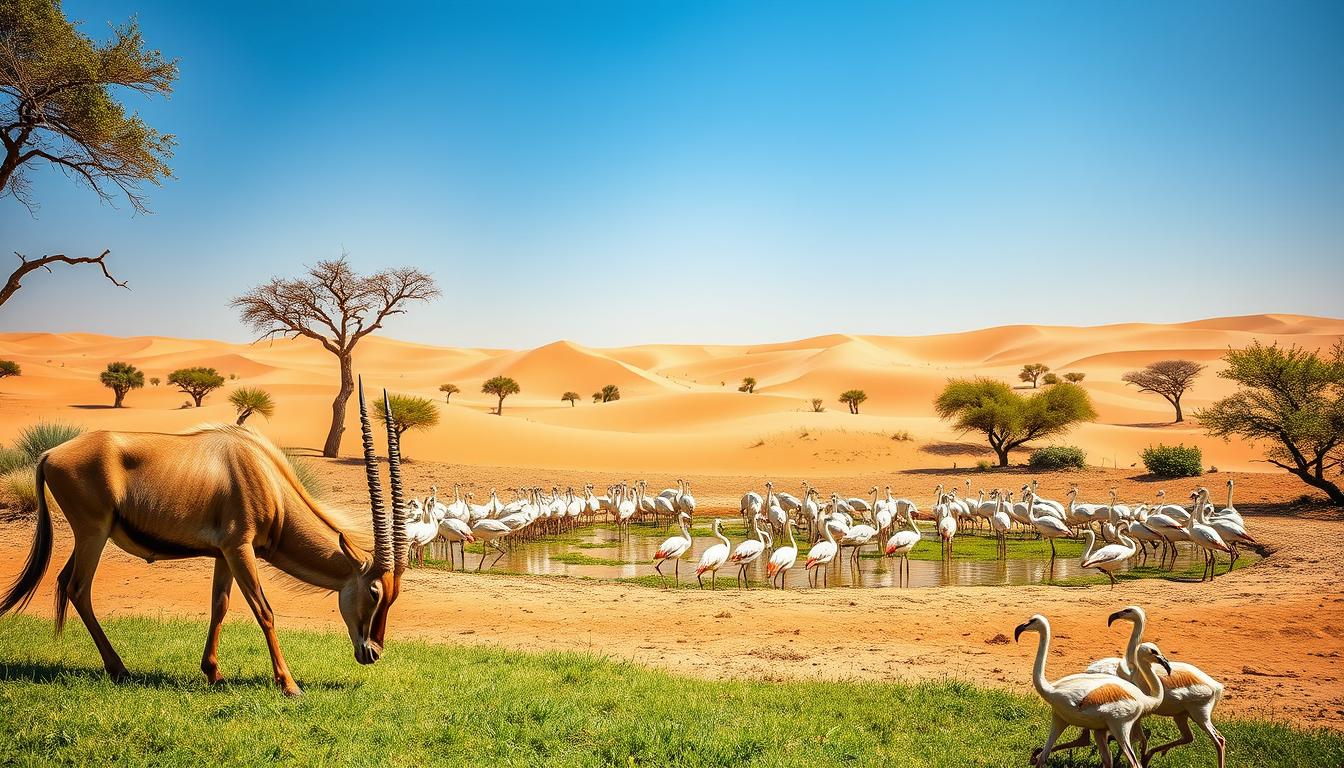
As you ride through golden grasses and acacia shade, you notice tracks and silhouettes. You see graceful antelopes, patient hunters, and quick birds. Each habitat is designed to feel natural, making your sightings feel earned.
Sharjah Safari wildlife shows its beauty in details. You see the bright horns of Arabian oryx and the light step of gazelles. The desert fox’s soft print at dawn is a sight to behold.
Patterns emerge in the desert. Shade gathers animals, and birds come out in the quiet. Heat changes the day, revealing the desert’s true self. It invites you to slow down and observe.
Leave room for wonder. Let curiosity guide you. A Sharjah wildlife safari rewards patience with real encounters. These moments stay with you, not just in photos.
Key Takeaways
- You’ll meet a diverse range of Sharjah Safari wildlife across purpose-built habitats inspired by Arabian and African ecosystems.
- The Wildlife You May See During Sharjah Safari includes signature mammals, elusive predators, and rich birdlife that reward patient viewing.
- A Sharjah wildlife safari feels authentic thanks to naturalistic routes, waterholes, and shaded zones that draw animals into view.
- Early mornings and late afternoons often offer the best Sharjah desert wildlife sightings in cooler light.
- Guided experiences can help you spot tracks, read behavior, and avoid disturbing sensitive species.
- Ethical viewing and slow travel lead to more meaningful encounters and better photographs.
Introduction to Sharjah Safari Wildlife and What to Expect
Step into a world where African-inspired biomes meet Arabian deserts. Sharjah Safari is home to open grasslands, wetland fringes, and dune corridors. These areas are designed to mimic natural habitats, allowing animals to act naturally.
Expect slow driving, quiet viewpoints, and clear sight lines. These features make wildlife watching in Sharjah special. You can observe animals without stressing them.
Overview of habitats and conservation zones
Grazers roam the savanna-style plains, while browsers eat from thorny acacia trees. Nocturnal animals hide in shaded areas during the day. This helps them keep their natural routines.
Conservation zones have rules for vehicles to keep animals calm. These areas help breed Arabian oryx and native gazelles. Your route is planned so you can see wildlife from a safe distance.
| Habitat Zone | Typical Behavior | Viewing Tip | Conservation Focus |
|---|---|---|---|
| Savanna Grasslands | Herd grazing and short bursts of movement | Scan edges of herds for calves and sentinels | Low-speed corridors to reduce herd stress |
| Wetland Edges | Bird foraging and mammal watering | Watch quiet shorelines for sudden arrivals | Protected buffers around water bodies |
| Acacia Woodlands | Selective browsing in dappled light | Look for movement at mid-canopy height | Habitat integrity and sapling protection |
| Dune Corridors | Shade-seeking and crepuscular travel | Track along slipfaces for fresh prints | Route planning to avoid den sites |
Best seasons and times for Sharjah wildlife sightings
The cooler months, from November to March, are the best for wildlife watching. Early mornings and late afternoons offer the best light for spotting animals.
Midday is hot, so animals seek shade. Spring and autumn bring more birds to lagoons and pools, adding to the variety of wildlife you can see.
How guided tours enhance your wildlife encounters in Sharjah
Guides use radios to find the best spots for wildlife. They consider the wind and sun to ensure you have a clear view. This way, you can watch animals without disturbing them.
Guides also share interesting facts about the animals and their habitats. This knowledge helps you appreciate wildlife watching in Sharjah even more.
Spotlight on Iconic Species: Arabian Oryx, Gazelles, and More
You arrive at wide plains where heat shimmers and acacia trees cast short shade. This is prime ground for Sharjah desert wildlife. It’s a highlight of any Sharjah wildlife safari. As you scan the horizon, think about the Wildlife You May See During Sharjah Safari. Each species fits the rhythm of the dunes.
Arabian oryx behavior, habitat, and conservation success
The Arabian oryx stands out with its white coat, black facial mask, and long, straight horns. Herds roam open flats near acacia and salt-tolerant shrubs. They feed at dawn and dusk.
They conserve water by resting during the heat. They browse on hardy grasses and leaves. The oryx is a regional comeback story, reintroduced to managed reserves after vanishing from the wild.
On a Sharjah wildlife safari, you may see careful herd spacing and calm, synchronized movement. This poise helps them watch for predators while saving energy in the harsh sun.
Mountain and sand gazelles: differences and viewing tips
Mountain gazelles favor rocky or rolling ground. They look slender, with a darker side stripe and quick, agile turns. Sand gazelles keep to open dunes and pale plains, often lighter in color with more delicate horns.
For clear views, keep the sun at your back and avoid sudden movement. Use binoculars to note stotting when alarmed, grooming between companions, and short bursts of sprinting. These habits are classic parts of Sharjah desert wildlife and enrich the Wildlife You May See During Sharjah Safari.
Other hoofed species you may encounter
In curated savanna zones, you may spot addax with spiral horns and the scimitar-horned oryx. Both are vital to global conservation work. Some African-themed habitats feature Nile lechwe or similar antelopes, giving you a broader window into grazing strategies and herd vigilance.
Mixed groups often cluster by forage height, shade, and water. As you pace your Sharjah wildlife safari, watch how species spread out across grass levels and rotate around shelter. Small shifts in position can reveal social rank, feeding pecking order, and safe paths through the dunes.
Predators and Elusive Hunters of the Sharjah Desert
As twilight falls, the desert comes alive. This is when the wildlife of Sharjah Safari shows its true nature. To have the best Sharjah safari experiences, move quietly, speak softly, and watch for animals at the edge of dunes and scrub. These moments can lead to unforgettable wildlife encounters in Sharjah.
Desert foxes and sand cats: signs and tracking tips
Look for small paw prints on dunes at dawn. These might belong to Rüppell’s fox, red fox, or sand cat. They often follow paths that protect them from the wind. Look for small dens and scat with fine hair to find where they hunt at night.
Guides look for tracks and listen for birds before the sun gets too hot. Move slowly and quietly. This way, you can enjoy wildlife encounters in Sharjah and learn more about Sharjah safari experiences.
Birds of prey: eagles, falcons, and owls in hunting action
Look up to see eagles soaring in the sky. Falcons dive and then glide smoothly. At dusk, owls fly silently, almost unseen.
Watch for signs like eagles scanning from high, falcons hovering, or owls flying low. These behaviors show how Sharjah Safari wildlife works. They make your safari experiences unforgettable.
Understanding predator-prey dynamics in arid ecosystems
In dry lands, every action is about saving energy. Predators look for places where they can easily find prey. Prey animals stay together, spread out, and hunt when it’s cooler.
By being quiet and giving animals space, you help them thrive. With patience, you can see how wildlife in Sharjah survives the heat and sand. This is a true highlight of Sharjah safari experiences.
Birdlife Bonanza: Migratory and Resident Species
You enter a world where birds are always on the move. Wetlands, tree belts, and open savannas are full of life. In the early morning, you hear the songs of larks, wheatears, doves, and the striking hoopoe. Kestrels and eagles soar in the sky, making your visit unforgettable.
Migration peaks from March to May and September to November. This is when birds from Africa and Europe pass through the UAE. Look for waders and herons on the shore, and watch for storks flying overhead. Late afternoon is great for seeing birds feeding and raptors flying.
Don’t forget your binoculars or spotting scope. Move quietly and keep your voice down. This helps you see more birds. Pay attention to how their feathers change with the seasons. Also, look for signs like tail-fanning and courtship dances to help identify birds.
- Best light: dawn for song and clean views; late day for raptor activity and feeding frenzies.
- Where to look: water edges for shorebirds, open thermals for soaring raptors, and windbreaks for migrant passerines.
- Fieldcraft: pause, listen, then scan methodically from near to far for reliable Sharjah wildlife sightings.
Take short photos and avoid playing bird sounds. This helps you see more birds and respect their homes. By watching carefully and quietly, you can have amazing wildlife experiences in Sharjah.
Reptiles and Desert Specialists You Should Watch For
Step into a world where heat shapes life. In Sharjah’s desert, movement is subtle, and tracks tell stories. Shadows hold surprises. Your wildlife sightings can soar when you read the sand at dawn and dusk.
Look for crisp tail marks and tiny foot drags. Guides often pause near gravel fans and low shrubs. That’s where reptiles warm up and hunt, and you get clear views.
Lizards and geckos adapted to dune environments
Fringe-toed lizards seem to “swim” through sand. They use elongated scales to shed heat and boost speed. At first light, they bask on warm rocks, then dive into soft dunes at the slightest motion.
Geckos come alive after sunset. Their wide toe pads grip vertical surfaces, and their pale skin blends with moonlit sand. On a quiet night, you can spot delicate tracks between shrubs. These calm encounters add depth to Sharjah desert wildlife.
Snakes and safety awareness during sightings
Some snakes favor curated zones and native patches. They leave smooth sidewinding curves across open sand. Keep a respectful distance and never try to handle any snake. If you see one, alert your guide at once and follow instructions.
Wear closed footwear, scan before stepping near shrubs, and remain in vehicles unless your guide says so. These habits keep wildlife sightings safe for you and stress-free for the animals.
Desert-adapted amphibians and rare finds
After rain or around managed wetlands, desert-adapted amphibians may appear. Their brief calls often rise at dusk, hinting at hidden pools and tiny moist pockets in the sand. Such moments highlight delicate microhabitats within Sharjah desert wildlife.
Join a night drive or an early evening walk with authorized guides. You might notice geckos on patrol and even scorpions under UV light. These careful sessions broaden Wildlife You May See During Sharjah Safari while protecting the desert’s rhythm.
Wildlife You May See During Sharjah Safari
You enter a world of habitats, each with its own life. As you explore, you see both native and exotic animals in Sharjah. These experiences require patience and timing for the best views.
Sharjah Safari wildlife highlights by habitat
Open savannas show herds of Arabian oryx and gazelles. In woodlands, look for browsers and birds of prey.
Wetlands are home to herons and shorebirds. Dune edges might have fox tracks and sand cats at dusk. Guides on nature walks help you understand the desert.
Exotic animals in Sharjah: curated zones and ethical viewing
Some areas mimic African biomes. This lets you see different species up close. Always follow the rules to protect the animals and the experience.
Stay in your vehicle and let animals move freely. Share views when it gets crowded. This way, everyone can enjoy the wildlife.
Photographing wildlife responsibly for better results
Use long lenses to keep a safe distance. Shoot during the golden hours for the best light. Avoid flash, as it disturbs animals.
Pre-focus and use burst mode wisely. Keep your camera quiet. Frame your shots to respect the animals and capture their beauty.
Planning Your Sharjah Safari Experience
Visit the Sharjah wildlife safari from November to March for the best weather. Go at sunrise or late afternoon for the best light and animal activity. Book your spot early to avoid long waits.
Wear comfortable clothes and respect the environment. Choose light, breathable layers and closed-toe shoes. Don’t forget a hat, sunscreen, water, binoculars, and a camera with a long lens. A field guide or app can help you learn about the wildlife without disturbing them.
Read the park’s rules before you go. Follow speed limits and stay on paths. Keep quiet, don’t feed animals, and check drone rules. Always leave the park as you found it to help conservation efforts.
If you’re bringing kids, pick shorter routes with shade and restrooms nearby. Contact the park for mobility support and vehicle choices. Check the park’s hours, as they can change with the seasons and events.
Plan your visit around sunrise and sunset for the best views. Consider visiting nearby cultural or nature spots in the UAE for a full day. For more on desert activities, see this guide and follow local rules.
Pro tip: Carry your gear in a small bag, bring extra batteries and memory cards. Set your camera to freeze fast-moving wildlife in Sharjah.
Enhance Your Adventure with Desert Buggy Rental Dubai
Expand your day with high-energy rides across the red dunes. This shift from wildlife to motorsport thrills is seamless. Expert guides and safety gear are ready for you.
About Desert Buggy Rental Dubai and 24-hour booking
Desert Buggy Rental Dubai offers 24/7 booking support. This lets you plan rides when it suits you. Their team helps plan around heat and traffic, focusing on the dunes and exotic animals in Sharjah.
Adventure services: Dune Buggy Tours, Quad Biking Tours, and more
- Dune Buggy Tours with roll-cage buggies, helmets, and goggles for fun.
- Quad Biking Tours on marked routes for all skill levels.
- Evening Desert Safari with sunset views and a Desert BBQ Dinner.
- Morning Desert Safari for cooler air and calm sands.
- Camel Ride and sandboarding for families and beginners.
How to combine Sharjah wildlife safari with desert activities
Do wildlife tours in Sharjah in the morning. Then, enjoy late-afternoon rides for golden-hour views. End with a Desert BBQ Dinner.
If you prefer a Morning Desert Safari, visit exotic animals in Sharjah later. This is when temperatures are lower.
| Goal | Suggested Schedule | Why It Works | Pro Tips |
|---|---|---|---|
| Balanced thrills and nature | Morning safari in Sharjah, late-day dune buggy ride | Prime wildlife viewing first, cooler sands at sunset | Pack goggles, scarf, closed shoes; hydrate between activities |
| Family-friendly day | Wildlife tour, then camel ride and sandboarding | Gentle pace suits mixed ages | Keep breaks for shade; bring light layers |
| Adrenaline focus | Quad Biking Tours after lunch, BBQ dinner at night | Peak energy for technical dunes, relaxed finish | Confirm route difficulty; follow guide signals |
Contact details: +971 52 440 9525 | [email protected]
For 24-hour booking and advice, contact Desert Buggy Rental Dubai. Call +971 52 440 9525 or email [email protected]. They plan rides to avoid heat and align with wildlife-friendly times, making your day smooth.
Conclusion
You now know what Wildlife You May See During Sharjah Safari. You can spot Arabian oryx, gazelles, sand cats, foxes, and birds of prey. These animals show us life in the desert.
Sharjah Safari also has vibrant migrants and resident birds, plus hardy reptiles and rare amphibians. This shows how wildlife thrives when habitats are protected.
To see more wildlife, plan your visit wisely. Go during cooler hours at dawn and dusk. Choose guided tours for expert tips.
Follow viewing rules to keep animals calm. Use tips to spot tracks, listen for calls, and read the dunes. Small choices like keeping distance and staying quiet help conservation and improve your view.
Make your day balanced with nature and adventure. After seeing wildlife, try Desert Buggy Rental Dubai. This lets you see the UAE’s landscapes from a new angle.
Pack water, sun protection, and a lens cloth. Keep your camera ready for wildlife moments. With planning and respect, you’ll have memories to share.
FAQ
What wildlife can you expect to see during a Sharjah wildlife safari?
You might see Arabian oryx, mountain and sand gazelles, addax, and scimitar-horned oryx. Desert foxes and sand cats are also around. The birdlife is rich, with eagles, falcons, owls, larks, and migratory waders.
Reptiles and amphibians can be spotted after rain. This makes Sharjah safari experiences varied and memorable.
When are the best seasons and times for Sharjah wildlife sightings?
The best times are from November to March. Early morning and late afternoon are best for seeing animals. Midday is too hot.
Spring and autumn are great for birdwatching. These seasons offer a good mix of weather and wildlife.
How do guided tours improve your wildlife encounters in Sharjah?
Guides use radio updates and know where to find animals. They position vehicles for clear views and keep a safe distance. You learn about conservation and photography tips.
This increases your chances of seeing wildlife safely.
What are the differences between mountain and sand gazelles?
Mountain gazelles are agile and live in rocky areas. They have a slender build and darker side stripes. Sand gazelles prefer open plains and have paler coats.
For better views, keep the sun behind you. Move slowly and use binoculars to observe without disturbing them.
Where are Arabian oryx most likely to be seen, and what should you know about them?
Look for Arabian oryx in open plains near acacia patches. They are most active at dawn and dusk. They have white coats and bold facial markings.
They are a success story in conservation. Your visit helps support their reintroduction.
How can you spot desert foxes and sand cats?
Look for fresh tracks at first light along dune edges. Listen for bird alarm calls. These hunters are active at dawn and dusk.
Always observe from a respectful distance.
What birds of prey are common, and when are they most active?
Eagles, falcons, and owls are common. They are most active in the early morning and late afternoon. Scan perches and watch for soaring silhouettes.
Keep noise low to avoid flushing birds.
Which habitats should you prioritize for the best Sharjah safari experiences?
Open savannas are best for oryx and gazelles. Acacia woodlands are good for antelopes and raptors. Wetland edges are great for herons and waders.
Dune corridors are home to foxes, sand cats, and dune larks. Curated zones offer exotic animals with strict viewing rules.
How can you photograph wildlife responsibly and get better results?
Use a telephoto lens and avoid flash. Shoot during golden hours. Stabilize your camera with a beanbag on the window.
Pre-focus where animals travel. Keep sound low and prioritize animal welfare.
What safety tips should you follow around snakes and other reptiles?
Keep a safe distance and never handle wildlife. Wear closed-toe shoes and watch your step. Remain in the vehicle unless instructed.
Early morning is best for spotting basking lizards. Night drives reveal geckos and other nocturnal species under safe protocols.
What should you bring and wear for a Sharjah wildlife safari?
Wear breathable clothing, closed shoes, a hat, and sunscreen. Bring water, binoculars, a camera with a telephoto lens, and a field guide or app.
Check speed limits and no-go zones. Confirm opening hours and plan for shaded stops if traveling with children.
Are there accessibility options for the Sharjah safari?
Yes. Contact the venue in advance for mobility support and vehicle preferences. Plan your visit around sunrise or late afternoon for cooler conditions.
How do curated zones with exotic animals in Sharjah align with ethical viewing?
Curated zones mirror African and Arabian biomes and follow strict welfare standards. Stay on designated tracks and keep noise minimal.
Never feed or call animals. This approach allows educational, low-impact wildlife encounters while supporting conservation goals.
Can you combine a Sharjah wildlife safari with dune adventures the same day?
Yes. Book your safari in the morning for peak animal activity. Then, schedule late-afternoon rides for golden-hour dunes.
This plan balances cooler temperatures, better light, and varied experiences across wildlife and adventure activities.
Who offers 24-hour booking for desert activities near Sharjah?
Desert Buggy Rental Dubai provides 24-hour booking for Dune Buggy Tours, Quad Biking Tours, and more. Call +971 52 440 9525 or email [email protected] for assistance.
How do you prepare for dune activities after your Sharjah wildlife safari?
Pack goggles, a scarf, closed shoes, and extra water. Coordinate transfers and confirm timings to avoid peak heat.
Choose packages that fit your schedule. This ensures smooth transitions between wildlife encounters and high-energy rides.
What rules help protect Sharjah Safari wildlife during your visit?
Respect speed limits and stay on marked routes. Keep a safe distance and avoid loud music and drones without permits. Never litter or feed animals.
These rules safeguard wildlife habitats and improve your viewing quality.
Are night experiences recommended for wildlife viewing?
Yes. Night drives reveal geckos, owls, and other nocturnal specialists. Use red or dim lights if provided, remain quiet, and follow all protocols.
This minimizes disturbance and enhances sightings.
Categories
- Desert Buggy Rental (2,218)
- Dune buggy (4)
- Quad Bike Rental (1)
- Desert safari (1)
- Hot air ballon (2)
- dirt bike (4)
- Uncategorized (4)
Recent Post



Tags
Adventure travel tips All-terrain vehicle risks Anniversary Celebrations Authentic Bedouin Experience Balloon Ride Dubai BBQ Desert Dinner Couples Safari Getaway Desert excursion with kids Desert Safari Dubai dress regulations Desert Safari Excursions in Dubai Desert safari itinerary Desert Safari Recommendations Desert Safari time recommendations Dune age rating Dune Buggy Capacity Dune buggy vs quad bike packages Dune movie Emirati culinary traditions Evening safari dubai packages Evening safari tours Exciting Off-Road Safari Exclusive dune buggy prices Exiting a train with a stroller Flying with Infant's Stroller Hummer Desert Safari Dubai Luxury car hire Mleiha Desert tours Morning safari abu dhabi packages Morning safari dubai packages Morning safari sharjah tours Off-road dune buggy rentals Off-roading gear Parental guidance in Dune Private desert safari dubai experience Quad bike combo Dubai experience Quad biking abu dhabi Religious inspiration Roller coaster comparison Safari Clothing Guide Safari without Dune Bashing Senior Friendly Tours Sharjah Desert Safari Tips Sharjah outdoor experiences Shopping mall transportation Young adult literature