

- 180 Views
- 23 Min Read
- (0) Comment
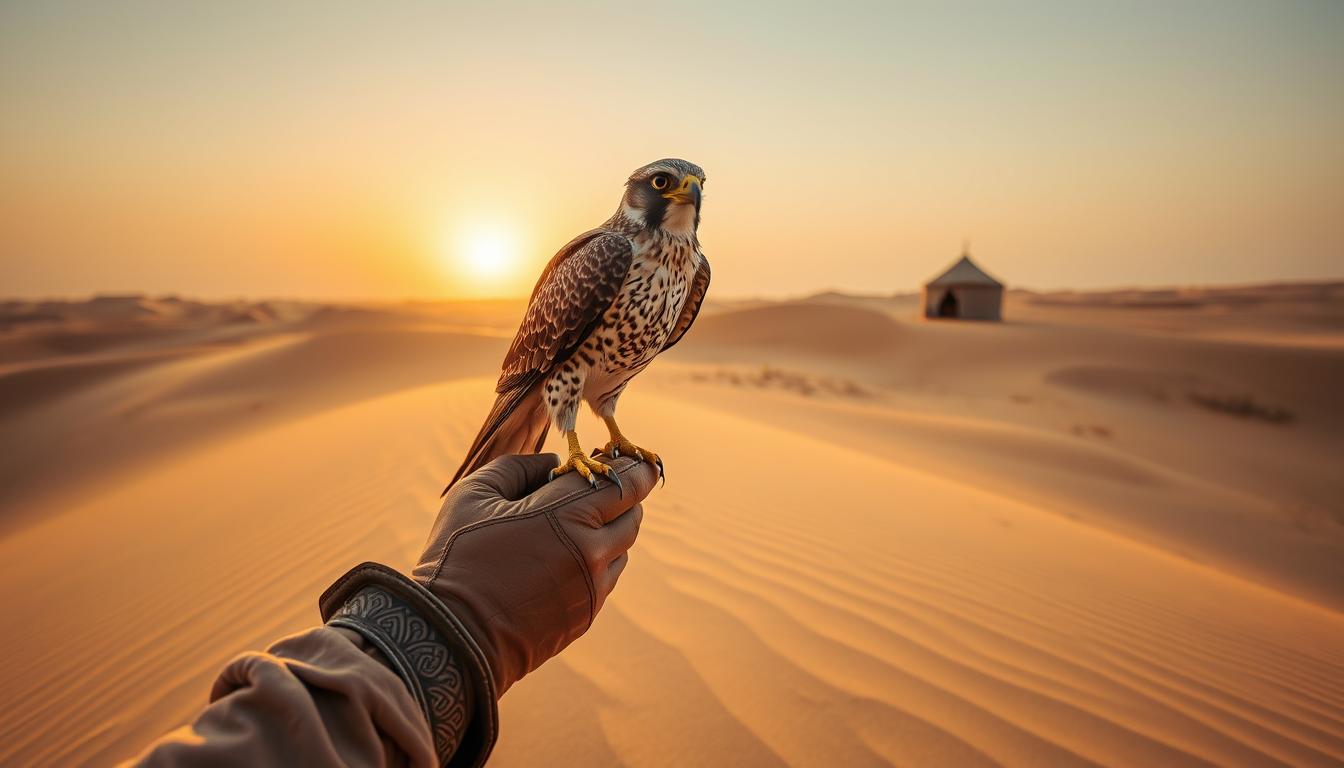
You step onto the sand before sunrise, and the desert is quiet. A trained falcon settles on a gloved hand, eyes sharp, wings ready. In this moment, you feel history and excitement. This is where your journey with Falcon Photography in Sharjah Desert Camps starts.
You’re not just taking pictures. You’re creating a moment that honors culture and wildlife. The dunes become clean lines, and the sky softens. Every detail tells a true story. With careful choices, your photoshoot becomes art and record.
In Sharjah, photography uses color and space to show speed and grace. You’ll see how Arabian wildlife photography is both powerful and ethical. A partner like Desert Buggy Rental Dubai can handle logistics, so you can focus on your shots. By sunset, you’ll be ready to make images that honor desert camp photography and its heritage.
Key Takeaways
- Sharjah’s dunes and open skies act like a natural studio for desert camp photography.
- Plan a UAE desert photoshoot that balances artistry with cultural respect and animal welfare.
- Use the unique light of golden hour and blue hour to elevate Sharjah desert photography.
- Work with licensed falconers and coordinate logistics through Desert Buggy Rental Dubai.
- Apply ethical Arabian wildlife photography principles to protect raptors and habitats.
- Compose for speed, power, and place so your images feel both authentic and timeless.
Sharjah Desert Photography: What Makes Falcon Shoots Unique
When you step onto dune crests, the view simplifies. In Sharjah desert photography, the sand reflects light, giving you clear details. This makes desert camp photography feel like a movie.
Licensed falconers often fly Peregrine Falcons and Saker Falcons here, and the landscape helps you follow their speed. The skyline is clear, making autofocus quick. Wind-carved ripples add scale to each pass. These conditions make desert falcon images compelling.
Why the Sharjah dunes elevate desert camp photography
The ridges reflect light at sunrise and sunset. This bounce fills shadows, boosting contrast in motion. You get clean backgrounds for capturing falcons in flight.
The skyline’s purity makes panning smoother. Warm hues change through the day, giving natural color grading. This enhances desert camp photography.
Arabian wildlife photography ethics and best practices
Work with trained raptors under licensed handlers. Keep a respectful distance. Avoid baiting and rapid movements that stress birds.
Follow local directions on where to stand during flights. Let the demonstration set the pace. Ethical photography respects the raptor’s welfare first.
How desert falcon images differ from studio bird of prey photography
Studio sessions use controlled lights and static poses. In the dunes, you capture fast stoops and turns. Wind and haze add depth you can’t stage indoors.
Sand ripples and footprints add depth cues. This is where Sharjah desert photography meets Arabian wildlife photography. Movement, minimalism, and authentic action define desert camp photography.
| Feature | Sharjah Dune Shoots | Studio Bird of Prey |
|---|---|---|
| Light Quality | Natural bounce from sand; warm tonal range at dawn/dusk | Fixed modifiers; consistent but less environmental nuance |
| Background Control | Clean horizons for strong separation in desert falcon images | Backdrops; controlled but often flat in context |
| Behavior Captured | Stoops, banks, handler interactions in real wind and terrain | Perched poses and planned flights within limited space |
| Color and Texture | Shifting sand tones, ripple patterns, atmospheric haze | Uniform palettes; textures added artificially |
| Ethical Focus | Handler-led sessions; no baiting; respectful distance | Controlled handling; minimal environmental variables |
Planning Your UAE Desert Photoshoot
Planning is key to capturing the essence of your UAE desert photoshoot. Focus on light, access, and safety to make your images come alive. Make sure your schedule fits with Sharjah tourism photography and Falcon Photography in Sharjah Desert Camps for a smooth shoot.
Optimal seasons and times for golden-hour and blue-hour shots
From October to April, the weather is cooler and the air is clearer. This makes for sharp horizons and vibrant colors. Sunrise brings warm tones to the dunes and the falcon’s eyes sparkle.
Sunset, on the other hand, deepens the reds and textures in the sand. For blue hour, silhouettes become moody and exposures work well. If allowed, use LED lights to add detail without glare.
Plan to arrive before dawn and stay until dusk for a full range of colors.
Permits, permissions, and working with licensed falconers
Some places need permission for commercial shoots or big lenses. Check with the operator and work with licensed falconers. Written approval is needed for drones, as many places ban them near wildlife and gatherings.
Have a quick briefing with handlers before the first flight. Set safe distances and signals for a smooth, ethical shoot.
Coordinating with Desert Buggy Rental Dubai for logistics
Sand shifts, light changes, and tracks disappear. Work with Desert Buggy Rental Dubai for route planning and transfers. Make sure to check tire pressure for soft sand and have recovery gear ready.
Share GPS pins and plan exit routes. Add a buffer for wind or haze. Align buggy arrivals with the falconer’s schedule for perfect sunrise and sunset shots.
| Planning Focus | Key Actions | Why It Matters | Pro Tip |
|---|---|---|---|
| Season & Light | Target Oct–Apr; arrive 45–60 minutes before sunrise/sunset | Best color, cooler temps, stable visibility | Stage test frames for golden hour and blue hour transitions |
| Permissions | Secure camp approvals; verify licensed falconers | Compliance and access to prime locations | Carry printed permits and ID for quick checks |
| Drone Policy | Request written authorization or avoid UAVs | Protects wildlife; meets UAE rules | Use ground gimbals as a legal, quiet alternative |
| Logistics | Coordinate with Desert Buggy Rental Dubai; plan recovery | On-time arrivals at remote dunes | Preload GPS routes and set VHF/phone backups |
| Safety Brief | Align flight cues and distances with handlers | Smoother action and ethical conduct | Keep a marked “no-go” zone around the bird’s path |
| Contingencies | Add 30–45 minutes buffer for wind or haze | Maintains schedule for light windows | Have alternate ridges scouted to pivot fast |
Essential Gear for Bird of Prey Photography in the Desert
For bird of prey photography, you need gear that lets you reach and move fast. Use a fast telephoto lens, like 300–600mm, or a zoom like 100–400mm or 200–600mm for capturing flight. Also, bring a 24–70mm or 24–105mm lens to frame wider scenes that show both desert landscapes and camp life.
Having a second camera body is a good idea. It lets you switch lenses without getting sand in your way. Choose cameras that can shoot 10–30 frames per second, have deep buffers, and can track subjects with their eyes and heads.
Filters can be helpful, but use them carefully. A circular polarizer can darken skies unevenly, so use it sparingly. A 3‑stop ND filter helps you try slower shutter speeds for panning blur while keeping the falcon sharp. For desert camp photography, a small collapsible reflector can add subtle fill if allowed.
Heat and dust are always a problem. Keep your gear in dust sleeves or rain covers. Carry a rocket blower, microfiber cloths, and sensor swabs for quick cleaning. Also, bring lots of high‑capacity, fast UHS‑II or CFexpress cards and more batteries than you think you’ll need.
Long lenses can be heavy. Use a lightweight monopod or a gimbal head to balance reach without losing mobility. Wear neutral, breathable clothing, UV protection, and closed shoes. Pack water and use a GPS‑enabled device or app to mark safe routes. This way, you can return to high vantage points at dawn and dusk.
| Category | Recommended Options | Why It Matters in the Desert | Field Tips |
|---|---|---|---|
| Telephoto Lenses | 300–600mm primes; 100–400mm or 200–600mm zooms | Reach for distant passes and tight frames during bird of prey photography | Use zooms for fast framing as falcons change altitude |
| Wide/Standard Zoom | 24–70mm or 24–105mm | Captures dunes and camp life for desert landscape photography | Keep on second body to avoid sandy swaps |
| Camera Bodies | High burst (10–30 fps), deep buffer, subject‑detect AF | Reliable tracking on erratic flight lines | Assign back‑button focus for quick reacquisition |
| Support | Light monopod; gimbal head | Stability for long glass without losing mobility | Set height for eye‑level shots over dune crests |
| Filters | CPL (sparingly); 3‑stop ND | Control reflections and enable motion‑blur pans | Watch for uneven skies; remove CPL near wide angles |
| Media & Power | UHS‑II or CFexpress; extra batteries | High data rates and heat drain demand headroom | Rotate cards to prevent buffer bottlenecks |
| Protection & Cleaning | Dust sleeves, rain covers, blower, microfiber, swabs | Sand and wind are constant threats | Clean before lens changes; bag gear between sets |
| Personal Kit | Neutral clothing, UV gear, water, GPS device | Comfort and safety during desert camp photography | Mark routes to safe pull‑offs and shaded rest spots |
Pack light, think fast, and keep your kit ready for shifting light and sudden flights across the Sharjah dunes.
Camera Settings and Techniques for Fast-Flying Falcons
Fast wings need fast camera choices. In the open dunes, settings must lock focus, freeze motion, and keep feather detail sharp. As you practice in Sharjah desert photography, adjust settings to match speed, light, and sand glare. This way, you get crisp desert falcon images that stand out in bird of prey photography.
Shutter speed, autofocus modes, and burst strategies
Begin with 1/2500–1/4000 sec to freeze wing tips. Set aperture around f/5.6–f/7.1 for sharpness and gentle blur. Use continuous autofocus with subject tracking—AF-C or AI Servo with bird or animal detect—plus wide-area tracking to hold erratic flight. These choices support clean desert falcon images under shifting wind.
Use high-speed bursts to capture peak wing spread and clear eyes. Pace your bursts to avoid buffer lock, and shoot shorter sequences as the falcon turns toward you. In bird of prey photography, this rhythm keeps timing precise without losing frames.
Exposure in harsh sunlight and high-contrast dunes
Under strong Gulf sun, meter for highlights to protect white and buff feathers. Dial in -0.3 to -1 EV when the sand flares bright. If the background tone flips from dark dunes to sky, switch to manual exposure for steady results. Auto ISO with a capped maximum helps control noise in midday heat.
For Sharjah desert photography, check the histogram and blinkies between passes. Small tweaks keep texture in primaries and avoid flat shadows that hide detail.
Panning, tracking, and background separation tips
For motion feel, pan at 1/80–1/250 sec as the bird approaches or departs. Keep elbows tucked, feet shoulder-width apart, and rotate from the hips. Maintain smooth lateral motion through the subject to keep the head sharp while the wings paint a dynamic blur.
Pre-focus along the flight line the handler indicates to cut lag. Choose backgrounds that contrast with plumage—deep leeward shadows, distant sky gradients, or a soft dune ridge—to separate the falcon cleanly. This choice boosts the impact of desert falcon images without heavy edits.
| Scenario | Core Settings | AF Method | Execution Tip | Why It Works |
|---|---|---|---|---|
| High-speed stoop in bright sun | 1/3200 sec, f/5.6–f/7.1, Auto ISO (cap ISO 3200) | AF-C/AI Servo, wide-area with bird detect | Expose for highlights with -0.7 EV | Freezes feathers and protects bright sand detail |
| Side pass against dark dune | 1/2500 sec, f/6.3, Auto ISO | Zone AF with tracking | Aim at the eye, fire short bursts | Strong contrast aids lock and clean separation |
| Panning for motion blur | 1/125 sec, f/8, low ISO | Continuous AF, single-point start | Follow-through past the frame edge | Sharp head with expressive wing blur |
| Mixed background (sand to sky) | Manual exposure set from highlight check | Tracking with subject recognition | Lock exposure, let AF adapt | Consistent tone as scenery shifts |
| Backlit late-afternoon pass | 1/4000 sec, f/5.6, ISO as needed | AF-C with custom sensitivity tuned low | Spot meter on bright feather edges | Controls flare and preserves rim light detail |
Keep stance stable, breathe steady, and anticipate the arc. Technique turns fleeting passes in Sharjah desert photography into publishable bird of prey photography.
Composing Desert Landscape Photography with Falcons
When you’re capturing desert landscapes, the falcon is the star. But the dunes and sky are the backdrop. For a UAE desert photoshoot, keep your frame clean and the horizon straight. Give the bird room to fly across the image.
Start wide to map the scene, then tighten for impact. In desert camp photography, move from wide to close-up. Use the rule of thirds to place the falcon on a power point. Leave space in the direction it’s flying.
Using leading lines, dune ridges, and sky gradients
Position yourself to follow dune ridges and wind-carved ripples to the falcon or handler. These lines add rhythm and help track the bird’s flight.
At sunrise or sunset, align the flight path with sky gradients. Soft pastels can silhouette wing shapes or frame the bird against color bands. This is a hallmark of desert landscape photography.
Foreground elements: footprints, shrubs, and shadows
Use footprints, shrubs, and shadows to add depth. In an UAE desert photoshoot, these elements scale the scene and keep the story grounded.
Move a step back to avoid clutter. A low angle can turn a single shrub into a strong anchor without stealing focus.
Balancing subject isolation with environmental storytelling
For isolation, use a long focal length and a wide aperture to blur the dunes. When you need narrative, step wider to include tents and cultural tools. These are key elements of desert camp photography.
Build a cohesive set: tight action, mid-range portraits, and wides that show the camp and ridgelines. This progression reads smoothly in portfolios and editorial spreads.
| Goal | Framing Strategy | Key Elements | Why It Works |
|---|---|---|---|
| Subject Isolation | Telephoto, wide aperture, off-center placement | Eye in focus, clean background, nose room | Draws attention to the falcon while keeping motion clear |
| Environmental Story | Wide to normal lens, layered composition | Tents, majlis, perches, dune ridges | Context enriches desert landscape photography narratives |
| Dynamic Flight | Pan along ridge lines | Leading ripples, sky gradients, level horizon | Lines and color bands emphasize speed and direction |
| Depth and Scale | Low angle with foreground anchor | Footprints, shrubs, elongated shadows | Creates three-dimensional depth in an UAE desert photoshoot |
| Cultural Texture | Mid-range with selective layering | Hood, gauntlet, handler stance | Authentic detail supports desert camp photography storytelling |
Falcon Photography in Sharjah Desert Camps
As you step into the dunes, you find a perfect blend of pace, light, and respect. Falcon Photography in Sharjah Desert Camps is all about patience and focus. It’s about capturing the beauty of tradition and wildlife with care.
Working safely around trained raptors and handlers
Stand where the handler tells you to, and listen to every instruction. Keep a safe distance and avoid shiny objects that might scare the bird. Always ask before moving closer to the falcon or its perch.
Use a silent shutter when the bird is free or flying. At night, use minimal light and check that your flash is okay. Being careful helps you get closer to the birds and take better photos.
Capturing interactions at traditional desert camps
Focus on the story, not just the birds. Capture moments like tea being made, incense burning, and the falcon’s release. Watch the bird’s body language to catch the perfect shot.
Start with wide shots to show the scene, then zoom in on details like the jess or the handler’s hand. This way, your photos tell a complete story, fitting perfectly with Arabian wildlife photography.
Respecting culture and Sharjah tourism photography guidelines
Sharjah is all about respect and consent. Always ask before taking photos of people, and be careful around families. Follow signs and rules to protect everyone and the wildlife.
Try not to leave a big impact. Stay on paths, be quiet during prayer times, and don’t block views. Working with licensed handlers and following local rules helps you create photos that are appreciated everywhere.
Post-Processing Desert Falcon Images
Begin by adjusting white balance to match desert light. Use daylight as a starting point, then add warmth for golden hour or coolness for blue hour. This ensures skin tones look natural and the dunes are accurately depicted in your Sharjah desert photography.
When editing, recover highlights in feathers and sand while keeping contrast. Use masks to lift shadows under wings without losing texture. Apply noise reduction for high-ISO shots, then add micro-contrast to highlight the falcon’s plumage in your images.
Enhance catchlights with a radial filter to draw the viewer’s eye to the falcon’s gaze. For panning shots, remove motion blur only where necessary to keep edges natural. Adjust color casts from reflected sand by tweaking HSL, focusing on yellows and oranges that can affect midtones.
Ensure horizons are straight and crop to follow the bird’s flight path. Keep some negative space for context, which is vital in desert landscape photography. Export high-resolution TIFFs or JPEGs for print, and optimized JPEGs for web with sRGB and screen-focused sharpening.
To make editing easier, back up to a portable SSD and create extra copies before moving. Consider using proxies for smoother editing. For more on desert post-production, check out this guide on desert post-production basics.
Booking Your Experience with Desert Buggy Rental Dubai
Make your desert photoshoot smooth and efficient. Desert Buggy Rental Dubai offers transport, access, and timing for your UAE desert photoshoot. This guide helps you plan rides, camp access, and crew needs for great desert camp photography.
Service types to pair with your photoshoot
Match your story with the right ride. Dune Buggy Tours are great for exploring ridges and high points. Quad Biking Tours let you quickly move between spots for your UAE desert photoshoot.
- Morning Desert Safari: crisp air, low crowds, steady tones for calm portraits.
- Evening Desert Safari: warm light, silhouettes, and post-sunset ambiance.
- Desert BBQ Dinner: cultural context and low-light camp scenes that enrich desert camp photography.
- Camel Ride: authentic foreground elements and rider portraits.
- Sandboarding: action frames and dynamic motion blur.
Choose private or shared setups with Desert Buggy Rental Dubai. Make sure vehicles can carry extra gear. Ask for routes near stable dunes and safe launch zones for falcon work.
How to schedule a sunrise or sunset session
Book a few days early for golden-hour or blue-hour slots. Share your preferred time, gear list, and any special needs. This includes assistant seating or extra cargo space.
- Request buffer time for safety briefings with licensed falconers.
- Note pickup points and travel time to your selected dunes.
- Build a backup plan for sandstorms or road closures.
For a tight schedule, keep things simple. Pack batteries, cards, and a cloth for fine sand. This way, you can adjust quickly if the weather changes.
Contact details and 24-hour booking support
Desert Buggy Rental Dubai offers 24/7 help. Call +971 52 440 9525 or email [email protected] for booking support.
When you call, ask about private or shared experiences, timing, and services. Also, confirm backup plans for weather changes. This keeps your desert camp photography on track during your UAE desert photoshoot.
Safety, Animal Welfare, and Cultural Sensitivity
When you take photos of falcons, you must follow important rules. These rules help protect the bird and respect local culture. They make sure your photos are great without harming the desert’s natural flow.
Handler-led interaction protocols
Always listen to the licensed handler. Stay where you’re told and move only when they say it’s okay. Keep the bird’s view clear and use short, quiet movements.
Let the handler decide when to start and stop. Respect the bird’s rest times and stay in place when they signal it’s time to stop.
Minimizing stress and avoiding baiting practices
Don’t ask for more flights or faster speeds. Never use food, toys, or bait to get the bird’s attention. Avoid using laser pointers and harsh flashes.
Move back if the falcon looks stressed. This helps keep the bird safe and makes your photos ethical.
Dress code and etiquette in UAE desert camps
Wear modest, comfortable clothes like long sleeves and pants. Avoid bright colors or patterns that might distract the birds. Keep your gear organized and out of the way.
Always ask before taking photos of people. Follow signs that say “no photos” and clean up after yourself. This helps keep the desert beautiful for future visitors.
| Topic | Do | Don’t | Why It Matters |
|---|---|---|---|
| Handler Protocol | Follow positions, timing, and cues | Step into flight paths | Prevents accidents and missed shots |
| Lighting | Use diffused, low-intensity light | Use lasers or harsh flash | Reduces stress and eye strain |
| Flight Requests | Accept handler-set durations | Push for extra or faster flights | Protects welfare and stamina |
| Approach | Move slowly on permission | Rush or crowd the bird | Avoids habituation and startle |
| Attire | Neutral, modest, breathable layers | Bright patterns and loose scarves | Prevents distraction and snags |
| Community Respect | Seek consent, obey restricted areas | Photograph people without asking | Aligns with local customs and privacy |
| Environment | Pack out waste, stay on paths | Disturb dunes or vegetation | Preserves habitat for future shoots |
| Ethics | Document natural behavior | Bait or stage harmful scenes | Keeps Arabian wildlife photography responsible |
Sharpening Your Portfolio: From Sharjah to the Wider UAE
Boost your portfolio by mixing tight action shots, handler scenes, and wide desert views. Start each UAE desert photoshoot with a clear plan: approach, launch, flight, and recovery. Keep your edits consistent to ensure your story flows smoothly.
Expand with intent. Bring the same visual style to Abu Dhabi’s pale dunes and Dubai’s copper ridges. Mix up wind directions, sun angles, and backgrounds but keep colors consistent. Use this guide on planning a Dubai desert photo to plan logistics and timing.
Organize your work into themed series: flight against ridges, heritage moments, or blue hour silhouettes. Include precise captions and metadata for location, time, wind, and collaboration details. This builds trust with buyers and elevates your desert camp photography.
Export both color and monochrome sets for pitches. Prepare print-ready TIFFs and web-optimized JPEGs for galleries and social media. Remember lessons from Sharjah to streamline shoots in Dubai or the Empty Quarter, keeping your workflow efficient.
- Maintain a repeatable shot list across regions to ensure visual continuity.
- Balance action and context to anchor desert landscape photography with clear narratives.
- Document every collaboration and permit in captions to simplify syndication.
Conclusion
Sharjah’s dunes offer a unique mix of speed, texture, and light. With careful planning, respect for culture and animals, and desert-specific techniques, your photos can tell a special story. Falcon Photography in Sharjah Desert Camps is all about timing, restraint, and detail.
Start planning early to focus on your craft. Work with licensed falconers and arrange access and transport through Desert Buggy Rental Dubai at +971 52 440 9525 or [email protected]. In the strong sun, use fast shutter speeds and reliable autofocus.
When editing, be gentle to protect feather details and keep colors true. Create sequences that mix close-up action with wider views. This way, your photos will show the beauty of flight and the spirit of the camp.
As you grow your portfolio, choose ethical and clear storytelling. Arabian wildlife photography needs patience, handler-led protocols, and respect for local customs. With the right preparation, gear, and practices, your work will show the elegance of falconry in the UAE.
FAQ
What makes Falcon Photography in Sharjah Desert Camps unique compared to other locations?
Sharjah’s dunes offer clean horizons and warm light that highlight raptor colors. You get real bird of prey photos with licensed falconers. The natural textures and sky gradients make your photos special.
These elements create dynamic, culturally rich UAE desert photos. You can’t get this in a studio.
When is the best season and time for Sharjah desert photography of flying falcons?
October to April is best for cooler weather and clear skies. Golden hour gives rich tones and eye-catching light. Blue hour offers moody silhouettes and balanced shots.
Plan for sunrise or sunset to capture fast action. This light is flattering and minimizes heat haze.
Do you need permits or special permissions for desert camp photography?
Some camps need advance permission for professional gear or commercial use. Work with camp operators and licensed falconers. Always get written approval for drone use.
UAV rules in the UAE are strict. They often ban flights near wildlife or gatherings.
How do you coordinate logistics with Desert Buggy Rental Dubai for a photoshoot?
Share your preferred time, gear list, and route plan. Confirm tire pressure for soft sand and meeting points. For 24-hour support, call +971 52 440 9525 or email [email protected].
Lock in sunrise or sunset access.
What core gear do you need for Arabian wildlife photography of falcons?
Bring a 300–600mm prime or 100–400mm/200–600mm zoom for flight shots. Use a 24–70mm or 24–105mm for environmental shots. Carry a second body, fast cards, and extra batteries.
Consider a lightweight monopod or gimbal head. Dust protection and a 3-stop ND are also useful.
Which camera settings work best for fast-flying bird of prey photography?
Start with 1/2500–1/4000 sec at f/5.6–f/7.1. Use Auto ISO capped to control noise. AF-C/AI Servo with bird detection and wide-area tracking are best.
In bright sand, protect highlights with -0.3 to -1 EV. Or switch to manual exposure for consistent sequences.
How do you achieve strong background separation in desert falcon images?
Position the flight path against sky gradients or shadowed dune faces. Use longer focal lengths and wider apertures to blur backgrounds. Pre-focus along the handler’s indicated route and track smoothly.
What etiquette should you follow in Sharjah tourism photography at desert camps?
Always ask consent before photographing guests. Respect signage and dress modestly. Minimize light intrusion and avoid flash around birds unless approved.
Follow handler directions at all times. Preserve dunes by staying on paths and packing out waste.
How can you compose desert landscape photography that includes falcons and context?
Use dune ridges, ripples, and footprints as leading lines. Keep horizons level and give the bird nose room in the frame. Mix tight action with wider shots that show tents and traditional equipment.
What safety and animal welfare practices should you follow during a UAE desert photoshoot?
Maintain handler-set distances and avoid sudden movements. Never bait or touch the falcon or lure. Limit rapid approach sequences and respect rest periods.
Let handlers decide flight duration. Keep noise low and skip reflective accessories that could distract the bird.
How do you post-process desert falcon images for accurate color and detail?
Set white balance for desert light and recover highlights in feathers. Lift shadows selectively. Apply tailored noise reduction and micro-contrast to emphasize plumage.
Correct sand-induced color casts via HSL, straighten horizons, and crop with ample negative space for motion.
Can you pair your shoot with activities that enhance access and storytelling?
Yes. Combine Dune Buggy Tours, Quad Biking Tours, Morning Desert Safari, Evening Desert Safari, Desert BBQ Dinner, Camel Ride, or sandboarding. These services improve mobility across soft sand and provide cultural scenes.
How far in advance should you book a sunrise or sunset UAE desert photoshoot?
Book several days ahead to secure prime light. Share your time window, equipment needs, and any special requests. Confirm contingency plans for wind, sandstorms, or closures with Desert Buggy Rental Dubai’s 24-hour team.
What clothing and personal gear should you bring for desert camp photography?
Wear neutral, breathable long sleeves and pants, closed shoes, and a hat. Pack sunscreen, water, and UV protection for your eyes. Avoid bright, flashy patterns that distract wildlife.
Carry a GPS-enabled device to mark safe access routes and vantage points.
How can you expand a Sharjah-focused falcon set into a broader UAE portfolio?
Sequence flight dynamics, handler interactions, and environmental frames into cohesive sets. Then add shoots from Abu Dhabi and Dubai fringes for varied dunes and light. Keep consistent color grading, captions, and metadata.
Prepare both print-ready and web-optimized exports.
Categories
- Quad Bike Rental (1)
- Desert safari (1)
- Hot air ballon (2)
- dirt bike (4)
- Uncategorized (4)
- Desert Buggy Rental (2,089)
- Dune buggy (4)
Recent Post
Tags
Abu Dhabi sightseeing tour Adrenaline-Pumping Adventures Astrakhan Desert Atacama Desert adventures Best age for beginner riders Best of Dubai sightseeing Burj Khalifa dining Desert Adventure Duration Desert excursion risks Dubai's hidden gems Dubai cultural experiences Dubai hotels with children's activities Dubai quad biking age limit Dubai travel tips for solo adventurers Dubai visa process Entry-level drones Family-friendly accommodations Four-wheelers Head Protection High-speed quads Independent travel in Dubai Kenya Budget Safari Options Kid-approved hotel amenities Kyzylkum Desert adventure Lovers Day in Abu Dhabi Luxury Desert Safari Middle Eastern Cuisine Motorcycle license for quad bikes Nightlife destinations in Dubai Off-road vehicle license Dubai Off-road vehicle lifespan Outdoor activities Rajasthan Proper tourist outfits Quad bike adventure for 13-year-olds Quad bike helmet Quad bike safety guidelines Quad Biking Safety Guidelines Registan Desert Skydiving experiences in Dubai Southern Madagascar travel Tokyo sakura season 2025 Two-seater quad Uyuni Salt Flats Where to Sit in a Hot Air Balloon Youth ATV riding tips