

- 365 Views
- 30 Min Read
- (0) Comment
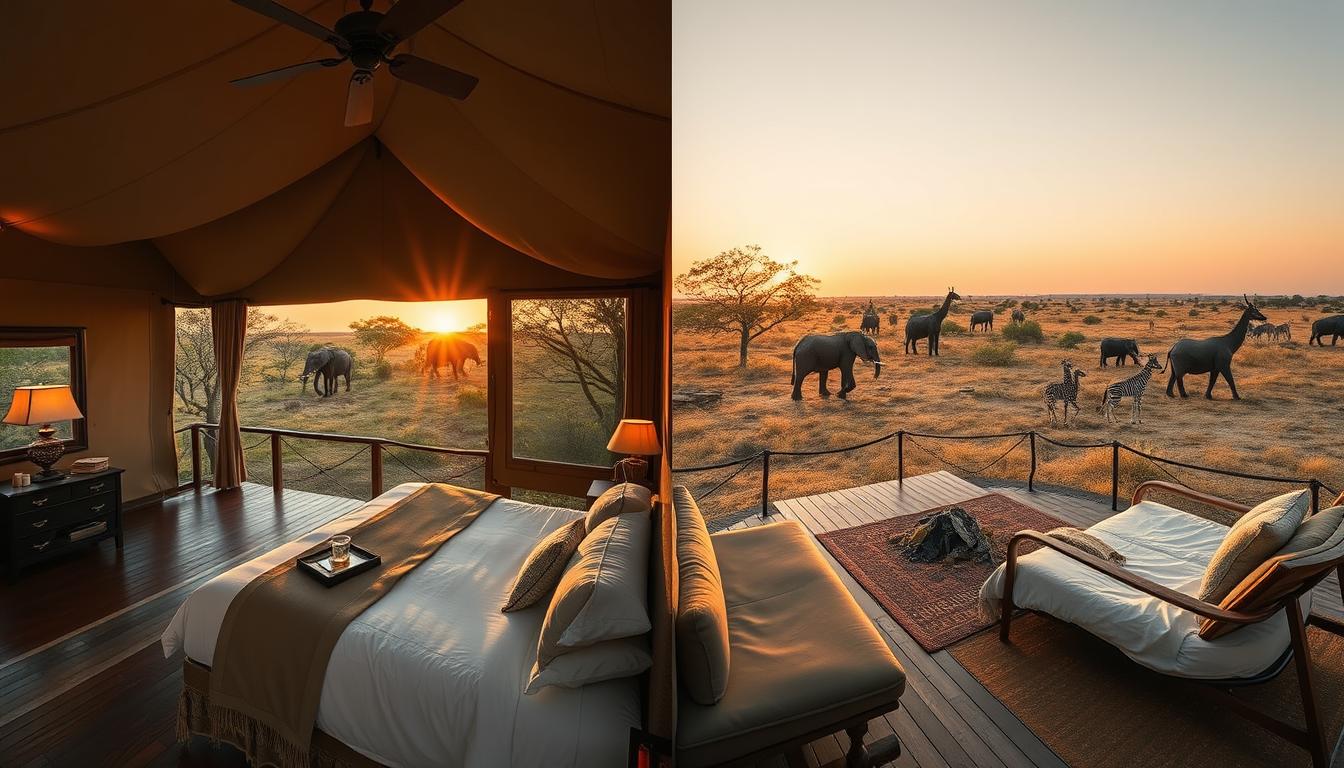
You have a ticket to Africa and only a week to spare. You crave the quiet of dawn and comfort at night. You also expect great service, like what you’re used to back in Dubai or Abu Dhabi. Now, you’re wondering: Premium vs Standard Safari Camps – What’s the difference? This choice will shape every moment of your adventure.
This guide will help you understand the differences between safari lodgings. It’ll help you find the perfect match for your time, budget, and need for comfort. You will learn about the choices, from cozy tents to luxury spots with big tubs and private decks.
Do you like things clear and fast? Premium camps provide exclusive experiences. They offer night safaris, off-road adventures, and fewer crowds. Standard camps are in public areas. They offer real charm and good value. Both types of camps give you a quality safari stay. Your choice depends on what you prefer: luxury or a closer feel to nature.
If you’re planning from the United Arab Emirates, consider adding a desert experience. Before or after Africa, check out Desert Buggy Rental Dubai at +971 52 440 9525 or [email protected]. They offer many activities like Dune Buggy and Quad Biking Tours. There’s also Desert Safaris and Camel Rides. This guide helps you pick confidently and enjoy every moment, even a lion’s roar at dawn.
Key Takeaways
- You’ll compare safari lodging differences that affect comfort, access, and value.
- Premium camps on private concessions often offer exclusive activities and fewer vehicles.
- Standard camps in public reserves provide authenticity and strong safari accommodation quality.
- Luxury safari accommodations add privacy, refined design, and elevated service.
- Clear insight into safari accommodation options helps you align time, budget, and expectations.
- Travelers from the UAE can plan efficient, high‑service experiences without guesswork.
Overview of Safari Accommodation Options in Africa
In Africa, your choices range from tented camps to luxury lodges and boutique bush villas. You can also select mobile camps. These options are available in places like Kenya’s Maasai Mara, Tanzania’s Serengeti, and Botswana’s Okavango Delta. They are also in South Africa’s Greater Kruger, Namibia’s Etosha, and Zambia’s South Luangwa. Comparing these options can help you decide based on location, services, and how you get there.
Focus on what matters to you: space, privacy, and ease of getting to the field. The top options are on private land. They have fewer cars and more activity choices. Meanwhile, standard camps are often in national parks. They have fixed paths and schedules. This difference affects the quality of your safari experience in big ways.
How safari lodge comparisons help you choose wisely
Compare lodges to look at room sizes, bathrooms, ways to stay cool, and guide numbers. In the Okavango and Linyanti, private spots let you drive at night and go off-road. But in places like Serengeti National Park, Etosha National Park, and Kruger National Park, there are stricter rules. Comparing these can show you how different features can make your stay more comfortable and fun.
Places like the Mara and Serengeti get crowded during the Great Migration. Private areas like Sabi Sand have fewer cars and more peaceful animal sightings. Understanding these differences can help you see the quality of where you’re staying before you decide.
Where premium and standard safari accommodations are typically located
Premium lodges are often in exclusive-use areas like the Okavango Delta, Linyanti, and Sabi Sand. They offer flexible schedules and diverse environments. Standard camps are more common in spots like Kruger National Park, Serengeti National Park, and Etosha National Park. Here, set roads and schedules make viewing animals easy and reliable.
Both types of accommodations cover Africa’s best spots—from Greater Kruger to South Luangwa. This way, you can choose your favorite setting and match it with the right place to stay. The location affects not just the view but also the types of activities available, a key part of what these places offer.
Matching your travel style, budget, and expectations
If you prefer quiet, less crowded sightings, and a schedule made just for you, go for a premium lodge. If you like a traditional bush vibe and want to keep to a budget, standard camps are a good choice. Think about what you want from your stay, like cooling options, meal times, and special activities, and match them with your trip plans.
For travelers coming from the UAE, think about when flights leave and how the seasons change. Busy months might mean higher prices and more cars in public parks, while private spots stay more consistent. Make sure the place you pick has everything you want, and use comparisons to pick the best quality for your visit.
Defining Premium vs Standard Safari Camps
You have two choices in safari stays: fancy or simple. Understanding the differences in safari places helps you pick what fits your style. This helps in knowing what you really need for a great trip from the UAE.
What “premium” means in safari accommodation standards
Premium camps offer lots of room, fancy sheets, and top-notch service. You’ll find big rooms, soft linens, beautiful rooms, and gourmet meals with fancy wines. andBeyond, Singita, and Wilderness are some brands that provide these posh stays.
These places have cool features like air-con in some rooms, small pools, private decks, and spa services. You also get your own butler, special menus, and activities when you want. This makes every day exactly how you want it.
How “standard” camps deliver value and authenticity
Standard camps give you comfort without breaking the bank. They have nice tents or small houses, comfy beds, hot showers, and big meals. The simple joys of campfire tales and the wilderness vibe are still there.
Typical features include fans, clean rooms, and places to hang out together. These camps are often close to public parks. This keeps prices low while keeping the adventure real.
Key decision factors: comfort, access, and experience
Consider comfort first. Premium camps have things like air-con and private areas. Standard camps offer airy shelters and cozy spots. Then, think about where you can go. Private lands might let you drive off-road or at night. Public spots might only let you travel during the day on set paths.
Finally, think about the experience. Premium camps often have fewer guests per guide, giving you better chances for photos and a personal feel. Standard camps have more guests per guide, but they’re still a good deal. Pick what’s best for how you want to see the wild.
Luxury Safari Accommodations and Design Features
When looking at luxury safari accommodations, consider how much space and privacy you want. The top resorts are designed to highlight wildlife and scenic views but also offer comfort. Compare different places to see which ones offer the best rest, views, and temperature control.
For travelers from the UAE, it’s crucial to have air movement, shade, and good insulation, especially when it’s hot. The best designs keep the inside cool with smart materials and layouts, while still letting you hear nature.
Suite layouts, private decks, and plunge pools
Premium suites are big, ranging from 50–120 square meters. They have separate lounges, big beds with soft linens, and both an indoor bathroom and an outdoor shower. The private decks offer peaceful views of waterholes or rivers.
Some places have plunge pools for cooling off quietly between drives. These features improve your stay without harming the natural view. More basic options include tents or small buildings with fans and shaded areas, combining comfort with savings.
Tented elegance versus solid-structure lodges
Tented accommodations mix canvas walls with stylish décor. You wake up to nature sounds and feel the breeze, close to the wilderness in luxury.
Stone or wood lodges offer better soundproofing and temperature control. They use large windows and natural touches to blend indoors with outdoors, quiet and comfortable.
Architectural integration with the environment
Designs that consider the environment use raised paths to protect nature, and roofs that keep buildings cool and light soft. Using local decorations and smart design minimizes the impact on nature and enhances your stay.
High-end places may use solar power and special cooling, while simpler sites focus on sturdy, practical designs to keep prices low. Both aim to blend with, not overpower, the surroundings and wildlife.
Safari Camp Amenities and On‑Site Services
You want your comfort to reflect the wild around you. Finding the right mix of safari camp amenities and on‑site services shapes your entire day. From the thrill of sunrise drives to the romance of dinners under the stars, the features of your safari resort are key. They should meet modern standards for luxury safari stays.
Butler service, spa treatments, and fine dining
Premium camps might offer a personal butler. They handle everything from coffee times and laundry to preparing your room at night. For relaxation, spa tents provide massages and hot stone therapies. These services help soften the strain of long journeys. Meanwhile, chefs create daily changing multicourse meals with fresh, seasonal ingredients.
Standard camps focus on warmth and generosity. Meals here might be set menus or buffets but they’re always fresh and hearty. Fireside dinners and bush breakfasts offer great value. All while keeping a keen eye on quality. Both types of camps use local ingredients to bring a taste of the region to your table.
Housekeeping standards and in-room comforts
In luxury tents and suites, look forward to plush bedding and curated bath products. Expect in‑room espresso and a well‑stocked minibar too. Turn‑down service brings little luxuries that raise the bar on safari standards.
Standard camps ensure daily housekeeping with high-quality linens, mosquito netting, and hot water. The accommodations are practical, well‑kept, and secure. This guarantees a good night’s sleep after a full day of adventure.
Connectivity, charging stations, and sustainability features
Connectivity options differ across camps. In premium places, Wi‑Fi might reach your suite. Standard camps often keep the Wi‑Fi in shared areas or omit it entirely. This helps maintain the wilderness vibe. Power options vary from private charging facilities in your room to shared stations in communal areas.
Sustainability is a big goal for these resorts. Premium camps might use solar power, water purification, and other eco-friendly measures. They also report their impact to support local wildlife and jobs. Standard camps often use solar lights and manage water carefully to be cost-effective yet eco-conscious. Both approaches aim to maintain high safari standards while safeguarding the wild areas guests come to enjoy.
| Category | Premium Camps | Standard Camps | Guest Benefit |
|---|---|---|---|
| Service | Personal butler, curated itineraries, turn‑down rituals | Attentive staff, daily housekeeping, efficient check‑in | Tailored pace for premium; streamlined simplicity for standard |
| Wellness | On‑site spa with massages and hot stone therapies | Massage on request or partner therapists when available | Recovery after drives; better sleep and mobility |
| Dining | Multicourse fine dining with daily changing menus | Buffet or set‑menu meals, hearty and fresh | Choice of pace and style without compromising quality |
| In‑Room Comforts | Premium bedding, espresso machine, stocked minibar | Quality linens, mosquito nets, reliable hot water | Consistent rest and readiness for early game drives |
| Connectivity | Suite Wi‑Fi; universal sockets; bedside charging | Wi‑Fi in lounges or offline; communal charging | Flexible work and share options without screen overload |
| Sustainability | Solar farms, water purification, impact reporting, anti‑poaching support | Solar lighting, borehole management, basic waste reduction | Lower footprint and stronger community outcomes |
| Standards | Elevated safari accommodation standards across touchpoints | Essential comforts aligned with core safari camp amenities | Clear value choice for different budgets and goals |
Game Viewing Quality and Exclusive Access
You measure wildlife time in minutes, not miles. Safari lodge choices often start with understanding land rights and rules. It’s important to consider location, policy, and timing when picking lodges. These factors decide what animals you’ll see and the quality of your stay.
Private concessions versus public reserve areas
Private concessions in places like Botswana’s Okavango Delta and Kenya’s Mara allow fewer cars per animal sighting. This means you get up close to big cats and calm herds without being rushed. But, in public reserves like Kruger or Serengeti, you’ll see a lot of animals but also deal with more rules and cars.
Private conservancies by migration paths avoid traffic jams and keep you near exciting river crossings. The access they provide really changes your safari experience each day.
Vehicle density, guide-to-guest ratios, and off-road policies
Top camps usually have four guests per vehicle for better views and more time with each animal. At standard camps, with six to nine guests, it’s harder to see quickly during action-packed moments. Policies on driving off-road differ: private areas might allow it for closer looks at predators, but national parks often don’t, to protect nature and animals.
When choosing a lodge, look into these rules. Fewer guests per guide and some off-roading can make a big difference in your experience without much extra cost.
Night drives, walking safaris, and specialized photographic hides
Night drives offer glimpses of nocturnal creatures like aardwolves and lions, all depending on local laws. On walking safaris, guides teach you about animal tracks and sounds, deepening your understanding of the wild. Photo hides near water give you the chance for great low shots after a patient wait.
Some luxury camps include these unique activities, and even some standard ones do when rules permit. To understand the difference between basic and luxury options in the desert, check out this comparison. Then, use what you learn to choose the best African safari for you.
| Factor | Private Concessions (Okavango, Sabi Sand, Mara Conservancies) | Public Reserves (Kruger, Serengeti, Etosha) | Impact on Experience |
|---|---|---|---|
| Vehicle Limits at Sightings | Strict caps (often 2–3 vehicles) | Higher numbers during peak hours | Less crowding improves viewing angles and behavior |
| Guide-to-Guest Ratios | Commonly 1:4 | Often 1:6–1:9 | More personal attention and flexible positioning |
| Off-Road Access | Allowed for key sightings under strict etiquette | Generally prohibited | Closer approaches to big cats and rare moments |
| Night Drives | Often included | Limited to park-run tours, if available | Nocturnal species and different predator behavior |
| Walking Safaris | Frequent, with armed guides and trackers | Available in designated zones only | Track reading and intimate ecological insights |
| Photographic Hides | Purpose-built, close to water sources | Occasional, fewer sites | Low-angle perspectives and longer dwell time |
| Traffic Bottlenecks | Rare, managed access | Possible near famous crossings or kills | Calmer scenes versus congested hotspots |
| Match to Property Type | Often premium; select standard camps participate | Both premium and standard operate within park rules | Key driver of safari accommodation options and quality |
Picking between premium and standard? Start by understanding the land and its rules. This is key to finding differences in safari lodging. It leads to better animal sightings, peaceful moments, and more meaningful notes.
Guide Expertise and Staff-to-Guest Ratios
Your guide is critical in the safari experience. In the choice between Premium vs Standard Safari Camps, the skill and care from your guide and tracker really matter. The quality of these safaris isn’t just about where you sleep but also how well the staff are trained and care for you.
Tracking skills, certifications, and safety protocols
Premium camps usually have experienced guides with top qualifications, like FGASA levels in South Africa. These guides are skilled in tracking big animals, birds, and even reading animal footprints quickly.
They also know how to keep you safe. They explain safety rules clearly, follow strict firearm policies on walks, and ensure everyone behaves well during sightings. Good communication helps avoid crowds and gives you better views, making your safari calmer and richer.
Dedicated hosts and personalized itinerary planning
Top safari spots often include a camp host to make your stay unique. They adjust wake-up times, meals, and safari lengths to suit what you like. Want to focus on photography or see certain birds? They’ll make it happen. This attention to your needs shows the high service standards you can expect.
But standard camps also offer great service, sticking to set plans. They provide valuable local knowledge and flexibility within your budget, keeping the safari experience high-quality.
How staff ratios impact your daily wildlife encounters
In premium camps, more staff per guest means quicker reactions to animal sightings and better positioning. Smaller groups allow for better vehicle placement, enhancing your experience. This difference is something you can truly feel when comparing Premium vs Standard Safari Camps.
Standard camps might have more guests each ride, which could mean slower movements. But ongoing learning and shared values in the safari world keep the quality high. This ensures you’ll still have unforgettable moments, even in larger groups.
Dining, Beverages, and Culinary Experiences
Every meal helps you taste the bush’s character. In luxury safari spots, chefs create menus that reflect the landscape and season. Regular camps offer comfort with shared tables and relaxed service. These details show the difference between safari lodgings and help plan your day.
Gourmet tasting menus versus hearty camp cuisine
Premium kitchens offer tasting menus with beautiful plating, paired with wines from South Africa and beyond. They provide artisanal breads, garden herbs, and fresh produce, perfect for halal, vegetarian, or gluten-free diets arranged beforehand.
Regular camps have big grills, stews, salads, and desserts served family-style or buffet. This setup encourages chatting post-game drives. Ingredients are quality-focused, but there’s more emphasis on comfort, value, and shared moments—a key feature of safari camp life.
All‑inclusive beverage programs and premium wines
Luxury properties often include curated wine lists, premium spirits, and expert bartenders. Expect chilled sparkling water and fresh juices, especially refreshing after a hot day.
Basic packages cover house wines, local beers, and soft drinks, with options to upgrade. This clarity helps you compare and set expectations before booking.
Bush breakfasts, sundowners, and private dining setups
Special activities make the wilderness feel close. Bush breakfasts come after morning drives, with sizzling food and coffee served under trees. Sundowners happen at dusk, with drinks and snacks as the day ends.
Premium camps might offer surprise dining, outdoor feasts, or riverside meals. Regular camps usually have meals by the fire, keeping costs down while creating memories.
| Aspect | Premium Camp Experience | Standard Camp Experience | Why It Matters |
|---|---|---|---|
| Cuisine Style | Chef-led tasting menus, elegant plating, seasonal produce | Hearty grills, stews, salads, classic desserts | Clarifies safari lodging differences for food-focused travelers |
| Dietary Needs | Tailored menus (halal, vegetarian, gluten-free) with notice | Flexible options on request, simpler execution | Supports varied preferences common for guests from the UAE |
| Beverage Inclusions | All-inclusive with premium wines and top-shelf spirits | House wines, local beers, soft drinks; upgrades at surcharge | Helps compare safari camp amenities and plan spend |
| Signature Moments | Bespoke bush breakfasts, riverbank or boma multi-course setups | Convivial fireside dining and dependable sundowners | Aligns with preferred safari resort features and ambiance |
| Service Style | Sommelier-led pairings, polished pacing | Friendly, efficient, communal atmosphere | Guides your choice between refinement and camaraderie |
Tip: Share your drink and food preferences before you arrive. The service will be smoother, and the menu will better fit your tastes.
- Check what your rate includes to gauge value across luxury safari accommodations.
- Ask about seasonal produce to understand freshness and sourcing.
- Review dining locations to find what suits your mood—deck privacy, lively boma, or romantic bush setting.
Family, Honeymoon, and Group-Friendly Features
Choosing the right camp makes your trip perfect. The best features can make family trips smooth, romantic getaways special, and group travels organized. Look at the differences in safari lodgings to find what suits you, while also focusing on quality.
Interconnecting suites and family tents
Top-notch camps offer more space and privacy. Look for two-bedroom family suites with living areas, shaded decks, and private pools. They often have someone to watch the kids during breaks from safari drives.
More basic camps provide large tents with extra beds or rooms that connect. This setup keeps kids near and is more budget-friendly. It stays comfortable and safe.
In both types, check the details like types of beds, bathroom setups, and if pools are safe for kids. Ask about the camp’s layout to make sure it’s great for your group.
Kids’ activities and flexible game drive schedules
High-end camps have special programs for kids, including tracking and conservation activities. They also offer meals at flexible times, which is nice after a long day.
Basic camps might offer talks suitable for kids, crafts, and the option to sit differently in vehicles if there’s room. It’s possible to ask for shorter drives or breaks for snacks, too.
Rules about age for certain activities like walking safaris can differ. Check these details when booking so everything fits your plans.
Romantic touches: star beds and private guides
Luxury camps provide unique experiences for couples, like sleeping under the stars, having a private guide, or getting massages in your room. They can organize special outdoor drinks in beautiful spots.
More standard camps create a romantic setting with special room setups, private meals, and nice views during drives. It’s a good balance of value and quality.
If privacy is key, look into how many guides there are per guest and if you can have your own vehicle. It’s a big choice for couples wanting a special experience.
| Traveler Type | Premium Highlights | Standard Highlights | Booking Tip |
|---|---|---|---|
| Families | Two-bedroom suites, private pools, child-minding, junior ranger programs | Interconnecting tents, extra beds, earlier dinners, flexible seating | Ask about age limits for walks and water activities; confirm safety features |
| Honeymooners | Star-bed sleepouts, private guides/vehicles, in-room spa, custom sundowners | Romantic turndowns, private boma tables, scenic photo stops | Verify privacy levels and whether a private vehicle is included or paid add-on |
| Groups | Exclusive-use vehicles, buyouts, complex logistics, private charters | Cost-effective room blocks, shared vehicles, flexible rooming plans | Lock transport early and align drive times to your group’s pace |
Groups get a lot from having their own vehicles. In top lodges, you can even book the whole place. Budget-friendly camps offer great deals on rooms and shared vehicles. This is good when saving money is important.
When deciding, compare what each place offers. Think about how it fits your daily plans, needs for privacy, and rules for getting around. This way, you’ll be happy with your choice on your trip.
Operational Standards, Safety, and Sustainability
Choosing your camp involves understanding their safari standards. Top-notch camps have new Toyota Land Cruisers or Land Rovers. These have special seats, places for cameras, and things to keep you dry in the rain. Standard camps also keep their vehicles safe and ready. They have seatbelts and tools for emergencies. Doing daily checks, following park rules, and using radios right helps everyone enjoy and respect wildlife.
Safety starts before you even get in the vehicle. Be ready for detailed briefings, easy-to-see medical kits, and team members trained in first aid right there. High-end lodges might have satellite phones and equipment for heart emergencies. Regular camps stick to approved safety steps and keep in touch with park headquarters. They also have clear rules for walking at night, storing fuel safely, and stopping fires from spreading.
Safari camps have gotten better at being green. They use solar power for fridges and lights. They fill reusable bottles to reduce plastic waste. And, they treat used water to help plants grow. Some places even have quiet, electric vehicles to cut down on noise and air pollution. They make sure to drive responsibly. This protects nature but still makes your safari exciting.
Working with the local community is vital for great safari places. Good camps hire people from the area, buy local food, and help with schools. High-end spots share detailed reports on their efforts, but even standard camps get involved in meaningful ways. This means you get to hear amazing stories, eat real local food, and know your visit helps more than just the tourism industry.
When looking at different safaris, dig deeper than what brochures say. Ask how quickly they can handle emergencies, how often they train their guides, and their goals for reducing waste. Find out about their water safety, battery recycling, and how they keep fuel safe. The best camps will have these details ready. They show they really care, in every part of your adventure.
For visitors from the UAE, reliable services are key. Consistent power for your cameras, good radio service, and on-time wake-up calls show a camp knows what they’re doing. No matter if you stay in a fancy suite or a simple tent, great planning, skilled teams, and ethical behavior mean you can focus on enjoying nature.
| Operational Focus | Premium Camps | Standard Camps | What You Experience |
|---|---|---|---|
| Vehicle Readiness | Newer Land Cruisers/Land Rovers, tiered seating, camera mounts | Well-maintained units with essential safety gear | Stable rides, clear sightlines, minimal downtime |
| Safety Systems | Satellite comms, AEDs, advanced first-aid training | Radio check-ins, full medical kits, regulator-approved plans | Faster response, confident briefings, safer night protocols |
| Sustainability | Solar arrays, RO bottling, greywater treatment, EV drives where feasible | Solar lighting, refill stations, plastic-free policies | Lower footprint, quieter drives, cleaner camps |
| Governance | Transparent impact reporting and audits | Policy summaries and community updates | Clarity on safari accommodation standards and outcomes |
| Guest Comfort | High-spec charging, all-weather gear, fine-tuned logistics | Reliable power windows, ponchos, efficient turnarounds | Consistent safari accommodation quality across seasons |
| Feature Set | Expanded safari resort features integrated into operations | Core features aligned to value and access | Services that match your pace, budget, and priorities |
Pick a camp based on their serious approach to safety and teamwork. Solid rules, honest reports, and disciplined teams show care for both guests and nature. These are signs of dependable safari standards.
Premium vs Standard Safari Camps – What’s the Difference?
You need clear, easy-to-understand advice before making a booking. This quick overview helps you see what sets safari lodgings apart on the spot, focusing on real-world features and the level of service. It also explains how comparing different safari lodges can lead to better decisions, especially important for UAE travelers considering flight times, connections, and overall value.
Side-by-side safari lodging differences that matter
| Feature | Premium Camps | Standard Camps |
|---|---|---|
| Space & Design | Large suites, private plunge pools, indoor-outdoor lounges | Comfortable tents or chalets with compact, smart layouts |
| Access & Activities | Private concessions with off-road and night drives; fewer vehicles | Public parks with fixed routes; great wildlife where densities are high |
| Service | High staff-to-guest ratios, private hosts, tailor‑made pacing | Efficient teams, scheduled game drives, convivial campfire vibe |
| Culinary & Wellness | Chef-led dining, curated wine lists, spas and advanced wellness | Hearty meals, bar service, simple massage or none |
| Inclusions | Most activities and beverages included; fewer add‑ons | Full-board or half-board; activities and drinks may be extra |
Comparing safari lodges helps you find what matches your hopes. Premium and Standard Safari Camps mainly vary in privacy, customization, and that special ‘only for you’ feeling. Yet, both types offer excellent places to stay in top areas.
When to upgrade to premium and when standard is perfect
Go for premium for less crowded views, custom photo setups, and more time observing big cats. It’s best for special occasions like honeymoons or celebrating big moments, and for those who cherish peace and a personal touch.
Choose standard if seeing lots of wildlife is your main goal and comfortable lodging comes second. It’s great for those who love meeting new people around a bonfire, are watching their spending, or want to spend most of their time exploring.
In some areas—like the Serengeti, Maasai Mara, or Kruger’s private reserves—mixing it up works well. Using lodge comparisons to balance a few luxury nights with great standard locations can give you both great views and value.
Budget planning for safari accommodation quality
- Remember to include flight costs: getting into remote spots can affect your budget.
- Add costs for conservation, hiring private vehicles for certain days, tips, and any single person fees.
- Look at what’s included: premium packages often cover most activities and drinks; standard options might charge extra.
- Think about the impact: choosing a private vehicle for days with the best wildlife viewing can be more valuable than an extra night’s stay.
Spread your budget between different camps and types of access. By cleverly comparing lodges, you can tailor your safari to fit your dreams, making sure the quality of your stay remains top-notch without going over budget.
How to Choose the Right Safari Resort Features for You
Start by listing what you can’t do without. This could be things like seeing animals up close, having your own space, air-conditioning, spa visits, or places good for kids. This helps make choosing a safari lodge simpler. It also keeps you focused on what’s really important for your stay.
Then, think about how you’ll get there. Being in a private area means more freedom to explore and nighttime drives. Public areas have famous views and cost less. Compare these based on what you want from your trip. Also, consider the experience of guides and how many people will be in each vehicle—important for those looking to take great photos.
Don’t forget about when you’re going. Going in the shoulder seasons may lower costs but still offer good wildlife viewings. If coming from the UAE, plan your flights through Dubai or Abu Dhabi. This cuts down on travel time. Make sure the place you stay will be comfortable when it’s hot out.
Plan to stay a few nights at a fancy lodge for a special experience, then go to a budget-friendly camp. This helps your money go further. Use comparisons to get the right mix of privacy, meals, and activities. For clear prices on desert side trips, check out this quick guide to Dubai desert safari costs before you decide.
Pro tip: Match what you want to do with where you stay. Bird watchers might like places to hide and watch quietly. Families might want rooms that connect. Couples on a honeymoon might look for private pools and decks. Make sure the place you pick fits your travel style by keeping these details in mind.
Looking for excitement before or after your safari? Desert Buggy Rental Dubai has dune buggy tours, quad biking, and more. They’re open 24 hours for booking. You can add some adventure to your trip with a desert experience. Call +971 52 440 9525 or email [email protected] for more info.
Conclusion
The best safaris are all about knowing what you want. Premium camps are all about privacy and luxury in secluded areas. They offer top-notch guides, extra game-viewing time, and superior service. Standard camps, however, offer a true safari vibe with tents or rondavels, friendly gatherings by the fire, and reasonable prices in famous parks. Yet, they still promise exciting wildlife encounters.
Comparing lodges carefully will help you choose where to stay. Look at the layout, amenities, and what activities they offer. Also, consider how they care for the environment with solar energy, eco-friendly building, and saving water. This helps you understand the quality of safari lodges and the real differences before you decide.
Creating a good travel plan is key. Mixing a few premium nights with more standard ones can give you the best experience. This way, you get luxury and a great atmosphere at a good price. This mix often creates unforgettable memories without breaking the bank and lets you fully enjoy Africa’s natural beauty.
If you’re coming from the UAE, why not keep the excitement going? Pair your safari with a trip to Dubai’s desert. Desert Buggy Rental Dubai is open 24/7 for Dune Buggy Tours, Quad Biking Tours, and more. Call +971 52 440 9525 or email [email protected]. It’s a perfect way to transition your adventure from the Arabian sands to Africa’s wild lands. This keeps your adventure spirit alive, matching your safari stay choices with the experiences that matter most to you.
FAQ
How do premium and standard safari camps differ in real terms?
Premium camps offer big suites, private decks or pools, top-notch food, and less crowded safaris. They’re on private lands. Standard camps focus on comfort and value in public parks. You’ll find differences in guides, off-road drives, and activities that determine the quality of your stay.
Where are premium versus standard safari accommodations usually located?
Premium spots are in private areas like the Okavango Delta and Mara conservancies. They have flexible activities and fewer cars at animal sightings. Standard camps are in parks like Kruger and Serengeti, with stricter rules but lots of wildlife. Location plays a big role in the experience.
How do I match my travel style and budget to the right camp tier?
If luxury, unique schedules, and exclusive lodges matter to you, pick premium. For a friendly campfire vibe and savings, standard camps are great. Consider what comforts you need, like air conditioning or fans, and what activities you want to line up options with your expectations.
What defines “premium” in safari accommodation standards?
“Premium” means large rooms, fancy design, gourmet food, curated wines, spas, and lots of staff for each guest. These camps have special safari drives and expert guides. It represents the highest level of luxury and service in the wild.
How do standard camps deliver authenticity and value?
Standard camps offer cozy tents or chalets with private bathrooms, quality bedding, warm showers, and good food. They have communal spaces and fire pits for character. This gives great wildlife access at a better price while keeping quality high.
What room and design features set luxury lodges apart?
Premium suits can be huge, with sitting areas, outdoor showers, private decks, and pools. They mix canvas with wood for elegance, while stone lodges control temperature better. Standard camps focus on functional designs and shaded spots, showing clear differences in lodging.
Which amenities should I expect at premium versus standard camps?
Premium camps have butlers, spas, in-room coffee machines, minibars, and night service. Standard camps ensure clean rooms, mosquito protection, and reliable hot water. Wi‑Fi and charging options differ; premium often has them in rooms, standard in shared areas. Both are improving their environmental care.
How do private concessions compare to public reserves for game viewing?
Private areas restrict car numbers, allow off-road and night drives, leading to better animal viewing. Public parks have more animals but more cars and strict rules. Your choice affects your wildlife experience, guide quality, and what facilities you’ll have during outings.
Do guide expertise and staff ratios really change the experience?
Yes. Premium spots have seasoned guides with special skills, helpers, and more staff per visitor for tailored plans. Standard camps use knowledgeable local guides but might have more guests per vehicle. This changes how you see animals and your daily schedule.
What are the dining differences between premium and standard camps?
Premium lodges have chef-designed meals, selected wines, and special diet options. Standard camps offer hearty, tasty buffets or shared meals. Both might have outdoor breakfasts and drinks at sunset; premium adds unique dining experiences as special touches.
Are there family and honeymoon features I should consider?
For families, premium places might have connecting rooms, pools, and programs for young ones. Standard offers big tents and earlier meals. Honeymooners can find exclusive sleepouts, personal guides, and spa time at premium, while standard arranges special room setups and dinners for two.
What safety and sustainability standards are typical?
Premium services use new cars with high-tech gear and follow strict safety rules. Standard keeps reliable vehicles and safe practices too. Both are embracing solar power, recycling water, and hiring locally, marking key points in care for the environment.
When should you upgrade to premium—and when is standard perfect?
Go premium for private experiences, flexible plans, special safari access, fewer guests per car, and luxury touches. Choose standard for a focus on animals and a sociable, affordable stay. Mixing both types can balance costs and experiences, a smart choice for many.
How should you budget for safari accommodation quality?
Think about travel costs, park fees, private tours, tips, and extra charges. Premium usually includes most drinks and activities; standard has a base rate with extras. Plan for special days, like using a private car, and mix camp types for the best value.
What connectivity and charging can you count on?
Expect charging in your room and maybe Wi‑Fi at premium places; standard camps might have shared charging and Wi‑Fi spots. Many use solar power for a quieter stay, meeting modern demands for comfort and green efforts.
How does seasonality affect your choice between premium and standard?
In busy seasons like the Maasai Mara migration, public spots are crowded. Private lands offer a quieter option at a higher cost. Yet, in less busy times, standard camps can be just as rewarding without the crowds, offering good deals.
Can you combine a safari with a Dubai desert experience?
Yes. Coming from the UAE or passing through Dubai? Add dune buggies, quad bikes, desert dinners, camel rides, or sandboarding to your trip. Contact Desert Buggy Rental Dubai at +971 52 440 9525 or [email protected] for an adventure before or after Africa.
Categories
- Uncategorized (4)
- Desert Buggy Rental (2,218)
- Dune buggy (4)
- Quad Bike Rental (1)
- Desert safari (1)
- Hot air ballon (2)
- dirt bike (4)
Recent Post
Tags
150cc quad bike Adventure Fitness Levels Adventure Photography Tips Arabian Gulf city tour Authentic travel experiences Best Buggy Tour Duration Camel ride Camel ride adventure Camel Riding Desert Dune Exploration Desert Geography Desert Safari Magic Desert trail riding advice Driving Thrills Dubai ATV Trails Dubai sunset adventures Exotic car hire in Dubai Explore Dubai's Desert Landscapes Explore Dubai Desert Safari Extreme Adventure Tours Ferrari driving packages in Dubai First-time quad biking tips Group Outing Ideas Licensing for recreational vehicles Luxury Racing Events Off-Road Quad Riding Off-road tours in Dubai Off-road trips in the UAE Outdoor adventures in Sharjah Quad biking experiences in Dubai Safari experiences Sharjah Sharjah Adventure Tourism Sharjah corporate events Sharjah Desert Sharjah Desert Adventure Hotels Sharjah Desert Tours Sharjah Quad Bike Models Student Excursions Sunset Buggy Rides Things to do in Dubai Traditional Maritime Experience UAE buggy trips Unforgettable desert quad biking Yamaha Grizzly Quad Bike