

- 266 Views
- 28 Min Read
- (0) Comment
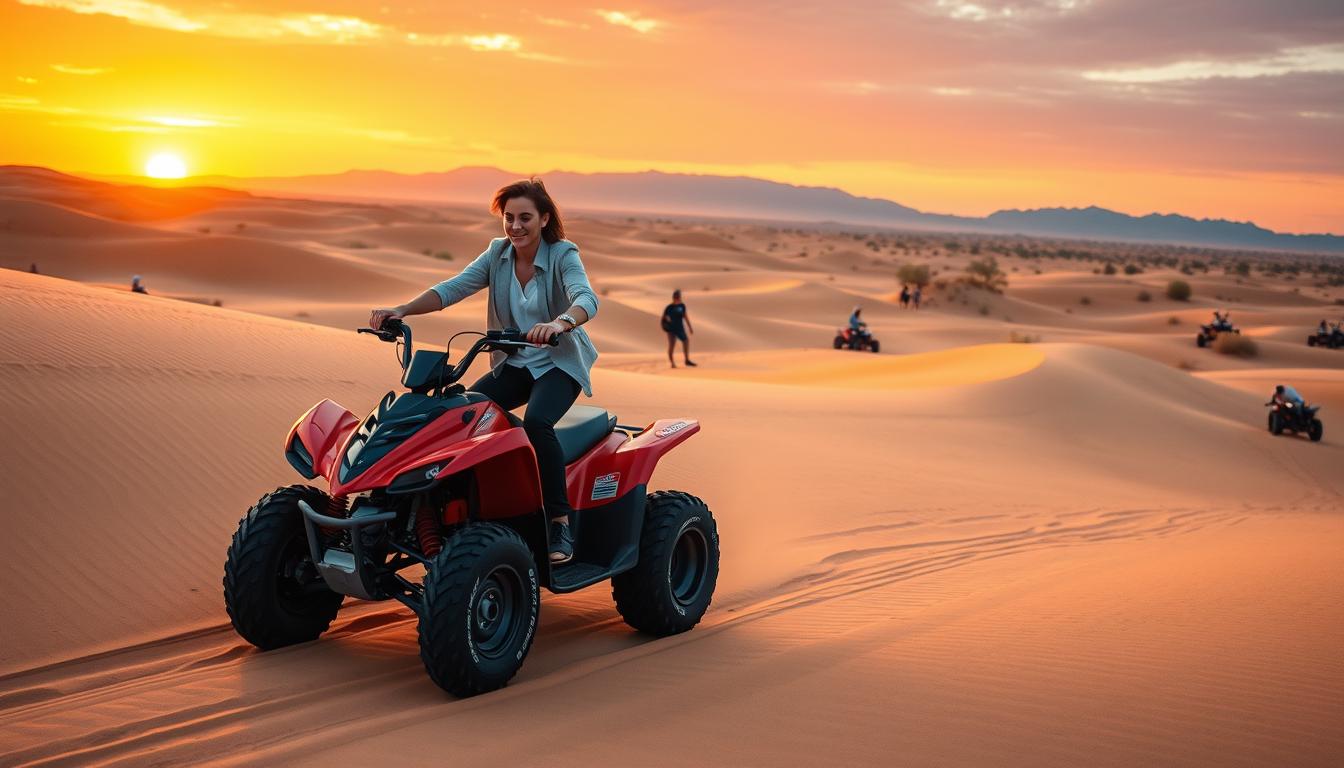
Before the engine roars to life, you’re already feeling the thrill. The sun rises over Dubai’s red dunes. The sand shifts beneath you, almost like it’s alive. You adjust your gloves, eyeing your next challenge. This is your chance to learn how to ride.
If desert quad biking is new to you, don’t worry. Many start out excited yet unsure. You seek control, safety, and a clear way ahead. This guide offers you that direction, with tips suited for the UAE’s unique conditions. Here, the heat, dune shapes, and rules are crucial.
This guide outlines easy steps to advance your skills. It covers reading slipfaces, controlling your speed, and avoiding stalls on steep climbs. You’ll progress from selecting the right bike to navigating high dunes. The advice you find here imitates a real ride, combining hands-on experience with practical knowledge.
By the end, you’ll grasp the basics of desert quad biking confidently. You’ll respect the landscape while staying safe. Plus, you’ll discover tips on renting bikes, getting permits, and riding properly in groups. And if you prefer expert guidance, options for guided tours are covered too.
Key Takeaways
- Start with a clear plan that matches the UAE’s dunes, heat, and rules.
- Build quad bike riding skills step by step: balance, throttle, braking, and line choice.
- Learn quad biking for beginners with safety-first habits for soft sand and steep crests.
- Read terrain like a map—spot windward slopes, slipfaces, and hidden drop-offs.
- Practice calm recovery methods to avoid stalls and bog-downs.
- Use local knowledge for rentals, permits, and desert quad biking tours.
- Ride with respect for the environment, other riders, and the community.
Introduction to Desert Quad Biking in the UAE
At the UAE’s edge, vast deserts stretch far and wide. Here, desert quad biking combines wide-open spaces with top-notch rental places for a great first experience. From the get-go, you’ll follow beginner tips for riding quad bikes, helping you improve smoothly and quickly.
Why desert quad biking is unique in the UAE
In Dubai’s Al Badayer, also called Big Red, you find high dunes with clean, steady lines. Al Qudra offers broad, easy sands close to the city. Down south, Liwa awaits with huge dunes and vast basins. These places are perfect for learning how to bike off-road, providing clear paths for everyone.
Thanks to reliable rental spots, led groups, and well-kept bikes, learning is easy. You’ll have space to pick up biking skills without any mess or traffic, and mastering the throttle control pays off on this terrain.
What to expect on your first off-road quad biking ride
Your adventure kicks off with a lesson on safety, how to wear your helmet and goggles correctly, and how to use the bike’s controls. Riding a short circuit on flat land lets you get used to how the bike moves on the sand and adjusts to different textures.
Instructors will guide the group, setting the speed and how far apart everyone rides. Be ready for the wind to change and the dunes to get steep, especially late in the day. If it’s summer, try to ride early in the morning or late in the day when it’s cooler, making it easier for beginners.
How this guide helps you build quad bike riding skills
You’ll start with easy steps, like picking the right bike and learning the best sitting positions for different terrains. Then, you’ll get the hang of adjusting your speed and using the brakes on soft sand to stay on top.
Eventually, you’ll learn to read the dunes, manage how far you are from others, and what to do if you get stuck. Each new skill helps with the next one, making you ready for all kinds of quad biking and keeping your rides safe.
| Location | Terrain Character | Best For | Key Tip |
|---|---|---|---|
| Al Badayer (Big Red), Dubai | Tall, consistent dunes with firm approaches | Early skill drills and line reading | Use steady throttle on faces; avoid abrupt stops on crests |
| Al Qudra, Dubai | Open flats with soft patches | Control practice and spacing discipline | Scan ahead for color changes that signal loose sand |
| Liwa, Abu Dhabi | High slipfaces and deep bowls | Advanced progression after basics | Commit to momentum on climbs; reset calmly after stalls |
| Early Morning Rides | Cooler temps, stable wind | First-time sessions | Hydrate before and after; keep rides shorter at the start |
Choosing the Right Quad Bike for Beginners
When choosing a quad bike, look for one that’s stable on soft sand and can handle heat and wind well. It’s important for beginners in the UAE to find a bike with predictable power, easy-to-use controls, and comfy seats for long rides in the desert. Use beginner tips to find the right quad bike for your skill level before tackling off-road trails.
Engine size and power for new riders
Begin with engines between 250cc–350cc for smooth power and easy control in the sand. Lighter or smaller riders might prefer 200cc bikes for easier handling. For those feeling braver, 400cc bikes offer more challenge but should be used with a guide. Choosing the right size helps you balance power for climbing and learning to control the bike on different terrains.
Choose a bike’s power based on your riding plans. Less power is fine for short practice runs, but longer rides on dunes need more power to keep going strong. These tips help you maintain a good riding pace without losing control or power.
Automatic vs. manual transmissions in desert riding
Automatic CVT transmissions are the best choice for riding in the dunes. They provide a smooth ride without needing to shift gears, letting you focus more on navigating the terrain. This reduces the chance of stalling and makes riding over dunes smoother.
Manual transmissions offer more control going downhill but can be tougher to manage in loose sand. Beginners should try practicing with manual gears on flat ground before taking on dunes. However, an automatic transmission usually offers a simpler, safer experience for new riders.
Seat height, ergonomics, and comfort over dunes
Choose a bike where you can touch the ground with both feet when stopped. A comfortable riding position helps reduce tiredness, especially when switching between sitting and standing. Good bikes have wide foot rests, adjustable handlebars, and comfy seats to make moving around easier.
These features help you stay stable and reduce strain on your arms, which is very helpful when riding in the desert heat. Comfort enhances your control over the bike, making it a key factor for a good riding experience.
Maintenance checks before you rent or ride
Always check the bike before you start riding. Make sure the tires are right for sand, inspect the treads, and check the air filter and brakes. It’s also important to check the throttle, steering, and coolant level to ensure everything is working well.
Don’t forget to check the fuel, and whether you have a spare plug and drive belt. Having a pump and tools ready either with you or with your guide is essential. For more detailed information on preparing for desert rides, visit this guide which includes how to pick the right suspension, tires, and clearance.
Essential Gear and Desert Quad Biking Safety Tips
Riding in the UAE’s dunes requires smart preparation. Make sure to pack essentials for desert quad biking. Follow specific safety tips to make every journey smooth. These tips are helpful for beginners and seasoned riders alike.
Helmet, goggles, gloves, and body armor essentials
Always wear a helmet that meets DOT or ECE standards. Full-face or motocross helmets from brands like Shoei, Arai, or Bell are recommended. Pair your helmet with anti-fog goggles. Brands like Oakley or 100% offer lenses that prevent dust and glare.
Select gloves that resist abrasions and have padded palms for better grip. Wear CE-rated chest and back protectors. Don’t forget knee and elbow guards. For footwear, choose over-ankle off-road boots by Alpinestars or Sidi. They provide ankle support and better traction on sand.
Hydration systems and sun protection in desert heat
Carry a hydration pack that holds 2–3L of water. Drink often to stay hydrated. Adding electrolyte tablets can help maintain your body’s balance during long rides. This is crucial for biking in the Gulf’s heat.
Apply a broad-spectrum SPF 50 sunscreen and dress in UV-protective clothing. A neck buff is also recommended. Wearing a ventilated jersey can help keep you cool, allowing for a longer, more comfortable ride.
Emergency kit: tools, first aid, GPS, and communication
Include a compact first aid kit in your gear. It should have bandages, antiseptic wipes, a triangular bandage, and blister care items. Also, carry a multi-tool, tire gauge, mini compressor, and more for common trail problems.
Have a fully charged phone with you. Also, carry a satellite communicator like Garmin inReach for remote areas. Always use a GPS or offline maps. Sharing your route and expected time of arrival is a key safety tip.
Quad bike safety tips for soft sand and steep dunes
Keep a steady momentum and avoid wheelspin. Watch the terrain closely. When you approach crests, be sure you can see the other side. If not, stop and reassess.
Don’t ride alone. Maintain a safe distance from others, use clear hand signals, and have a spotter for blind crests. This advice is key for beginners and helps seasoned riders too.
| Item | Why It Matters | Pro Tip |
|---|---|---|
| DOT/ECE Helmet + Goggles | Head and eye protection against impacts and sand | Use anti-fog lenses with tear-offs for dust bursts |
| Body Armor & Boots | Shields chest, spine, joints; stabilizes ankles | Pick CE-rated armor and over-ankle off-road boots |
| Hydration Pack (2–3L) | Prevents dehydration in high heat | Add electrolytes and set 10–15 minute sip intervals |
| Sunscreen & UV Clothing | Reduces burn and heat fatigue | SPF 50, reapply every two hours; wear a neck buff |
| Tool & Recovery Kit | Fixes punctures and minor breakdowns | Carry mini-compressor, tire gauge, strap, and spare plug |
| GPS & Communication | Keeps you on route and connected | Download offline maps and share your ETA in advance |
| Group Protocols | Prevents collisions and missteps on crests | Use spacing, hand signals, and a crest spotter |
How to Ride a Quad Bike in the Desert – Beginner Techniques
Riding in soft, shifting sand means you need good control and balance. Master these desert quad biking techniques to maintain grip, turn with confidence, and keep your bike safe. As you get better, add beginner quad bike riding and safety tips to your skills. This helps when riding across the dunes of Dubai and Abu Dhabi.
Body positioning for climbs, descents, and side-hills
When going uphill, stand slightly or hover over the seat with your chest forward and elbows up. Shift your weight to the front for precise steering while maintaining steady gas. This technique is key for every ride in the desert.
For going downhill, shift your hips back, plant your feet firmly, and look ahead. Use the rear brake slowly and lightly use the front brake to avoid tipping forward. Always go straight down, not diagonally, for more stability and safety.
On slopes, lean your body towards the higher ground and put more weight on the uphill footpeg. Maintain a consistent speed and make smooth moves. Following these tips helps you stay balanced and keeps the bike steady.
Throttle and brake control on soft sand
Sand requires gentle movements. Increase power slowly to keep the tires on top instead of making them spin. Avoid suddenly reducing gas, especially at the tops of dunes, to prevent sliding.
Brake lightly and mostly use the rear brake. Combine with engine braking if you can. This mix is crucial for riding a quad in the desert and staying safe.
Line selection and reading dune slipfaces
Look at the dune before riding it. The windward side is easier and more solid. The leeward side can be steep, soft, and hide sudden drops.
Approach the top slowly, stop, and look over. Pick a path that is clear from start to finish. Then keep enough speed to stay atop. Picking the right path is a great tip for beginners.
Recovering from stalls and avoiding bog-downs
If you stall on a hill, hold the brake, shift to neutral or park, and restart while keeping the bike stable. If needed, move back to solid ground before trying again. Staying calm and detailed is good advice for beginners.
If you get stuck, don’t spin the tires. Get off, remove sand from in front of the tires, and gently rock the bike. If it’s okay, let out some air from the tires. Then, if safe, turn downhill to build up speed again. When with others, use a tow strap or help push as a safety tip.
Understanding Desert Terrain and Dune Dynamics
When you ride a quad in the desert, reading the sand is key. You need to understand the sand’s shape, color, and texture. These elements change every day. Using specific techniques helps you ride smoothly. It’s also important to follow safety tips before going up or down dunes.
Identifying windward vs. leeward dune faces
The windward face is the side that faces the wind. It’s usually longer and gentler. It’s also a bit firmer because the wind packs the sand. This side is safer for going up dunes carefully.
The leeward slipface is steep and made of looser sand. It can be tricky with sudden drops. When riding, slow down before you get to the edge. Look ahead to check the path before you commit.
Spotting razorbacks, bowls, and soft patches
Razorbacks are sharp edges on dunes created by wind. You should approach them straight, slow down, and stop to look. Speeding over them carelessly can be dangerous. Go slow and keep your balance.
Bowls are like sand traps with high walls. They can catch you off guard. Go in with a plan to get out and keep your speed even. This stops your wheels from spinning and keeps you moving.
Soft patches might look like ripples or have a lighter color. They are often found where the terrain changes. Go slow, lean back a bit, and try to keep the front of your quad light. This helps you stay on top of the sand.
Safe approaches to crests and blind drops
Head toward a crest straight on, then stop just before it. Look over the other side or have someone help you check. Don’t go over a crest fast. There might be a sudden drop on the other side.
If you’re not sure, get off and look around. Find a path that’s clear and doesn’t have dangers like ruts. Making these choices helps you stay in control. It makes riding safer and more predictable.
| Feature | Visual Cues | Surface Behavior | Best Technique | Key Safety Note |
|---|---|---|---|---|
| Windward Face | Long, gentle slope; wind-brushed texture | Firmer due to compaction | Climb straight with steady throttle | Maintain momentum without surging |
| Leeward Slipface | Short, steep drop; sharp edge | Loose, collapsible sand | Stop before edge; roll over under control | Verify runout; avoid blind launches |
| Razorback | Knife-edge crest line | Unstable on both sides | Perpendicular approach; controlled stop | Reset angle; do not turn on the ridge |
| Bowl | Concave dune pocket | Steep walls; drifting sands | Enter with exit line; carry light momentum | Do not stop at the lowest point |
| Soft Patch | Lighter color, ripples, fluffy look | Tires sink and push | Feather throttle; weight slightly back | Keep front end light to avoid digging in |
Keep your focus on smooth moves, strong choices, and clear paths. These are the basics of desert and off-road quad biking. They also keep you safe.
Beginner Quad Bike Riding Tips for Balance and Control
Becoming good at desert quad biking combines smooth moves with smart body positioning. These tips will help beginners read the sand, relax, and hone key skills for UAE’s dunes. Remember to look ahead, breathe easily, and let the bike move under you—perfect advice for new riders.
Standing vs. seated riding for stability
Stand up when you’re going over rough spots, hilltops, and when you’re moving up or down. Have your knees bent a bit, heels down, and elbows up. This helps you absorb bumps, see better, and eases arm tiredness.
Sitting is better for long rides to save energy. Hold the seat tight with your knees. This steadies your middle part, and keep your grip light on the handles. These tips are what make riding on rolling sands feel easy for newbies.
Counter-leaning and weight transfer in turns
In soft sand, lean the opposite way of your turn and push down on the outside footpeg. This technique increases grip and keeps the inside wheel on the ground. Apply a gentle, steady throttle to keep the back end light.
Always look where you want to go and stay relaxed in your upper body. With time, you’ll be able to turn sharp corners smoothly in the desert.
Progressive braking and engine braking on declines
Start slowing down by gently applying the rear brake, then gradually use the front brake. Avoid sudden stops to keep from sliding on soft ground. Keep your arms loose to stop shaky movements.
Try to slow down naturally by easing off the gas, and use engine braking when going downhill if your quad has this feature. Use lower gears to help stay in control. These braking tips are crucial for beginners looking for safe and smooth downhill rides in the desert.
Desert Quad Biking Techniques for Climbing and Descending
When you’re quad biking, you’ll meet steep dunes and hidden edges. Knowing the right techniques helps you keep your grip and move smoothly. These tips are great for beginners and anyone riding off-road in places like the UAE.
Start calm, look far ahead, and commit to each line. You’ll gain control and confidence. This way, you’ll also learn important safety tips for quad biking.
Momentum management on steep climbs
Choose the side of the dune where the wind makes the sand hard. Go straight towards the slope, pick up speed early, and keep your speed steady. Don’t shift gears while you’re going up to make sure power stays on your back tires.
If your quad starts to slow down, stop before you reach the top. Use both brakes and take a moment. Then, either go back down safely or back up if someone experienced is helping.
Controlled descents using feathered braking
Look for a smooth path down. Move your weight back, lighten the front of the bike, and gently use the back brake. Use the front brake just a little to keep the front end from sinking into the sand.
Keep your direction straight and make no sudden turns. A bit of throttle will help keep your ride stable. These tips make going downhill safer and easier, especially for beginners.
Crossing dunes at angles and avoiding rollovers
Ride across slopes at a gentle angle. Lean towards the uphill side and put more weight on the outside foot peg. Turn smoothly because fast turns can make your wheels dig in and tip the bike. If you feel like you’re going to tip over, steer downhill, ease off the gas, and balance yourself.
Try doing small dune runs over and over to get better at timing and moving your body. This exercise helps build the skills you need for safe riding on bigger slopes.
| Scenario | Primary Action | Body Position | Throttle/Brakes | Safety Focus |
|---|---|---|---|---|
| Steep Climb | Straight approach on firmer windward sand | Neutral torso, eyes up | Steady throttle, no mid-climb shifts | Stop below crest if slowing; controlled turn downhill |
| Long Descent | Choose a clear fall line | Weight rearward, light front | Feather rear brake; minimal front input | Avoid sudden direction changes to prevent washouts |
| Diagonal Crossing | Modest angle across the face | Uphill lean, outside peg loaded | Smooth, low throttle; no sharp steering | If tipping, turn downhill and reduce throttle |
| Practice Repeats | Short, consistent reps on small dunes | Relaxed grip, active feet | Predictable inputs, gentle corrections | Builds habits for quad biking for beginners |
Navigation, Group Riding, and Communication
Clear navigation and good communication make a ride not only great but safe too. In the UAE dunes, dealing with heat, glare, and shifting sands is common. Planning and working together are key for a good desert quad biking adventure. These tips are helpful for beginners and also remind experienced riders of important safety habits.
Pre-ride briefings and route planning
Start every adventure with a brief meeting. Decide who leads and who follows, talk about the route, key points to turn back, gas needs, the weather, and what to do in an emergency. Put GPS routes or checkpoints in place and pick places to meet up, like a noticeable tree or a radio tower.
Make sure to know who has the first aid kit and tools. These steps keep everyone on the same page and limit unnecessary stops. They’re especially useful for new riders before heading into challenging terrain.
Hand signals, radio use, and rider spacing
Communicate with clear hand signals: a raised hand means stop, palm down means slow, point out dangers, and make your turn signals obvious. When using UHF or GMRS radios, make sure everyone is on the same channel and test them before you start. Keep communication short and clear.
Stay a safe distance apart—3 to 5 lengths of a quad on flat ground and more on hills. Ride in a staggered formation to keep clear of the dust kicked up by the quads in front. Good spacing helps with visibility, controls dust, and is a top safety tip for group rides in the desert.
Spotter roles at crests and technical sections
At hard-to-see crests, dips, and tricky spots, have someone act as a lookout. They should stand somewhere with a clear view of the obstacle. The lookout makes sure the path is clear then signals when it’s safe to go. Tackle one challenging spot at a time, with others waiting in a safe spot.
Always watch the lookout, follow their directions, and keep things orderly. These steps are key for riding safely in the desert. They mix careful planning with smart actions, helping both new and experienced riders enjoy their desert adventure without trouble.
Common Mistakes Beginners Should Avoid
Enjoying quad biking in the UAE gets easier when you avoid classic errors. These tips will help you ride smoothly, protect your bike, and stay safe on the dunes.
Over-throttling and digging into soft sand
Pushing the throttle too hard can cause the wheels to spin and the bike to sink. So ease up. Keep your speed consistent and move your weight back to make the front lighter.
Choose pathways along ridges where the sand is packed by the wind. If you get stuck, stop, get off, and gently use the throttle while rocking the bike to free it. These tips are crucial for safe riding in the desert.
Riding over blind crests without a spotter
Don’t go over a hill if you can’t see what’s beyond it. The other side could be dangerously steep or have sharp drops. Always stop and look before going over.
Have someone watch for you or go very slowly, leaning back. Keep your bike straight and only proceed when sure it’s safe. This advice is essential for beginners and tops the list of riding safety tips.
Ignoring heat management and hydration
The desert heat in the UAE can be tough even for the fit. Drink water before you start, and then every 10-15 minutes. It’s best to ride early in the morning or late in the afternoon.
Seek out shade for breaks, use electrolytes, and watch for any signs of heat strain like dizziness or headaches. Choosing the right gear and pacing yourself are smart ways to stay safe while enjoying the desert.
- Do not ride alone; share your route and carry a radio.
- Set tire pressure for sand to improve float and control.
- Avoid tailgating in dust; increase spacing to keep vision clear.
- On slopes, steer and brake smoothly—no abrupt inputs.
Using these tips on every ride will help keep your rides smooth. They’ll keep your bike in good condition, and boost your confidence while riding the dunes.
Desert Quad Biking Essentials: Rentals, Permits, and Etiquette
In Dubai, Abu Dhabi, and Ras Al Khaimah, you can find reliable places for quad biking. They offer serviced ATVs, helmets, goggles, and guides. Make sure to check insurance, age requirements, and deposits before paying. Also, inquire about fuel, help if the bike breaks, and recovery support.
Some areas may need permits or follow specific time rules. Your provider will fill you in on where to ride, and the dos and don’ts of quad biking. It’s important to respect closed areas near farms or reserves. Also, follow local group size rules.
Pre-ride inspection matters. Check the quad for scratches with the staff, and test the brakes and lights. Take pictures of the ATV. Know who to call and how long help will take if you need it. Asking these questions will help protect you and your bike.
Following etiquette helps keep everyone safe on the dunes. Always let climbing riders go first, keep a good distance, and slow down near camps. When you’re near wildlife areas, stick to marked paths and don’t leave tire marks. Always clean up after yourself and steer clear of camels.
For new riders, pick an easy-to-ride quad. Look for one with automatic gears, manageable power, and a seat height right for you. Get clear instructions and plan a realistic ride. With this advice, you can enjoy your adventure while respecting the area and its rules.
Ride With Desert Buggy Rental Dubai
Step into the dunes with confidence. At Desert Buggy Rental Dubai, you join small groups paced to your skill level. This makes desert quad biking feel easy from the first time you try it. You start on flat sand and move to gentle dunes as you get better.
Why it matters: This method helps beginners feel less nervous about quad biking. It also builds good habits for off-road quad biking anywhere in the UAE.
Guided Quad Biking Tours tailored for beginners
You ride with trained guides who know the land and keep a steady pace. Routes change in real time. This lets you practice turns, starts, and stops before you face small and medium dunes.
Expect clear tips on the basics of desert quad biking. This includes how to use the throttle smoothly and how to stay safe in soft sand.
Professional instruction and safety briefings
Before you start, you get a briefing on how to wear your gear, hand signals, and the route. Instructors teach you about body position, using brakes on slopes, and how to spot wind-cut crests.
On the sand, your learning continues. You work on controlling the throttle and keeping balance while a spotter helps with difficult spots.
How to book: 24-hour booking and same-day availability
You can book anytime with 24-hour booking, including spots available the same day. Choose morning or evening sessions to enjoy cooler temperatures and the best light.
This flexibility makes it easy for beginners to fit training rides into their schedules.
Contact details and service options
Call +971 52 440 9525 or email [email protected] to find out more and ask for custom requests. The team can mix rides with extra activities for a full day of fun in the dunes.
- Dune Buggy Tours
- Quad Biking Tours
- Evening Desert Safari
- Morning Desert Safari
- Desert BBQ Dinner
- Camel Ride
- Sandboarding
Responsible riding and environmental respect
Your guide shows you how to ride in a way that protects the desert and keeps everyone safe. You maintain spacing, use spotters at blind spots, and follow marked paths around camps and wildlife.
All groups take their trash with them and use their engines less. This makes desert quad biking enjoyable for everyone, while also being kind to the planet.
Conclusion
You now know how to ride a quad bike in the desert, thanks to the beginner techniques in the UAE. We covered choosing the right ATV, dressing for the desert, and mastering basic skills. You’ve learned to handle the quad bike on soft sand, understand the terrain, and communicate in a group.
With these skills, you can safely enjoy quad biking. Plan your rides to minimize risks and tackle tougher trails as you get better. Remember to keep your speed consistent, use your brakes wisely, and always pick the safest path.
To stay safe while having fun, know your limits and watch out for the desert heat. Always ride with a friend, maintain a safe distance, and have a rescue plan. For the best start, consider Desert Buggy Rental Dubai for top-notch coaching and quads.
Always come back to these tips to brush up on your skills. With each ride, you’ll get better and more confident. The UAE’s dunes are waiting for you, ready to be explored with your new skills and knowledge.
FAQ
What makes desert quad biking in the UAE unique for beginners?
The UAE’s deserts like Al Badayer and Al Qudra offer wide, consistent dunes perfect for beginners. They provide soft sand and steep slipfaces in spacious areas. There’s good rental support, guided convoys, and safety briefings to help you learn.
What engine size is best for my first desert quad bike ride?
Beginners should start with a 250cc–350cc ATV for manageable power on sand. Lighter riders might prefer 200cc, while more confident beginners can handle a 400cc with a guide.
Should I choose automatic or manual for desert quad biking?
Automatic transmission is best for beginners as it provides a smooth ride. It reduces the chance of stalling. Manual gearboxes offer more control but can make learning harder.
What safety gear do I need for desert quad biking?
You need a full-face helmet that meets safety standards, anti-fog goggles, and padded gloves. Also wear chest and back armor, knee and elbow guards, and boots that protect your ankles. For the desert sun, add a neck buff and UV protective clothing.
How do I manage heat and hydration on a desert ride?
Carry a hydration pack with 2–3 liters of water and electrolytes. Use SPF 50 sunscreen. Ride in the cooler parts of the day. Take breaks in the shade. If you feel dizzy or get cramps, slow down. These are signs of heat stress.
What pre-ride maintenance checks should I do on a rental ATV?
Check the sand tire pressure and make sure it’s a bit low. Inspect the tires, air filter, and brakes. Ensure the throttle, steering, and coolant level are okay. Confirm the lights, horn, and kill switch work. Don’t forget to check the fuel level and ask about recovery support.
How do I climb and descend dunes safely as a beginner?
Gain speed early for climbs, keep your elbows up, and lean forward. Use a smooth throttle. For descents, lean back, look forward, and go straight down. Lightly use the rear brake, avoiding the front brake.
What’s the proper body position on soft sand and side-hills?
On rough spots, stand with your knees bent and heels down. On side-hills, lean uphill and put more weight on the uphill footpeg. This prevents sliding. Keep your speed steady to hold onto traction.
How do I read dunes and choose safe lines?
The windward sides of dunes are easier and firmer to ride on. The leeward sides are steep and soft. Always stop before a crest to look over it. Stay away from razorbacks unless you know it’s safe.
What should I do if I stall or get bogged down?
If you stall, brake and restart in neutral. Move back onto firm ground. If you’re stuck, don’t spin the wheels. Clear the sand from around the tires. You might need to slightly lower the tire pressure. Use a tow strap or get help to push if needed.
How do group rides work during desert quad biking?
A lead guide and a sweep rider help keep the group safe. Maintain a distance of 3–5 quad lengths. Stagger riding positions to avoid dust. Use hand signals. Approach blind crests one at a time with a spotter’s help.
What are the biggest mistakes beginners should avoid?
Don’t over-throttle, which can make you stick in the sand. Avoid riding over unseen dips. Don’t brake hard on slopes or follow too close in dusty conditions. Watch out for overheating. Keep your movements smooth and scout ahead.
Do I need permits to ride, and what etiquette should I follow?
Licensed groups handle permits and insurance in popular areas. Respect the environment and locals’ camps. Let riders going uphill pass first. Don’t damage the camp areas with your bike, and always clean up after yourself. Listen to your guide and follow the rules.
Where can I book a beginner-friendly quad biking tour in Dubai?
Check out Desert Buggy Rental Dubai for tours that suit new riders. They’re open 24 hours and have same-day booking. Call +971 52 440 9525 or email [email protected]. They offer quad biking, dune buggies, safaris, sandboarding, and a desert BBQ dinner.
What communication tools should I carry for off-road quad biking?
Carry a charged phone, a two-way radio or satellite communicator, and a GPS. Sharing your planned route and expected return time with someone is important for safety.
What quad bike safety tips matter most on steep dunes?
When climbing, go straight up with steady speed. Avoid changing gears halfway. If you can’t see over a crest, stop. When going downhill, keep it light in front. Brake gently and don’t turn sharply.
What are the desert quad biking essentials I should pack?
Bring a small first aid kit, multi-tool, tire gauge, and a mini-compressor. Include a tow strap, zip ties, and duct tape. Carry a spare spark plug and drive belt if it fits your bike. Don’t forget electrolytes, sunscreen, and a bag for your trash.
Can absolute beginners handle off-road quad biking on dunes?
Yes, starting with guidance and the right ATV size is key. Begin on flat areas to get used to the controls. Then, move on to small dunes. This way, you’ll gradually build your confidence using simple techniques.
Categories
- Hot air ballon (2)
- dirt bike (4)
- Uncategorized (4)
- Desert Buggy Rental (2,218)
- Dune buggy (4)
- Quad Bike Rental (1)
- Desert safari (1)
Recent Post
Tags
Affordable dune bashing in Dubai Ancient sites in Sharjah Arabian culture exploration Beach Buggy Passenger Limit Best desert safari Dubai Buggy Tour Ras Al Khaimah Campfire cooking Campsite accommodations Children's movies Desert off-roading Dubai Desert safari age restrictions Desert safari dubai experience Desert safari ras al khaimah tours Desert safari sharjah packages Desert terrain vehicles Desert Tour RAK Dirt bike ras al khaimah tours Dubai Airport accessibility Dubai airport buggy service Dubai Desert Adventure Time Dubai Safari Experiences Dune adaptation Dune Buggy Variants Dune content rating Dune fanbase Dune movie prerequisites Evening desert safari Dubai packages Evening safari abu dhabi tours Evening safari ras al khaimah packages Evening safari sharjah tours Family-friendly safari destinations Free desert safari Dubai Group Safari Packages Namib Desert Exploration Off-road buggy rentals Dubai Off-road driving laws in Dubai Off-road speed Private desert safari sharjah Red Dunes Dubai Roller coaster vs dune bashing Safety Measures in the Desert Sand Dune Outfit Ideas Sharjah cultural experiences Sunset Safari Photography Travel Precautions