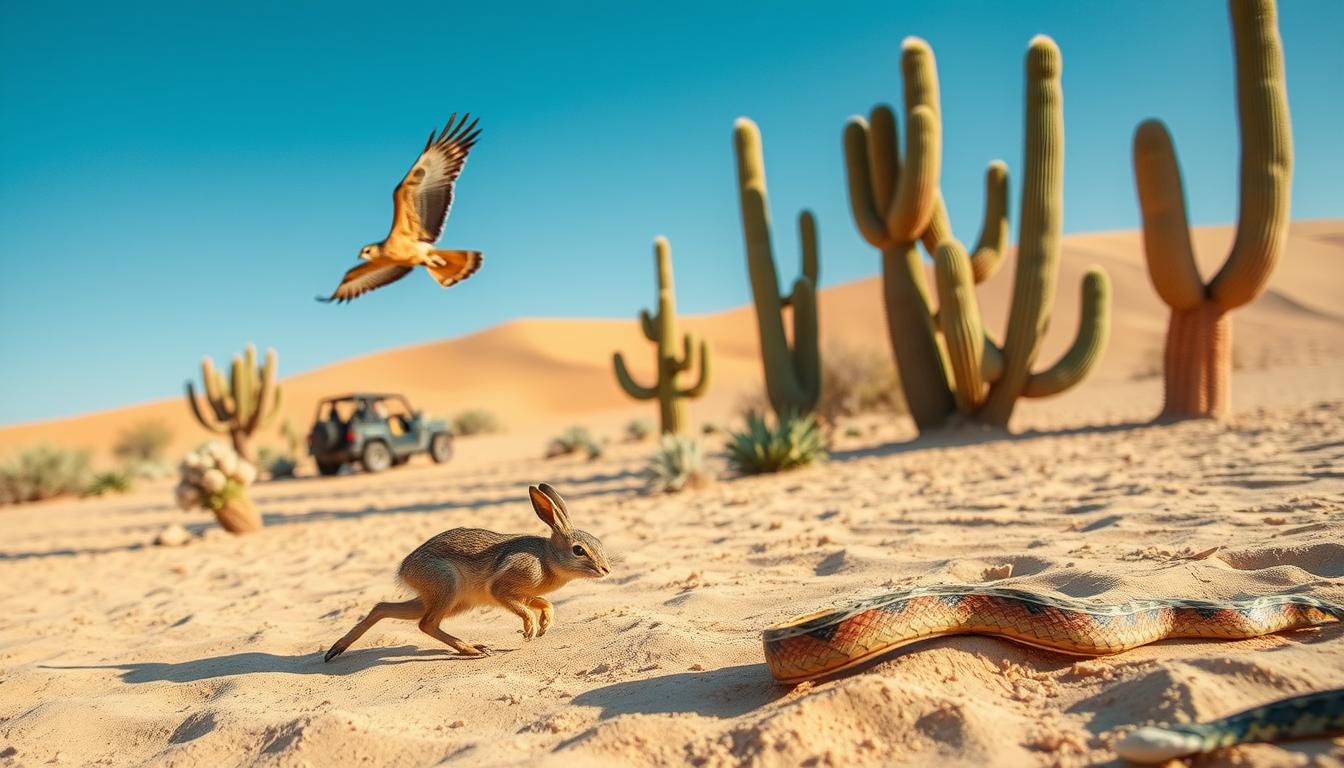
As the morning begins, the desert starts to light up. The sound of the engine mixes with the quiet, vast desert. Suddenly, you see movement and animals like it’s welcoming you.
This guide takes you close to the animals living beyond Dubai’s city lights. You’ll see Arabian oryx, sand gazelles, desert foxes, and more. During a UAE desert safari, you experience these animals up close while being respectful.
With Desert Buggy Rental Dubai, learning to spot wildlife becomes an adventure. You’ll know how to track animals and move through the desert without harm. This journey isn’t just a list; it’s about connecting with the desert and leaving it untouched.
Key Takeaways
- You can see desert wildlife best at dawn and dusk on a guided UAE desert safari.
- Buggy tour animals reveal themselves when you move slowly, watch the wind, and scan dune edges.
- Ethical viewing—distance, quiet engines, and no feeding—protects natural behavior.
- Desert Buggy Rental Dubai focuses on safety-first routes that reduce stress for wildlife.
- Simple gear—binoculars, sun protection, and water—boosts your chances of clear sightings.
- Look for tracks, burrows, and bird calls to locate species without leaving the trail.
- Desert Wildlife You Might Spot During a Buggy Tour includes mammals, reptiles, birds, and hardy invertebrates adapted to arid life.
Introduction to Desert Wildlife and Buggy Tours in the UAE
When you first look, the desert seems quiet but is full of life. The UAE’s dunes and plains are home to creatures that can handle the heat and dryness. If you choose the right time and path, you can see wildlife on a buggy tour without disturbing the desert’s peace.
Why the desert is teeming with life despite the heat
Desert animals stay cool using shade, burrows, and the cool air at night. You’ll find their tracks by trees and in green areas where there’s moisture. They are active at night, save water, and blend in to avoid the sun’s strongest rays.
What makes a buggy tour ideal for wildlife spotting
A dune buggy can go places where animals feed at dawn and dusk. The routes are easy on the environment and let you see more, including subtle movements. By going slow and not crowding, you’re more likely to see wildlife without making too much dust or noise.
About Desert Buggy Rental Dubai and what you can expect
Desert Buggy Rental Dubai offers well-kept buggies and a clear rundown on safety. The guides know where to look for animal signs to find the best spots for watching wildlife. Their knowledge helps make even quick sightings into memorable moments, all while being respectful to the animals.
Desert Ecosystem Fauna: How Animals Thrive in Arid Landscapes
As you walk among the dunes, you witness how animals in the desert thrive. They use the extremes to their advantage. Signs of life include subtle tracks, cool hideaways, and the shade of ghaf trees. Spotting desert wildlife becomes an art for those who love adventure and desert creatures.
Adaptations to heat, sand, and scarce water
Desert species make every drop of water count. They have adaptations like efficient kidneys and less sweating to survive dry periods. Their light-colored fur reflects sunlight, and special feet or scales help them move easily over sand.
Reptiles, like sandfish skinks, can glide through sand to keep cool. Birds ride the warm air currents to save energy. These strategies help desert animals stay active in tough conditions. They thrive in places where water is hard to find.
Nocturnal vs. diurnal behavior patterns you should know
Animals are most active at cooler times like dawn, dusk, and night. This is the best time for spotting wildlife, as many come out to feed. During the hot midday, those active during the day rest in cool spots to avoid losing too much water and overheating.
Planning your visit? Consider the timing of your excursions. According to this guide, mornings and evenings offer different wildlife sightings. Match your visit to the natural behaviors of desert dwellers.
Seasonal movements and the best times for sightings
Cooler air and greenery after the rain in late winter to spring increase animal sightings. As it gets warmer in spring, you’ll see more reptiles basking in the sun or on dunes.
For the best sightings of mammals and birds, go in the early mornings or late afternoons. Choose warm evenings to see reptiles and bugs. This way, you’ll see a variety of desert animals as they adjust their behaviors with the seasons.
Popular Desert Animals You’re Likely to See Near Dubai
As you travel from red dunes to open flats, desert animals emerge in the play of light and shadow. On a bright morning, you can see them clearly. Your journey reveals how these creatures prefer the calmness, letting you observe as the desert springs to life.
Arabian oryx and gazelles on the open flats
With the first rays of the sun, the tall Arabian oryx can be seen. Nearby, small groups of gazelles eat from the ground, choosing salty plants. If you keep a good distance, their natural actions and the beauty of desert life become more visible.
Foxes, hedgehogs, and small desert mammals
By the dune sides and in quiet parts, you might catch an Arabian red fox moving quietly. When night falls, look for the signs hedgehogs leave behind. These animals like to stay hidden, so look at burrows and under bushes carefully.
Lizards, geckos, and sandfish skinks
In the daytime, fast lizards heat up on rocks before quickly hiding. At night, light-colored geckos come out to hunt bugs. Look for sandfish skinks in the sandy dunes; watching them move is special during your adventure.
Birds of prey and migratory birds around dunes
Raptors glide on air currents, searching for food below. During certain times, different large eagles visit, along with kestrels and falcons. When it’s cooler, birds like wheatears and larks can be spotted, moving in search of cover.
| Animal Group | Notable Species | Prime Habitat Near Dubai | Best Time to Spot | Viewing Tip |
|---|---|---|---|---|
| Large Mammals | Arabian oryx, Arabian gazelle, sand gazelle | Gravel plains, protected reserves | Dawn and early morning | Stop and idle quietly; scan low shrubs for movement |
| Small Mammals | Arabian red fox, desert hedgehog | Dune margins, wadis, shrub lines | Dusk to night | Use red-filter light; check tracks and burrow openings |
| Reptiles | Agamid lizards, house and dune geckos, sandfish skink | Rocky outcrops, dune faces, fine sands | Morning for baskers; night for geckos | Watch sunny rocks and ripple crests for sudden sprints |
| Birds | Steppe eagle, greater spotted eagle, kestrel, falcon, wheatear, lark, bustard | Slipfaces, open flats, scattered scrub | Morning thermals; winter and migration | Glass ridgelines; pause on high ground to listen and scan |
Even pacing, patient stops, and respect for distance help you see more popular desert animals while keeping the desert wildlife safe.
Buggy Tour Wildlife Encounters: Safety and Respectful Viewing
Desert animals love when visitors are quiet and careful. Planning your wildlife spotting trip? Your actions matter a lot. Treating animals like neighbors, not just things to see, makes your experience natural and unforgettable.
Keeping a safe distance and minimizing disturbance
Always keep a safe distance from wild animals. If they look at you a lot or move away, you’re too close. In the UAE, guides recommend staying further away from Arabian oryx and sand gazelles. Always listen to them.
Never chase animals or block their path. Keep your buggy quiet and approach without scaring them. This helps keep them safe while you enjoy watching them.
Reading animal behavior to avoid stress
Look out for signs animals are stressed, like tail flicks or ear movements. If birds suddenly fly away, stop or back up. A calm animal will go back to what it was doing quickly.
If animals look worried or keep stopping, give them more space. This way, encounters are short and kind, and animals stay safe.
Responsible photography and ethical wildlife etiquette
For photos, use a zoom lens instead of getting close. Turn flash off at night to protect animals that are active then. Always stick to paths and avoid places where animals live, like nests.
Never touch or feed animals. Take your trash with you, and obey reserve rules. These actions help protect their homes and make wildlife watching better for everyone.
Desert Wildlife Spotting Tips for Better Sightings
You can turn a quick ride into an amazing desert wildlife spotting adventure. Just remember to go during cooler times, study the area, and move at the desert’s pace. This way, you get the best chances to see wildlife on your buggy tour.
Best times of day and seasons to book
Go early in the morning or late in the afternoon. That’s when animals are most active. In the UAE, the best months are from October to April because it’s cooler. Right after a light rain, animals come out to eat, and you’ll see more of them.
Using tracks, burrows, and calls to locate animals
Search the damp sand for fresh footsteps and animal poop. These signs will guide you to gazelles. Fox tracks often lead to burrows that could hide other desert creatures.
Also, animal poop can tell you what’s nearby, like predators or hedgehogs. Listen for bird songs or the sounds of animals in the bushes. These clues help you find more wildlife.
How your guide enhances spotting opportunities
Listen to your guide to know where to stand and look. They know the best spots with shade and clear views. They’ll take you to places where animals gather but make sure they don’t feel crowded. This makes your wildlife watching respectful and successful.
Desert Wildlife You Might Spot During a Buggy Tour
As you glide over quiet dunes and vast flats, you’ll find wildlife thriving in the light. With an expert guide, you’ll learn to read animal tracks and scan the horizon. This approach of moving slowly, then pausing, lets you see animals that others often miss.
Desert Wildlife You Might Spot on a Buggy Tour highlights both major sightings and small clues. Together, they create unforgettable encounters with the wildlife of the UAE’s deserts.
Iconic mammals: Arabian oryx, sand gazelle, and red fox
Spotting the Arabian oryx is thrilling, especially when its horns catch the sunlight. Gazelles may be seen in groups near the plains, ready to run if startled. Come dusk, you might find the Arabian red fox hunting close to dunes, listening for its next meal.
Reptiles: horned vipers, monitor lizards, and sand boas
After sunset, look for the unique movements of horned vipers on the sand. During the heat of the day, monitor lizards might be seen sunning on rocks. They’ll quickly scurry away as you get closer. Sand boas, hidden in burrows, are safest observed from a distance, with your guide ensuring safety.
Birdlife: falcons, eagles, bustards, and desert larks
Falcons dart across the sky, hunting for food. You might also see eagles soaring above, using the warm air currents. Bustards and desert larks are also around, adding to the vibrant bird life of the desert.
Invertebrates: beetles, scorpions, and solitary bees
At night, watch for the paths left by darkling beetles in the sand. Scorpions become visible under UV light, so be careful where you step. And after it rains, solitary bees buzz among the flowers, showing the desert is alive and interconnected.
Buggy Tour Animals and Where to Look for Them
Your path determines what animals you’ll see. Slow down and observe. You can find desert creatures by watching for footprints, shaded areas, and how the wind moves. This helps you discover animals during your buggy tour in different landscapes.
Crested dunes, sabkhas, and gravel plains
Look for birds of prey above crested dunes, using the wind to glide and search for food. On the softer side of dunes, search for reptile tracks. They show the desert’s life in the sand.
At dawn, sabkhas make it easier to see animals like Arabian oryx and gazelles from afar. When it rains, gravel plains attract birds and animals to new grass. This makes your buggy tour even more exciting.
Vegetated wadis and ghaf tree clusters
Wadis are full of life, offering shade and food. Look for signs of foxes and hedgehogs. Stopping quietly may reveal birds through their songs, indicating nearby animals.
Ghaf trees provide cool areas and attract insects. Look for lizards sunning themselves and small animals hiding. These signs show the desert’s ability to sustain life.
Oasis edges and conservation reserves
Oases are crucial for animals, offering water and a place to leave tracks. Visit early for peaceful wildlife watching. Following rules in reserves helps protect the animals and their homes.
Respect the environment by staying on paths and being quiet. This ensures you see the desert life without harming it. Your careful approach enhances your experience and supports conservation.
Enhancing Your Buggy Tour Wildlife Sightings with the Right Gear
Carrying light gear increases your chances of spotting desert wildlife on a buggy tour. The right gear like optics and clothes helps you see slight movements. This way, you don’t scare off the animals while smart safety tools let you fully enjoy the wildlife.
Binoculars, camera settings, and lens choices
Take small 8x or 10x binoculars to get a clear view over the dunes. To capture great photos of animals and birds, you need a 300–400mm lens. Also, set your camera to continuous autofocus and a fast shutter speed to catch quick actions.
When it gets darker, increase your ISO but beware of grainy photos. Support your camera on a roll cage or your knee to keep it steady. Make sure everything is tight to prevent noise that could disturb the animals.
Quiet clothing, hydration, and sun protection
Choose clothes that don’t make noise to avoid alerting wildlife. Wear breathable fabrics, a wide-brim hat, UV protection sunglasses, and sunscreen. These choices help you stay comfy and focused on spotting animals.
Remember to drink water often. Use insulated bottles and bring electrolytes for the heat. Also, secure your bottles well to avoid noise that might scare the animals during sightings.
Navigation aids and safety equipment
Your tour guide has radios and GPS, but having your own offline map is a good idea. A headlamp and power bank are helpful if it gets dark. Use a red-beam flashlight at night to keep your vision sharp and avoid stressing the animals.
Always carry a small first-aid kit for emergencies. Secure your supplies to avoid making noise. With the right quiet gear, you’re all set for an amazing wildlife experience, even as conditions change.
How Desert Buggy Rental Dubai Integrates Conservation and Education
You want ethical buggy tours that protect wildlife and the land. Desert Buggy Rental Dubai combines learning with careful planning. This way, you can see desert animals and help save their homes and the dunes.
Your briefing starts before the engine does. Guides teach you about speed, being quiet, and respecting the animals. They explain how the desert environment influences animal behavior. This knowledge helps you decide the best times to see animals.
Guide training and wildlife-first protocols
Guides can recognize when animals feel threatened. They know how to keep a safe distance. They avoid places where animals live and keep quiet to not scare them.
Before you start, you learn how to drive and watch animals safely. This approach ensures you can observe them calmly without disturbing.
Routes designed to protect sensitive habitats
Routes are carefully chosen to avoid harm. They stay clear of animal breeding areas and delicate ecosystems. You can stop at specific places to take photos without damaging the environment.
Driving slowly in certain areas keeps the dust down. This is better for seeing animals and less stressful for them. You also avoid damaging plant life that insects and small animals depend on.
Partnering with local conservation initiatives
The team follows conservation laws and educates about local wildlife and environmental issues. You learn why some areas are protected and should not be entered, keeping the adventure responsible.
This mix of education and thoughtful planning makes your trip memorable. It also helps protect the desert for animals and future visitors.
Planning Your UAE Adventure: Tours, Booking, and Contact
Enjoy a day in the dunes, spotting animals and feeling the speed without giving up peaceful moments under the stars. Watch animals at their most active times during your buggy tour to see more while keeping their homes safe.
Choose activities that match your adventure style, from thrilling drives to serene periods seeing animals at dawn and dusk. Each option below helps you see the desert wildlife mentioned in Desert Wildlife You Might Spot During a Buggy Tour.
Service types: Dune Buggy Tours, Quad Biking Tours, Evening Desert Safari, Morning Desert Safari, Desert BBQ Dinner, Camel Ride, sandboarding
Dune Buggy and Quad Biking Tours are fast ways to cover the dunes, making it easier to spot desert animals. The Morning Desert Safari is perfect for cool temperatures and fresh animal tracks.
The Evening Desert Safari offers a great chance to see animals before night. Adding a Camel Ride or sandboarding lets you enjoy the desert at a calm pace.
Finish with a Desert BBQ Dinner in special areas. Here, you can watch for animals discretely in the dim light.
Booking hours and how to reserve: 24 hours
Book any time, day or night. Pick a time that lets you enjoy the cool mornings or beautiful evening skies. Morning spots are great for spotting wildlife, while evenings are ideal for stargazing.
Contact Desert Buggy Rental Dubai: +971 52 440 9525 | [email protected]
Contact us to confirm your dates, group, and the time. Tell us about the animals or areas you’re interested in to help us plan your visit.
Best add-ons for wildlife enthusiasts
- Request dawn or dusk extensions to boost buggy tour wildlife sightings.
- Ask for a photography-led pace, with longer stops at vantage points.
- Arrange binocular or camera rental when available.
- Choose routes skirting ghaf groves, wadis, and reserve perimeters when access allows, maintaining ethical distances from buggy tour animals.
| Experience | Prime Wildlife Window | Habitat Focus | Pace & Noise Level | Best For |
|---|---|---|---|---|
| Dune Buggy Tours | Early morning / late afternoon | Crested dunes, gravel plains | Fast, moderate noise | Covering ground to spot tracks and movement |
| Quad Biking Tours | Morning | Open flats, dune fringes | Fast, higher noise | Short bursts to reach fresh sign zones |
| Morning Desert Safari | Sunrise to mid-morning | Wadis, ghaf clusters | Steady, low noise | Clear light for Desert Wildlife You Might Spot During a Buggy Tour |
| Evening Desert Safari | Golden hour to dusk | Dune slipfaces, shrub lines | Steady, low noise | Twilight behaviors and silhouettes |
| Camel Ride | Dawn / dusk | Oasis edges, soft sands | Slow, minimal noise | Close, calm encounters with skittish species |
| Sandboarding | Morning | Leeward dunes | Moderate, intermittent noise | Spotting from high ridges between runs |
| Desert BBQ Dinner | Twilight | Designated safe areas | Static, very low noise | Gentle observation while dining |
Conclusion
Step into a living scene where the UAE’s dunes and wadis come alive. Here, Arabian oryx, sand gazelles, and birds show how life thrives in the heat. With patience, you’ll see signs leading you to Desert Wildlife You Might Spot During a Buggy Tour.
For better wildlife sightings, go on your buggy tour at dawn or dusk. This is when it’s cooler and animals are active. Remember to keep quiet and respect their space. Wearing soft clothes and using binoculars can also improve your experience.
Desert Buggy Rental Dubai offers tours that care for wildlife. They use guides who know where to find animals without disturbing them. They teach how to responsibly enjoy the desert’s beauty.
Plan your visit when the light is soft, always bring water, and behave ethically. Doing this helps the desert show its secrets respectfully. With good timing and advice, your adventure becomes a journey of discovery in the desert.