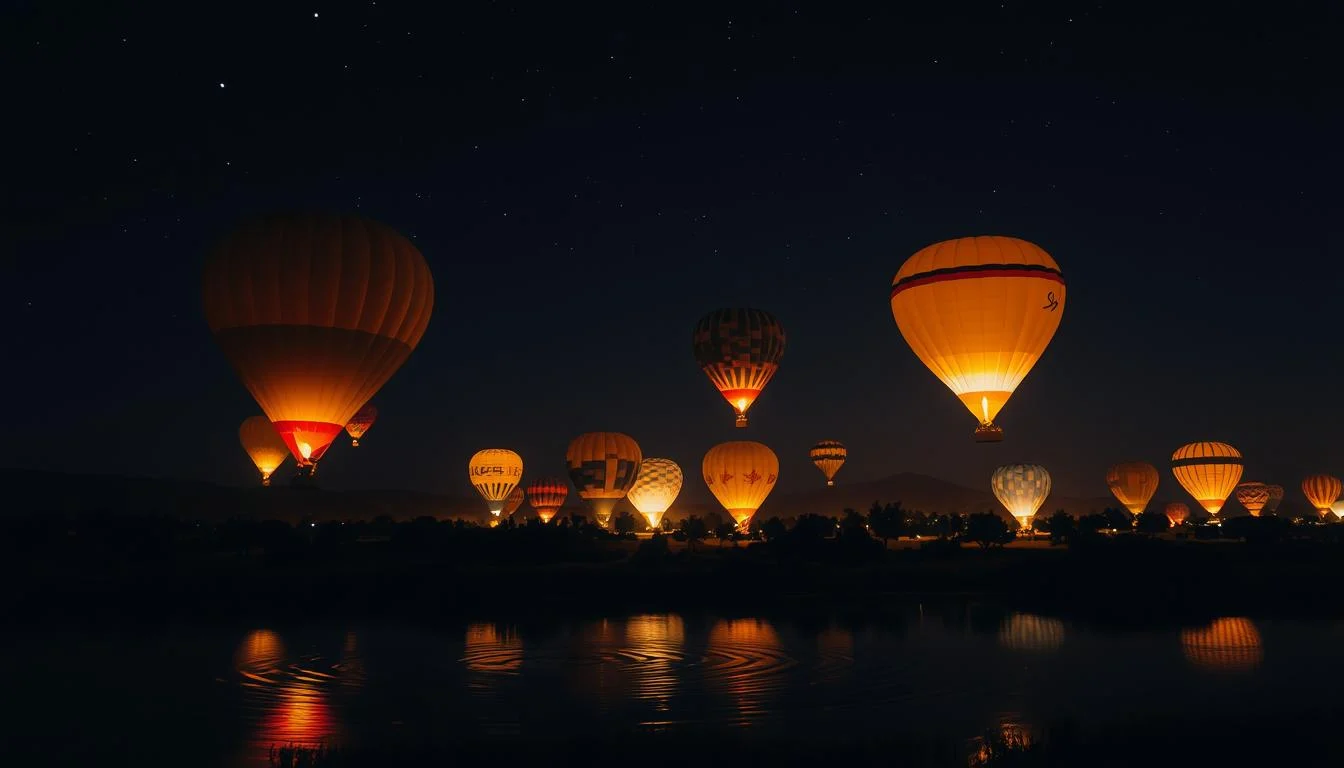
Imagine floating high in the night sky, with the moon’s soft light shining down. Surrounded by cool air and stars, it feels like magic. But, flying hot air balloons at night isn’t common due to practical reasons. While night rides sound dreamy, several factors prevent them. These include safety and the ability to navigate properly at night.
Key Takeaways
- Hot air balloons primarily rely on the sun for visibility and warmth.
- Safety concerns make nighttime flights risky due to limited visibility.
- Regulatory restrictions restrict flying at night for hot air balloons.
- Navigation becomes complex in low-light conditions.
- Nighttime hot air balloon rides are a rare but magical experience when safe.
Understanding Hot Air Balloon Operations
Operating hot air balloons combines science and skill, mainly through buoyancy and heat changes. Pilots heat the air to make the balloon rise. This involves knowing key safety rules and understanding how balloons move in the sky.
The Basics of Hot Air Balloon Flight
Learning how hot air balloons fly is fascinating. It’s all about making the air inside the balloon hot to lift it. The pilot controls this heating to go up or down smoothly. Weather also plays a big part in flying, especially at night when it’s harder to see.
Primary Factors Influencing Balloon Flights
Many things affect how safe and doable a balloon flight is. These include:
- Weather Conditions: Watching the weather closely is key.
- Balloon Flight Restrictions: Rules say when and where you can fly, for safety’s sake.
- Visibility: Being able to see well helps avoid problems and makes landing safer, especially early or late in the day.
Putting these factors into practice makes balloon flying better and safer for everyone. It helps make every flight magical.
Why don’t hot air balloons fly at night?
Hot air balloon flights are mainly a daytime activity. This is because safety and rules are very important at night. Knowing why can help us understand the challenges of flying hot air balloons in the dark.
Safety Concerns During Nighttime Flights
Night flights are tough due to visibility issues. Pilots need to see clearly to navigate and land safely. At night, it’s hard to spot the ground and dangers like power lines and trees are harder to see.
Regulatory Restrictions on Balloon Aviation
There are strict rules about when hot air balloons can fly. Authorities set these rules to keep everyone safe. By following these, balloonists make sure they fly only when it’s safest.
| Concern | Description | Impact on Safety |
|---|---|---|
| Visibility | Limited sight of the landscape and navigation markers. | Increases risk of collision and hard landings. |
| Navigation Challenges | Difficulties in determining altitude and orientation. | Heightened chances of losing control. |
| Regulatory Compliance | Flight restrictions set by aviation authorities. | Ensures safety and adherence to established protocols. |
Conclusion
Hot air balloon rides mainly happen during the day. This is because it’s safer and follows the rules. Flying at night has too many dangers, like not seeing well and running into things. So, companies that offer these rides make sure they follow the rules to keep everyone safe and have fun.
Daytime flights let you see amazing views and feel the excitement of flying. You get to fly over beautiful places and enjoy the calm air. These experiences create memories that last long after you land.
If you want more adventure, try activities like Dune Buggy Tours and Evening Desert Safaris. Desert Buggy Rental Dubai offers these. You’ll get to explore the stunning deserts of the UAE, making your trip even more special.