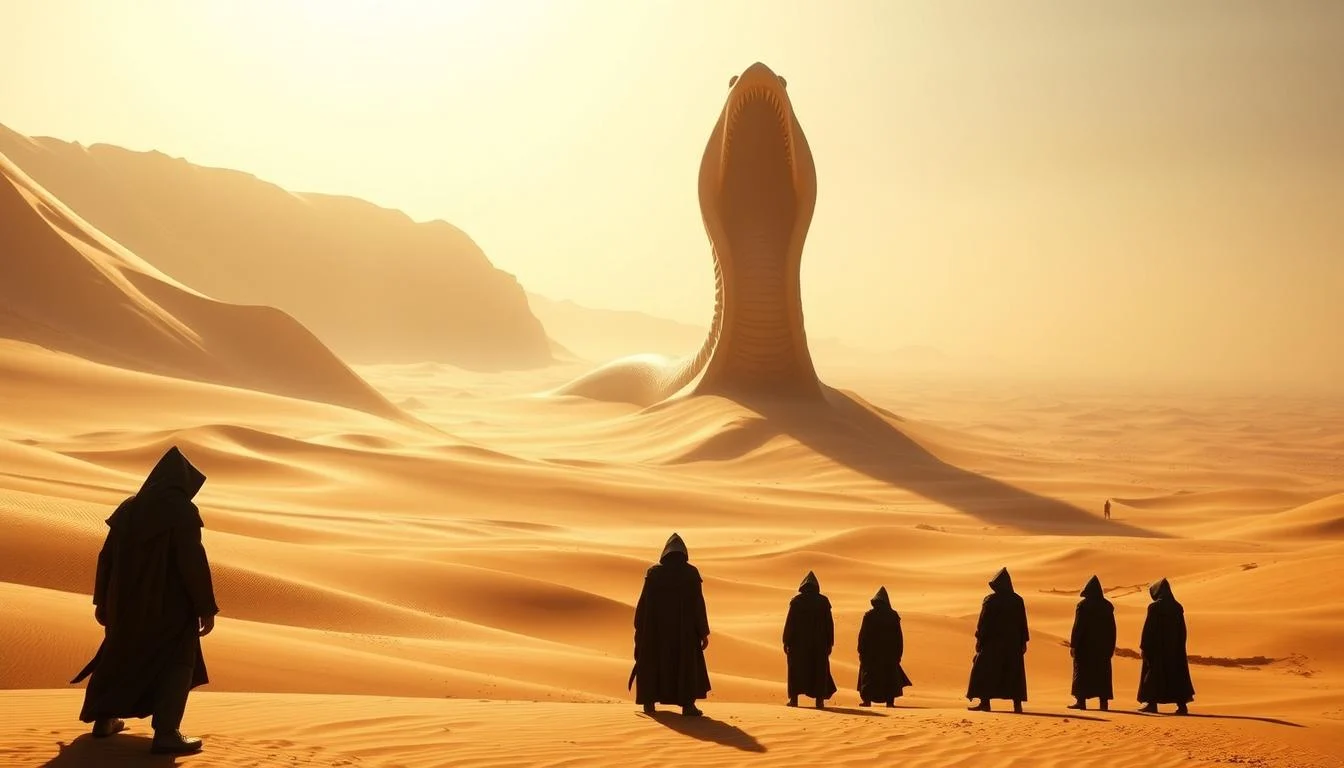
Imagine standing on a planet covered in huge sand dunes. Every grain of sand has a deep story beyond just staying alive. “Dune” by Frank Herbert isn’t just about space politics. It’s a complex story of how humans deal with success and challenges.
As you get into this big story, you’ll face big questions about life, nature, and control. Whether you’re new to sci-fi or know it well, figuring out what Dune is about can make you think about your own life’s big puzzles. Let’s go on this trip through Arrakis and see why so many people love this story.
Key Takeaways
- Dune explores intricate themes of power, survival, and ecology.
- The story is set on the desert planet of Arrakis.
- It offers a unique perspective on political intrigue and human dynamics.
- Understanding Dune can deepen your appreciation for science fiction as a genre.
- This epic narrative has influenced many aspects of popular culture.
Understanding Dune: A Complex Narrative
The Understanding Dune novel offers a journey through a complex story. It’s filled with deep themes and context. Since its first publication in 1965, it changed how we see science fiction. The author, Frank Herbert, used his knowledge of politics, religion, and ecology. He created a universe that makes us think deeply. This sets the stage for a Dune narrative breakdown that shows why it’s still relevant today.
The Origin of Dune
The roots of Dune start with Herbert’s own life and what he saw. The desert planet of Arrakis isn’t just a setting; it feels like a main character. It makes us face real issues like surviving and managing resources. This deepens the Dune story explanation, making us think about these big challenges.
Key Themes in Dune
The Dune themes dive into power and what’s right or wrong. Look at Paul Atreides. His story shows the tough choices leaders make. It represents the real struggles people face, according to the Dune book analysis. Herbert makes us question the power and our responsibilities. These themes are very relevant in our world today.
The Role of Power and Politics
The Dune political analysis looks at how power affects the story. Noble houses fighting over Arrakis show big themes of governance and desire. The Dune power dynamics study shows why characters make alliances or betray each other. Herbert gives us a universe where money and politics control everything. This makes Dune a series that really gets you thinking about power.
What WTF is Dune about?
Dune weaves a story full of political intrigue, prophecy, and growth. At its core is Paul Atreides, the future leader of House Atreides. His dangerous journey begins when his family moves to Arrakis. This desert planet is the only place where the valuable spice melange is found. This summary of Dune shines a light on crucial events. For instance, the betrayal of House Atreides and Paul growing into a leader among the Fremen, Arrakis’ native people.
This glimpse provides an understanding of how these elements are portrayed in the Dune movie. It also highlights the themes that echo throughout the tale.
Dune Plot Summary
The plot of Dune showcases a rich blend of conflict and fate. Paul faces many challenges and allies as he learns about Arrakis. He struggles to bring the Fremen together to fight their oppressors. These efforts lead him to accept a destiny predicted by prophecy.
His journey changes him deeply. It also sparks thoughts about freedom and fate. These ideas are key to understanding the Dune story.
Dune Book Analysis
The analysis of the Dune book delves into deep character stories and themes. Herbert mixes exciting action with deep thought. This invites readers to think about the story’s deeper meanings within the spice trade. The link between managing resources and addiction is fascinating. It mirrors larger issues in society.
Through Paul’s personal battles and growth, readers get a clear look at destiny versus free will. This study helps make sense of Dune and its complex themes. It also offers a detailed Dune spoiler review for those wanting to dive deeper into the narrative.
Conclusion
“Dune” goes beyond just sci-fi. It gives us a deep look into power, politics, and what drives us. It shows us how loyalty and betrayal play out against a universe full of rivals. Through Frank Herbert’s detailed world, we see why “Dune” deserves more than a quick glance.
Themes like environmentalism, colonialism, and religion in “Dune” connect with today’s issues. It helps us see how the stories in “Dune” mirror our real-world struggles with power. By understanding “Dune,” we can start meaningful conversations about our own world.
This summary invites you to explore “Dune” more, either by reading the books or watching their adaptations. Getting into the “Dune” series opens up new ways of seeing our world. It sparks discussions about humanity and where we’re headed.