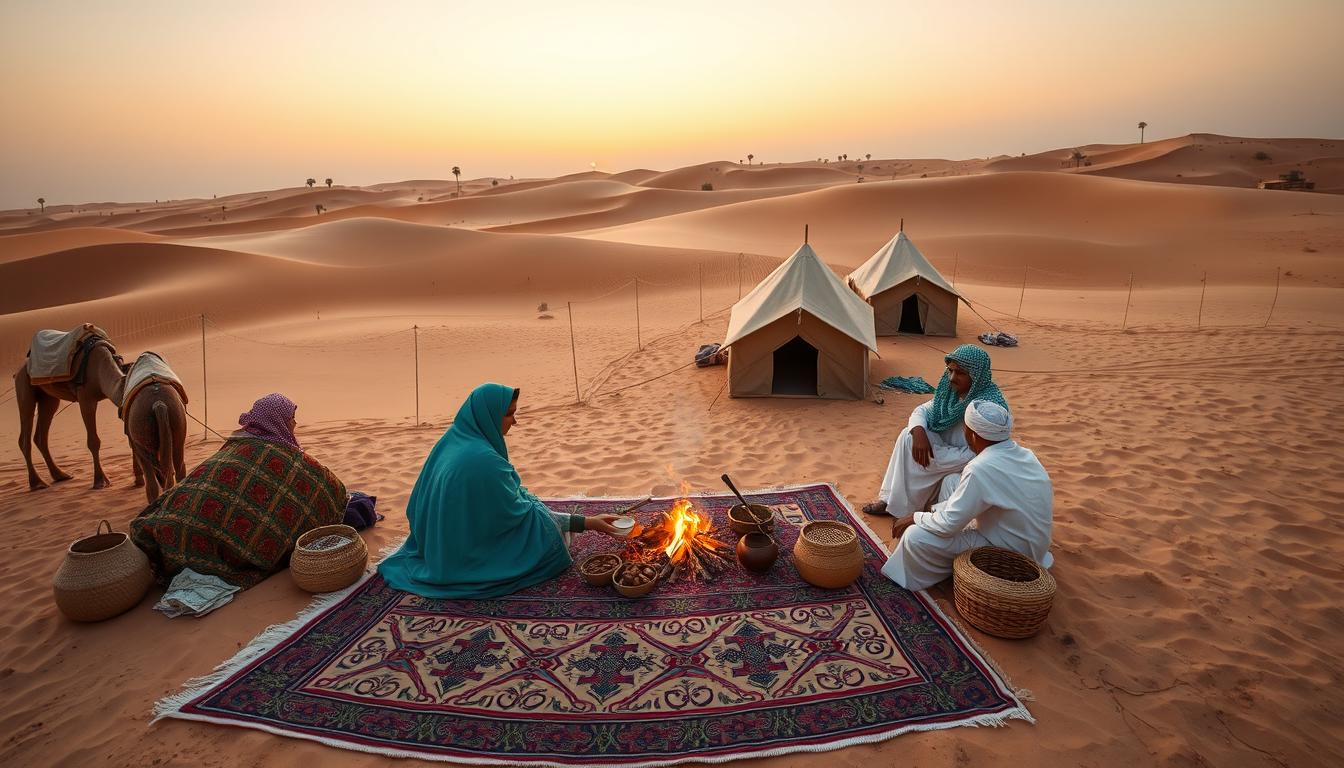
At dawn in Ras Al Khaimah, the Hajar Mountains cast blue shadows over the red-sand dunes. The sea air brings a hint of salt to your face. In the quiet light, you’re pulled to slow down, listen, and learn why Bedouin culture thrives amid modern growth.
A host greets you with gahwa and dates, showing the warmth of Arabian desert traditions. These simple acts create connections. Bedouin heritage in the UAE is alive, woven into daily life, not just the past.
You explore the desert, uncovering stories of ancient trade routes, wells, and family poems. Traditional Bedouin Culture Around RAK teaches you about belonging and reading the land. It shows the value of patience and community.
Your journey blends adventure with respect. You learn how camps, guides, and partners like Desert Buggy Rental Dubai ensure a respectful exploration. Your curiosity grows into appreciation, making your visit a part of the larger story.
Key Takeaways
- You connect with Ras Al Khaimah Bedouin culture through living customs, not staged displays.
- Arabian desert traditions reveal community values of hospitality, patience, and resilience.
- Bedouin heritage UAE links ancient mobility and trade with today’s national identity.
- Traditional Bedouin Culture Around RAK’s Desert blends poetry, falconry, cuisine, and craft.
- Responsible experiences ensure respect for local etiquette and the fragile dune ecosystem.
- Partners like Desert Buggy Rental Dubai support safe, culture-first desert exploration.
Introduction to Ras Al Khaimah’s Bedouin Heritage
Ras Al Khaimah spans from red dunes to the Hajar Mountains and the Gulf coast. This blend of elements carved out a life in the desert. Caravans, pearl boats, and herders shaped this life. Here, Arabian desert traditions still influence everyday choices and open welcoming spaces to visitors.
Across oases and wells, the thrives of majlis hospitality, Nabati poetry, and camel care continue. These customs connect the past to the present, while being rooted in the land and old trade routes. They offer a timeless yet authentic experience.
Why RAK is a living gateway to Arabian desert traditions
RAK’s geography enabled a mix of desert and coastal living. Herds fed inland in winter, and families turned to pearling in the Gulf during summer. This lifestyle preserved Bedouin customs and skills like star navigation and camp manners. Moving from the dunes to the creeks shows how the culture adapted without losing its essence.
How Bedouin ways shape the modern UAE identity
Values like generosity, resilience, and leadership come from Bedouin camp life and they still influence today. The majlis encourages polite talks, and poetry helps remember and advise. Traditions like falconry, camels, and communal meals connect past and present. They give us a clear view of the RAK desert way of life.
What you’ll learn about local Bedouin customs in RAK
- Etiquette inside a majlis, from serving gahwa and dates to seating order and greetings rooted in Arabian desert traditions.
- Foodways that prize patience and care—slow-cooked meats, spiced rice, and the role of coffee in trust-building.
- Textiles and clothing designed for sun, wind, and sand, showing how function and identity meet in Traditional Emirati heritage.
- Falconry, oral storytelling, and Nabati verse as living arts that sustain Local Bedouin customs across generations.
- Practical guidance to engage with artisans, guides, and hosts so your visit respects the RAK desert lifestyle in real settings.
Traditional Bedouin Culture Around RAK’s Desert
Walking into Ras Al Khaimah, you get to live the Bedouin culture shaped by the desert itself. The way they travel, welcome guests, and survive is special. Everything they do, even where they go, is based on their traditions. If you want to dive deep into their culture, check out this guide.
The heart of Bedouin life: mobility, hospitality, resilience
They move with the seasons, following the rain and feeding their herds. They show their honor through generosity, treating every guest like family. They start early, rest in the shade, and use every drop of water wisely.
When things get tough, everyone helps out. Elders solve disagreements with wisdom. These traditions keep them strong as they live in the desert and today’s world.
Key symbols of heritage: tents, falconry, and poetry
Their tents are made of black goat hair and work perfectly in the desert. They use ropes and know how to catch the breeze. Everything around them, like rugs and crafts, tells the story of their family and travels.
Falconry shows their patience and connection with nature. Watching a falcon fly is amazing. At night, their poetry keeps their history and humor alive.
Seasonal rhythms of the dunes and coastal plains
In winter, they move to the dunes; in summer, to the coast. They do their chores in the cool parts of the day. They’re smart about using water and staying cool.
They know how to read the land and sky like a map. Their traditions show us how nature and stories are a big part of their life.
| Heritage Element | Purpose in Daily Life | Cultural Meaning | RAK-Specific Insight |
|---|---|---|---|
| Black goat-hair tent (bait al sha’ar) | Shade, shelter, social hub | Adaptability and communal ties | Breathable weave cools days, tightens in rare rain |
| Falconry | Hunting technique and training art | Patience, partnership with nature | Demonstrations align with desert wind patterns near RAK dunes |
| Nabati poetry | Oral record, counsel, and entertainment | Memory, honor, and social law | Recited at gatherings after sunset for cooler air and calm |
| Seasonal mobility | Following pasture and water | Resilience through change | Winter near inland grazing; summer toward coast and oases |
| Mutual aid (al-faz’a) | Shared labor and problem-solving | Community cohesion | Elder mediation supports fair outcomes across camps |
Bedouin Hospitality and Majlis Etiquette
You enter a world filled with trust, peace, and kindness in the RAK desert. Here, a welcome extends beyond merely greeting someone; it forms a deep connection. As you explore Local Bedouin customs, you engage with the ancient Bedouin heritage of the UAE. The actions and daily routines speak volumes.
Customs of coffee, dates, and welcoming rituals
Arabic coffee, or gahwa, and fresh dates are offered first by your host. Coffee flows from a dallah into a tiny finjan. Always accept with your right hand, sip a little, then shake the cup lightly to show you’re done.
This tradition is your gateway to deep cultural experiences in RAK. It respects Local Bedouin traditions and values the time, place, and people involved.
Majlis etiquette for respectful cultural immersion
Always wait for an invitation to sit down. The elders and special guests get the priority seating. If others remove their shoes, you should too. Also, remember to keep your voice down.
Dressing modestly is key, and always ask before taking photos. This is especially important for women and private areas. This respect maintains the majlis’s tranquility while you connect with the Bedouin heritage of the UAE.
Gift-giving and conversational norms you should know
A small gift like premium dates, local sweets, or a considerate token is perfect. Always give and receive with your right hand. Starting with a warm “As-salamu alaykum” creates a friendly atmosphere.
Start conversations with casual topics like family or health. Compliments are welcome, but avoid touchy subjects unless they’re brought up first. This way, your interactions remain respectful and pleasant, fitting well with the RAK desert culture.
| Practice | How to Do It | Why It Matters | Local Insight |
|---|---|---|---|
| Accepting Gahwa | Use right hand; sip; shake finjan to finish | Signals gratitude and good manners | Core of Local Bedouin customs in RAK |
| Seating in Majlis | Wait for invitation; honor elders first | Shows deference and social awareness | Deeply rooted in Bedouin heritage UAE |
| Body Language | Keep feet soles down; speak softly | Prevents unintentional offense | Aligns with RAK desert lifestyle values |
| Photography | Ask permission; avoid private areas | Protects dignity and privacy | Best practice for Cultural immersion experiences RAK |
| Gift-Giving | Bring dates or sweets; offer with right hand | Builds trust and goodwill | Simple gesture, strong cultural signal |
| Conversation Openers | Start with greetings and well-being | Creates rapport before business | Respected across the Emirates |
Traditional Emirati Heritage and Daily Desert Life
Each morning in Ras Al Khaimah starts with Traditional Emirati customs. From sunup chores to nighttime duties, heritage guides every action. Here, the Bedouin culture blends work, faith, and travel with nature—wind, stars, and dunes. Though simple, every activity is filled with skill and carries memories of Arabian desert traditions, all learned through Authentic Bedouin experiences.
Nomadic routes, water wells, and desert survival skills
You learn to read the sky and dunes to navigate safely. Your path is lit by stars, guided by distant mountains, and enriched by valleys that come to life with rain. Your journey accounts for the needs of camels and goats, finding balance in old pathways that lead to guarded wells.
Water is precious in the desert, so you use it wisely. Cool goatskin containers hold your water as you journey from one well to another. You follow simple rules: drink in moderation, always refill, and prioritize the herd. This discipline helps you thrive amidst the heat and sandstorms.
Handicrafts: weaving, pottery, and leatherwork
In Ras Al Khaimah, domestic crafts are vital. Women transform goat hair into tents that are perfect for the desert climate. They also create mats, baskets, and screens from palm fronds. These items are essential for storing food and safeguarding tools.
The Bedouins are skilled in leatherwork too, making durable waterskins, sandals, and pack gear. In settled areas, they craft pottery from clay. This pottery is used to store food and purify water. Each crafted item is a testament to how Traditional Emirati heritage makes everyday items strong.
Family structures and oral storytelling traditions
Family is central, with elders leading and everyone sharing tasks. Children are involved in daily activities—like herding and sorting dates—to learn their roles early. Marriages strengthen bonds between families, ensuring support across the desert.
At evening, stories fill the air, rich with law, history, and morals. These tales, passed from one generation to the next, are vital. They are Arabian desert traditions that offer wisdom and a sense of belonging, rooted in Authentic Bedouin experiences.
Bedouin Cuisine and Desert Flavors of RAK
RAK desert meals are made from simple ingredients. They echo the Traditional Emirati heritage and the flow of camp life. When you share meals by the fire, you dive into Local Bedouin traditions that make every dinner special.
Classic dishes: harees, machboos, and slow-cooked meats
Harees mixes cracked wheat with meat into a creamy dish. Machboos is rice spiced up, with chicken or lamb, brightened with loomi and saffron. Then, slow-cooked meats like ouzi, are brought from the pit, tender and flavorful.
Dates, samna, and spiced stews complete the meal. These foods are central to Cultural immersion in RAK, with every pot telling a story of care and efficiency.
From camel milk to gahwa: beverages of the desert
Camel milk helps you stay cool. It can be fresh or fermented. Laban is a drink that cools you down after a meal. And gahwa, a lightly roasted coffee with cardamom, is always served first. It’s a sign of Local Bedouin hospitality.
You drink from tiny cups, often with dates or luqaimat. Each sip connects you to Traditional Emirati heritage through a simple yet elegant ritual.
Dining etiquette during cultural immersion experiences
Always wash your hands before eating. Accept coffee and food when first offered, and use your right hand for eating. Praise the host’s cooking, follow their meal pace, and avoid wasting food. Saying no at first may seem polite, but it’s often seen as hesitancy.
Following these dining rules during Cultural immersion in RAK shows respect and honors the desert lifestyle.
- Accept the first pour of gahwa and a second if offered.
- Eat from the part closest to you on shared trays.
- Always thank the host and leave them with kind words.
Music, Poetry, and Falconry in Bedouin Heritage UAE
Step into a world where poetry, rhythm, and falconry link people to the land. In Ras Al Khaimah, these traditions carry memories and pride from the sands to the sea. Through Traditional Bedouin Culture Around RAK’s Desert, you’ll see how these arts form the heartbeat of daily life.
Nabati poetry and songs that echo across the dunes
Nabati poetry uses a clear, local voice. It tells stories of love, bravery, and family, with camels and stars often painted in words. Poets swap lines, while everyone claps along.
The gatherings are welcoming. Songs range from playful to respectful, praising elders and the land. You’ll feel the deep roots of UAE’s Bedouin heritage in every verse.
Falconry as living heritage and conservation practice
Falconry in the UAE is so special, UNESCO recognizes it. Trainers work closely with the birds, paying attention to nature. There are even clinics and programs that show how old practices meet new science.
Watching a falcon soar, you see ancient skills still in use. This relationship highlights care for birds and land alike. It’s a key part of the Bedouin culture in RAK and many real Bedouin experiences.
Traditional dance and percussion at desert gatherings
At big celebrations, dances like Al Ayala and Razfa sync many men together. Bamboo canes and drum beats create a lively show. Chants celebrate unity and bravery.
You’re invited to join in and feel the rhythm. This shared beat brings people closer on a Desert safari RAK. It strengthens bonds among family and friends.
Clothing, Textiles, and Symbolism in RAK Desert Lifestyle
Each stitch and seam tells a story of place. In the RAK desert, clothing is made for heat, glare, wind, and movement. It also shows family ties and pride. These choices connect people to Arabian desert traditions. They tie them to the Ras Al Khaimah Bedouin culture that shapes daily life.
From abayas to kanduras: function meets identity
Men prefer the kandura. It’s light, airy, and in neutral tones to reflect the sun. The design allows cool air to circulate during the hot days. Women wear the abaya with a shayla for modesty and easy movement. Both outfits offer comfort. They also show they’re part of Traditional Emirati heritage.
Traditional outer layers protected skin from sand and sun but let out heat. This balance made it possible to walk in the dunes at noon and relax in a cool breeze at dusk. This careful choice is rooted in Ras Al Khaimah Bedouin culture.
Textile patterns, dyes, and protective design
Goat-hair weaves were used for tents and cloaks, repelling light rain and providing shade. Local materials like palm-fiber ropes helped with travel, rest, and trade. Stable dyes came from indigo, madder, and pomegranate. Patterns represented tribal history and the weaving process.
Decorations like talli embroidery and sarood braided trims added personal touches. Cuffs and hems were tailored to keep sand out and let air in. These details highlight the survival techniques of Arabian desert traditions.
Jewelry and adornment in Bedouin culture
Silver pieces and coin-studded headpieces were signs of status. They also acted as portable wealth. Kohl protected the eyes from sun glare and sand. In some places, veils like the burqa’ offered privacy and responded to climate. Shoes changed with the terrain, from soft leathers to harder soles for rocky paths.
Every detail matches Traditional Emirati heritage and the needs of desert life. As you look around, you’ll see how necessity becomes style. This keeps the Ras Al Khaimah Bedouin culture alive and wearable.
| Garment/Item | Primary Function | Material & Technique | Symbolic Meaning | Climate Advantage |
|---|---|---|---|---|
| Kandura | Daily wear and identity marker | Light cotton or blends; loose cut | Community belonging and modesty | Reflects sun; promotes airflow |
| Abaya & Shayla | Modesty and mobility | Breathable fabrics; flowing drape | Respect for tradition and poise | Shades skin; vents heat |
| Goat-Hair Cloak/Tent Weave | Shelter and protection | Handwoven goat hair; tight warp | Resourcefulness of nomadic life | Repels light rain; creates cool shade |
| Embroidery (Talli) | Decorative edging | Metallic and silk threads | Craft mastery and lineage | Light embellishment without heat load |
| Jewelry (Silver, Coins) | Status and portable wealth | Stamped silver; coin settings | Heritage, prosperity, protection | Non-heat-retentive when worn loosely |
| Kohl | Eye protection | Mineral-based cosmetic | Continuity with ancestral practice | Reduces glare; shields from sand |
Authentic Bedouin Experiences and Cultural Immersion in RAK
When you dive into Ras Al Khaimah’s Bedouin culture, choose small, knowledgeable hosts. They show you Bedouin ways and let you join in, making your visit feel special and real. These true Bedouin moments deepen your trip and help the community too.
Guided camp visits and storytellers’ sessions
Step into the desert life rhythm through guided camp visits. Hear Nabati poetry, watch coffee roast, and learn to pour from a brass dallah elegantly. You’ll see ethical falcon training and learn its significance in Bedouin life.
Pick groups that are small and led by locals. This way, you really soak in Ras Al Khaimah’s culture, learning about its people and customs. Even a simple “salaam alaikum” can show respect and open hearts.
Hands-on craft workshops with local artisans
Try crafting with palm fronds, goat hair, or leather under artisans’ guidance. These activities show how tradition crafts daily tools. Buying directly helps keep these traditions alive.
These real Bedouin experiences turn crafting into a living tale. You’ll appreciate the work in each creation and take home more than just an item.
Responsible photography and cultural respect
Dress modestly and ask before taking photos. Steer clear of private and sacred spaces. Always keep a respectful space and ask your host if unsure.
Support experiences in Ras Al Khaimah that fairly pay artisans and invest in the locale. Your choice can keep the Bedouin culture thriving, honoring its people.
Desert Safari RAK: Connecting Adventure with Culture
In a Desert Safari RAK, excitement and culture come together. It’s more than just a thrilling ride across sandy dunes; it’s a deep dive into Arabian desert traditions. Aim for operators who focus on culture, leaving a lasting, respectful mark on the sands.
Choosing experiences that honor local Bedouin customs
Choose guides who teach about majlis etiquette and serve fresh gahwa with dates. Look for experiences in RAK highlighting storytelling, falconry, or poetry by skilled presenters. This brings culture to life.
Authentic Bedouin experiences are best in small groups with shaded seating. They teach the meaning of local gestures and greetings. This connects you directly with the people, not just the scenery.
Sunrise and sunset itineraries with cultural touchpoints
Early morning offers serene dune walks, sightings of desert foxes, and coffee shared over ancient trade tales. This time showcases Arabian traditions in a soft, gentle light.
As the day ends, enjoy gentle dune rides, safe camel treks, and Al Ayala performances that reveal local culture’s rhythm and unity. A Desert safari in RAK at this time captures the sky’s changing colors as cultural experiences take center stage.
Safety, sustainability, and Leave No Trace in the dunes
Always go with guides who are well-trained and use vehicles with seat belts. Make sure to have safety checks in place. Tell them about any health issues before you start and stick to safe speeds in soft sand.
Adhere to Leave No Trace principles by staying on designated paths, avoiding damage to plants, and taking all trash with you. Watching wildlife should be from afar. Opt for operators who are committed to conservation in Ras Al Khaimah and who source their food locally for a genuine cultural immersion in RAK.
| Focus | What to Look For | Why It Matters | Culture Link |
|---|---|---|---|
| Guides | First-aid certified, local expertise, clear briefings | Improves safety and route choices | Accurate context for Arabian desert traditions |
| Itinerary | Sunrise walks, sunset Al Ayala, camel rides | Balances energy and comfort | Authentic Bedouin experiences at ideal times |
| Vehicles | Seat belts, radios, recovery gear | Reduces risk on soft dunes | Keeps focus on learning, not hazards |
| Etiquette | Majlis norms, coffee service, greetings | Builds mutual respect | Clear pathway to Cultural immersion experiences RAK |
| Sustainability | Track adherence, small groups, no litter | Protects habitats and vistas | Honors stewardship within Arabian desert traditions |
| Community Impact | Local sourcing, conservation donations | Supports livelihoods and heritage | Strengthens Authentic Bedouin experiences |
Planning Your Visit with Desert Buggy Rental Dubai
Create an adventure that mixes excitement with culture. Desert Buggy Rental Dubai combines thrilling dune rides with Cultural immersion experiences RAK. Each journey brings you a step closer to the heart of Traditional Bedouin Culture and the essence of Desert safari RAK.
Service types: Dune Buggy Tours, Quad Biking Tours, Camel Ride, sandboarding
Pick Dune Buggy Tours suited to how brave you feel, or choose Quad Biking Tours along beautiful landscapes. A calm Camel Ride offers chances for photos and stories. Sandboarding adds quick excitement. Then, relax with tea and dates back at camp.
Evening Desert Safari, Morning Desert Safari, and Desert BBQ Dinner
Enjoy the cool morning air, soft lighting, and watching for gazelles and foxes on a Morning Desert Safari. The Evening Desert Safari showcases golden skies and a peaceful drive to camp. End the day with a Desert BBQ Dinner. You’ll love the Emirati dishes, music, and stars above Ras Al Khaimah.
24-hour booking: +971 52 440 9525 | [email protected]
Book any time you want. Just call +971 52 440 9525 or send an email to [email protected]. Get instant answers, tailored plans, and options for small groups. All designed to fit with your cultural explorations and Desert safari RAK adventure.
Designing a culture-first itinerary in Ras Al Khaimah
Begin with an easy drive, then visit a camp to discover Traditional Bedouin Culture in RAK’s Desert. Include a bit of poetry or falconry. And save time for learning weaving or pottery from local craftsmen.
Learn about majlis etiquette, how to take photos respectfully, and how to care for the dunes. Choose paths away from delicate areas, and stay in small groups. With Desert Buggy Rental Dubai, your decisions help preserve the culture while you enjoy Desert safari RAK.
Preserving Ras Al Khaimah Bedouin Culture for Future Generations
Supporting community-led teaching helps keep Ras Al Khaimah Bedouin culture alive. Elders teach Nabati poetry, while artisans share weaving and leatherwork skills in workshops. This practice keeps Traditional Emirati heritage alive everyday.
Protecting this culture also means caring for the land. Dunes, oases, and old grazing paths are key to Bedouin heritage in the UAE. Working on land-use policies and preserving ghaf trees and wildlife are critical.
Festivals, school events, and heritage centers highlight Bedouin traditions across the UAE. Supporting culture-positive businesses, paying artisans well, and respecting Bedouin customs helps maintain pride and dignified lives.
Recording traditions is vital. Collecting songs, recipes, and crafts helps create resources for education and research. Mentorship and sustainable technology use demonstrate how tradition and innovation can blend under local guidance.
| Preservation Focus | Community Action | Positive Visitor Role | Cultural Outcome |
|---|---|---|---|
| Oral Arts & Language | Mentor youth in poetry and storytelling circles | Attend recitals and respect recording rules | Richer Ras Al Khaimah Bedouin culture literacy |
| Crafts & Cuisine | Run weaving, leatherwork, and cooking workshops | Pay fair rates and credit artisans by name | Stronger Traditional Emirati heritage economy |
| Land & Wildlife | Protect ghaf groves and migratory corridors | Choose low-impact tours and follow trail guidance | Resilient Bedouin heritage UAE landscapes |
| Etiquette & Rituals | Host majlis training on coffee and greeting norms | Observe Local Bedouin customs and privacy | Trust and mutual respect across cultures |
| Digital Archives | Build audio and photo repositories with elders | Share responsibly and avoid location tagging of sensitive sites | Accessible memory for future learners |
Choosing guides who value Local Bedouin customs makes a real difference in RAK. It supports those who hold the knowledge, ensuring that Bedouin songs, crafts, and landscapes continue to thrive.
Every respectful choice matters. Fair payments, asking before taking photos, and quiet presence in the majlis contribute. This way, Ras Al Khaimah Bedouin culture and the spirit of Emirati heritage remain deeply connected to the desert.
Conclusion
Your journey shows the role of mobility, hospitality, and poetry in Bedouin culture. You’ve seen tents and textiles that battle the desert’s harshness. These traditions guide the UAE today, from ancient gatherings to modern spaces.
By enjoying gahwa and dates, and hearing Nabati poetry, you dive into the local way of life. Meeting falconers and engaging in crafts lets you experience the region’s beauty first-hand. It adds layers to your understanding of the desert and coast.
Mix culture with adventure for a full experience. Desert safaris at sunrise or sunset reveal the desert’s ever-changing beauty. Guides share tales of survival and tradition, making the landscapes tell stories.
Consider Desert Buggy Rental Dubai for a trip focusing on cultural respect. Opting for genuine Bedouin experiences supports the guardians of this culture. This way, you contribute to preserving their heritage. You also form a bond with the heart of Bedouin culture, ensuring its legacy lives on.